 English
 Lietuvių
 Latviešu
 Eesti
 Polski
 Русский
 Українська
 Deutsch
 Nederlands
 Čeština
 Slovenčina
 Svenska
 Norsk
 Dansk
 Suomi


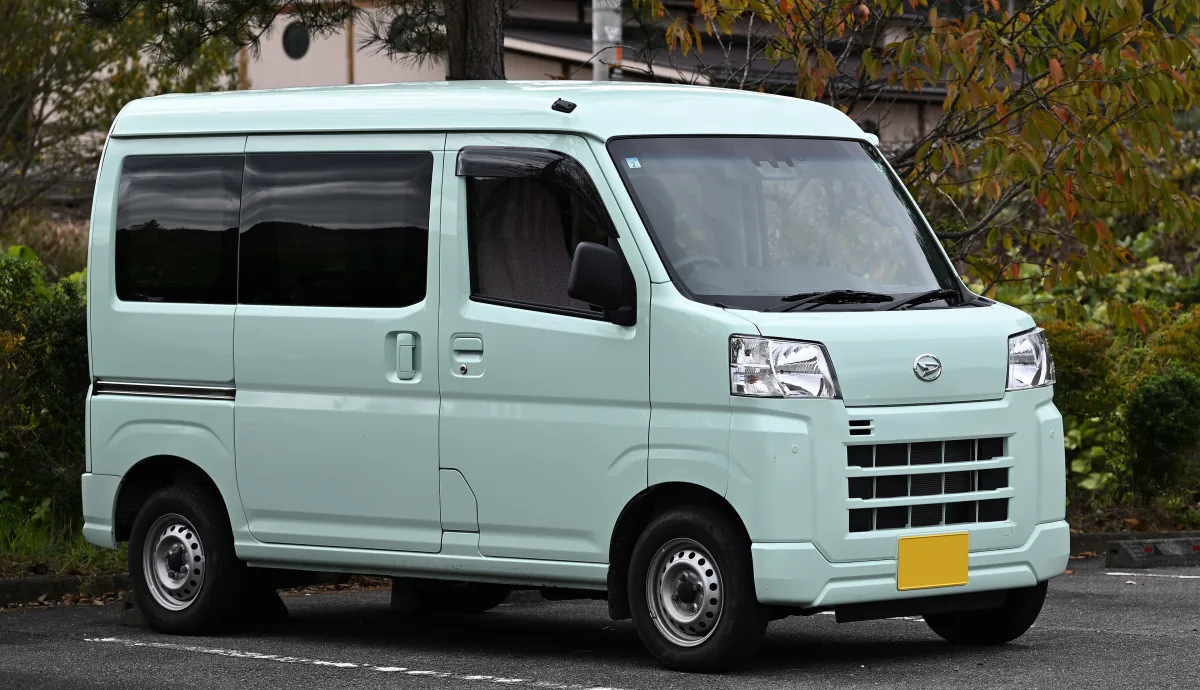
Daihatsu Hijet: the Japanese mini van and pickup — what buyers need to know
The Daihatsu Hijet is a compact Japanese van and pickup truck that's been in production since 1960. Here, we delve into its history, variants, engines, and what to check when buying a used Hijet, often imported from Japan.






Hijet in brief
The Hijet belongs to the kei class of commercial vehicles — compact, with small-displacement engines, highly practical in urban and rural settings. Cargo van (Cargo) and pickup truck (Truck) versions are available, while the passenger version in Japan is known as the Atrai.
In Lithuania, the Hijet is usually imported from Japan. It's favoured by small business owners, farmers, and those needing a compact utility vehicle for the garden, workshop, or deliveries.
Which one to choose
The Hijet has seen many iterations, so looks and tech vary greatly. Earlier models are simpler but have older engines, while later ones (post-1990) feature a 660 cm³ engine and more creature comforts.
For buyers, the key points are the body condition (rust), engine and gearbox state, and whether the vehicle has the necessary documents and meets registration requirements.
Engines and gearboxes
Most Hijets come with a small three-cylinder petrol engine. Before 1990, kei class engine displacement was capped at 550 cm³, later increased to 660 cm³. Some versions came with a turbocharger.
Transmission — manual (usually five-speed) or automatic. Some cars come with an optional four-wheel drive, which is particularly valued for economy and tough conditions.
What to check when buying a used Hijet
First off — corrosion: check the floor, sills, wheel arches, pickup bed, and door bottoms. Japanese cars often run with salt and moisture, and repairs can be costly.
Check the engine oil levels, coolant, transmission, four-wheel drive (if applicable), and brakes. Ensure the mileage and history match the documents, and the body hasn't been repaired after an accident.


Trim levels
Names and equipment vary by market and year; we list the versions most commonly found in Europe.
Hijet Truck
From 1960 —The compact pickup, the most popular variant.
- Three-cylinder engine
- Manual or automatic transmission
- Often — optional four-wheel drive
Hijet Cargo / Van
From 1960 —Van, designed for small deliveries.
- Three-cylinder engine
- Manual or automatic transmission
- Enclosed cargo area
Hijet Jumbo
From around the 1980sPickup with extended cab.
- Three-cylinder engine
- More space behind the seats
- Often — full-time four-wheel drive
Hijet Deluxe
various yearsBetter-equipped version.
- Often — better interior trim
- Often — air conditioning
- More comfort
Hijet variants comparison
| Truck | Cargo | Jumbo | Deluxe | |
|---|---|---|---|---|
| Who it's for | For farmers, builders, the garden | For small deliveries and business | For those needing more cabin space | For those wanting more comfort |
| Body | Pickup | Van | Pickup with extended cab | Truck or Cargo with better equipment |
| Price in the used market (relatively) | € | € | € | €€ |
Hijet — a practical and affordable workhorse, but when buying, pay special attention to corrosion and paperwork.
Pros
- Very compact and maneuverable
- Low running costs
- Practical cargo vehicle
- Many versions come with four-wheel drive
Cons
- Modest power and low top speed
- Corrosion and issues with older parts
- Import and registration concerns
Frequently asked questions
Who is the Daihatsu Hijet suited to?
This is a compact commercial vehicle — a van or pickup — ideal for small businesses, farms, and deliveries.
What engine does the Hijet have?
Most often, a small three-cylinder petrol engine; newer models come with a 660 cm³ unit.
Does the Hijet have four-wheel drive?
Most versions offer an optional four-wheel drive system, but there are also rear-wheel drive only models.
Updated 2026-10-21 · Trim levels and equipment vary by market and model year — check the equipment of the specific car. · Translated automatically


