 English
 Lietuvių
 Latviešu
 Eesti
 Polski
 Русский
 Українська
 Deutsch
 Nederlands
 Čeština
 Slovenčina
 Svenska
 Norsk
 Dansk
 Suomi


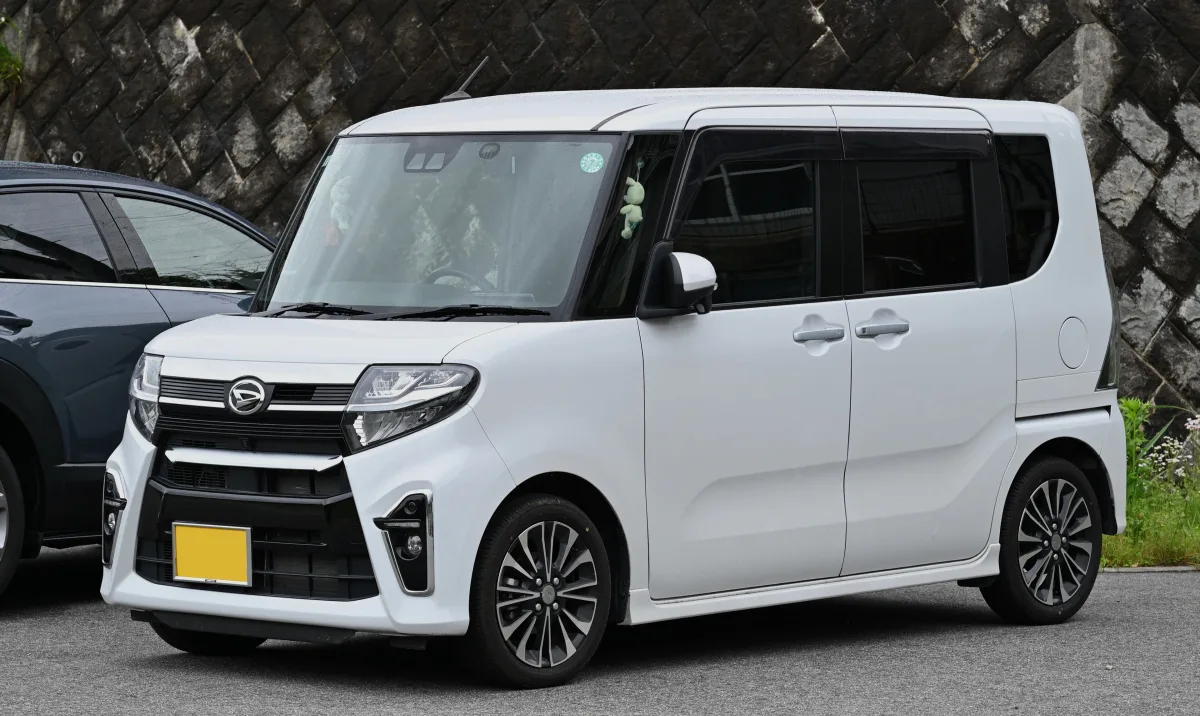
Daihatsu Tanto: a high kei class microvan, generations and what to know
The Daihatsu Tanto is a high kei class microvan from Japan, produced since 2003. In this article, we look at its generations, engines, and what you need to know in Lithuania when considering a Japanese import.






The Tanto in brief
The Tanto is designed for the Japanese kei class: compact dimensions, 660 cm³ engines, and a very high body that provides plenty of interior space. The car is particularly praised for its easy access and adaptable interior.
The Tanto is designed for easy city driving and short trips, so its strength lies in practicality rather than high-speed motorway cruising.
Generations — what's the difference
The first generation (around 2003–2007) had conventional rear doors. The second (around 2007–2013) was the first to get so-called 'Miracle Open Door' — sliding doors on the passenger side that open wide without a central pillar.
The third generation (around 2013–2019) and fourth (from 2019) have sliding doors on both sides. Newer generations come with more safety and driver-assistance systems, and the Tanto Custom versions stand out with a more striking front design.
Engines and transmissions
The Tanto's engines are 660 cm³ three-cylinder units: naturally aspirated and turbo (often badged 'RS'). Kei class regulations cap power at 64 hp, so the real differences between the naturally aspirated and turbo engines are mostly felt in acceleration.
Transmission — automatic CVT (no fixed gears). Drive — front-wheel, and in some versions, all-wheel.
What to check when buying a used Tanto
Cars are imported from Japan, so they usually have right-hand drive, and the mileage can be hard to verify. Ask for the auction sheet and appraisal, which helps determine the body and mileage condition.
Check the operation and smoothness of the sliding doors, the CVT transmission (jerking, hesitation), the turbo engine's oil level, and inspect for any signs of corrosion.
Before buying, inquire if such a car can be registered and insured, and what conditions need to be met — this will determine if the buyer will be compensated.


Trim levels
Names and features vary by market and year; we list the versions most commonly found in Europe.
X
3rd-4th generationA more basic trim for everyday use.
- Often — sliding doors and simple interior trim
- Naturally aspirated engine
- Often — steel or small lightweight alloy wheels
Custom X
3rd-4th generationA more stylish version with a more aggressive front end.
- Often — chromed or LED front accents
- Lightweight alloy wheels
- Luxurious interior
Custom RS
3rd-4th generationTurbo engine version with sportier trim.
- Turbo engine
- Often — larger lightweight alloy wheels
- Sportier trim
Comparison of versions
| X | Custom X | Custom RS | |
|---|---|---|---|
| Who it's for | Daily city driving | Style and comfort | For more dynamic driving |
| Engine | 660 cm³ naturally aspirated | 660 cm³ naturally aspirated | 660 cm³ turbo |
| Price in the used market (relatively) | € | € | €€ |
There are plenty of buyers for the X or Custom X with a naturally aspirated engine. The Custom RS is worth considering for those who value a livelier acceleration and a sportier look.
Pros
- Very spacious interior for a compact body
- Easy access thanks to sliding doors
- Small dimensions, easy to park
- Low running costs
Cons
- Mostly right-hand drive and imported from Japan
- Weak engine, not suited to long motorway journeys
- High body makes it sensitive to side winds
Frequently asked questions
What is a kei class car?
This is the Japanese class of compact cars with small dimensions and an engine no larger than 660 cm³. This class benefits from certain concessions, so models are designed with that in mind.
Is the Tanto suitable for motorway journeys?
It can drive on motorways, but the 660 cm³ engine struggles on them. Turbo versions are more dynamic, but in all cases, this is primarily a city car.
How does the Tanto differ from the Subaru Chiffon?
The Subaru Chiffon is the same Tanto model, sold with the Subaru badge. The technology and body are essentially the same.
Updated 2026-10-21 · Trim levels and equipment vary by market and model year — check the equipment of the specific car. · Translated automatically


