 English
 Lietuvių
 Latviešu
 Eesti
 Polski
 Русский
 Українська
 Deutsch
 Nederlands
 Čeština
 Slovenčina
 Svenska
 Norsk
 Dansk
 Suomi


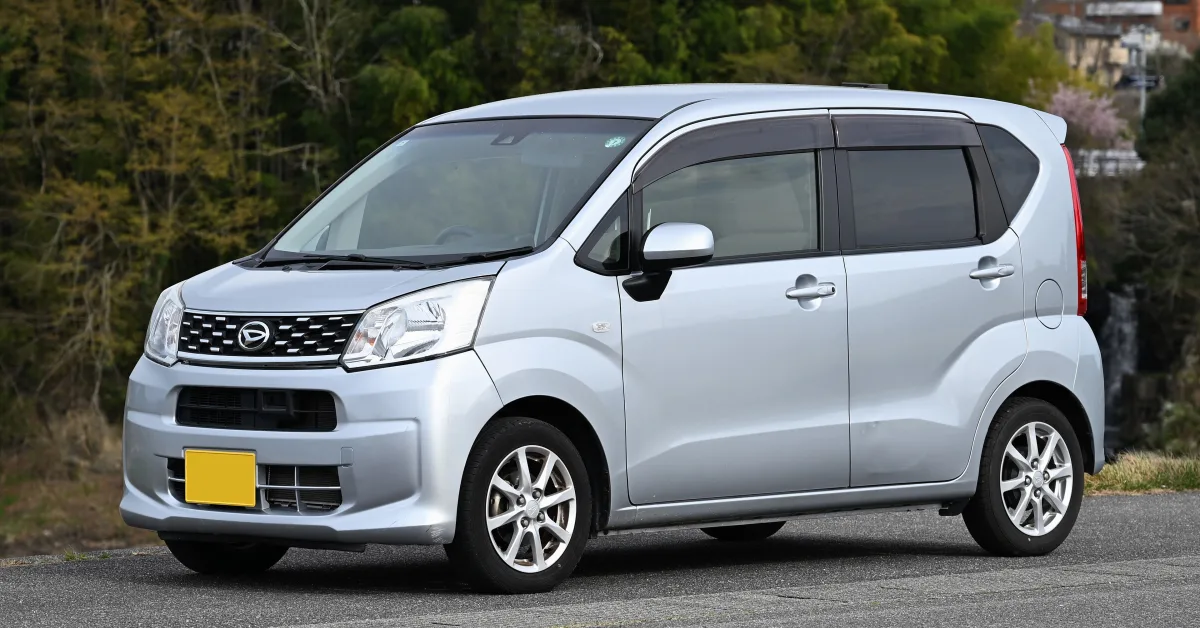
Daihatsu Move: generations, 660 cm³ engines and what the buyer should know
The Daihatsu Move is a compact, tall 'kei' class car that has been produced since 1995. In this article, we review its generations, engines, and trims, as well as what to check when buying a Move from Japan.






The Move in brief
The Move is a compact, tall passenger car designed for Japan's 'kei' class. Thanks to its high roofline and short dimensions, it's spacious and easy to manoeuvre in the city.
In Lithuania, the Move is most commonly found as a used car imported from Japan. In some European countries, you can also find first-generation models.
Generations — what's the difference?
The Move has been produced since 1995, with several generations released over time. The newer generations — LA100 (2010–2014) and LA150 (2014–2022) — are more modern, with better safety systems and more economical engines.
Alongside the standard Move, there are other versions such as the Move Conte and Move Latte, which differ in body shape and size. Before buying, make sure to identify the exact generation using the car's code.
Engines and transmissions
The Move uses 660 cm³ three-cylinder petrol engines. Most are naturally aspirated, while some versions come with a turbocharger. Power in the 'kei' class is limited, so these cars aren't fast, but they're well-suited to city driving.
The transmission is usually an automatic, often a CVT. Manuals are less common. On used Moves, it's important to check the service history of the transmission oil changes.
What to check when buying a Move
Most Move models are imported from Japanese auctions, so first check the history, auction sheet, and body condition. Inspect the underbody for rust, as well as the gearbox and engine cooling.
Right-hand drive, small boot space, and Japanese interior features might not be ideal if you're looking for a car for long journeys. Before buying, check the availability of parts.


Trim levels
Names and equipment vary by market and year; we list the versions most commonly found in Europe.
Move L
LA100 / LA150The base, most basic version.
- 660 cm³ petrol engine
- Often — automatic gearbox
- Simpler equipment
Move X
LA100 / LA150A more generous trim with additional comfort features.
- Often — more comfortable interior trim
- Often — additional safety systems
- Often — more comfort functions
Move Custom
LA100 / LA150Sportier looks and richer equipment.
- Often — sportier looks
- Often — a more luxurious interior
- In some versions — a turbo engine
Compare Move trims
| L | X | Custom | |
|---|---|---|---|
| Who it suits | For everyday city use | For comfort and daily driving | For style and a sportier feel |
| Equipment | Base | Mid-range | Top-spec |
| Price in the used market (relatively) | € | €€ | €€ |
The Move is ideal for one or two passengers for city use. Most importantly — check the history, mileage and body condition.
Pros
- Small and easy to manoeuvre
- Spacious interior for a compact car
- Economical to run
- Wide range of trim levels
Cons
- Limited power and long-distance comfort
- Mostly right-hand drive
- Limited choice of parts and specialists
Frequently asked questions
What is the 'kei' class?
This is the Japanese class of small cars with size and engine capacity restrictions (up to 660 cm³).
What engines does the Move have?
The Move uses 660 cm³ three-cylinder petrol engines, with some versions featuring a turbocharger.
Is the Move suitable for long journeys?
Not particularly. It's better suited to city driving and short distances.
Updated 2026-10-21 · Trim levels and equipment vary by market and model year — check the equipment of the specific car. · Translated automatically


