 English
 Lietuvių
 Latviešu
 Eesti
 Polski
 Русский
 Українська
 Deutsch
 Nederlands
 Čeština
 Slovenčina
 Svenska
 Norsk
 Dansk
 Suomi


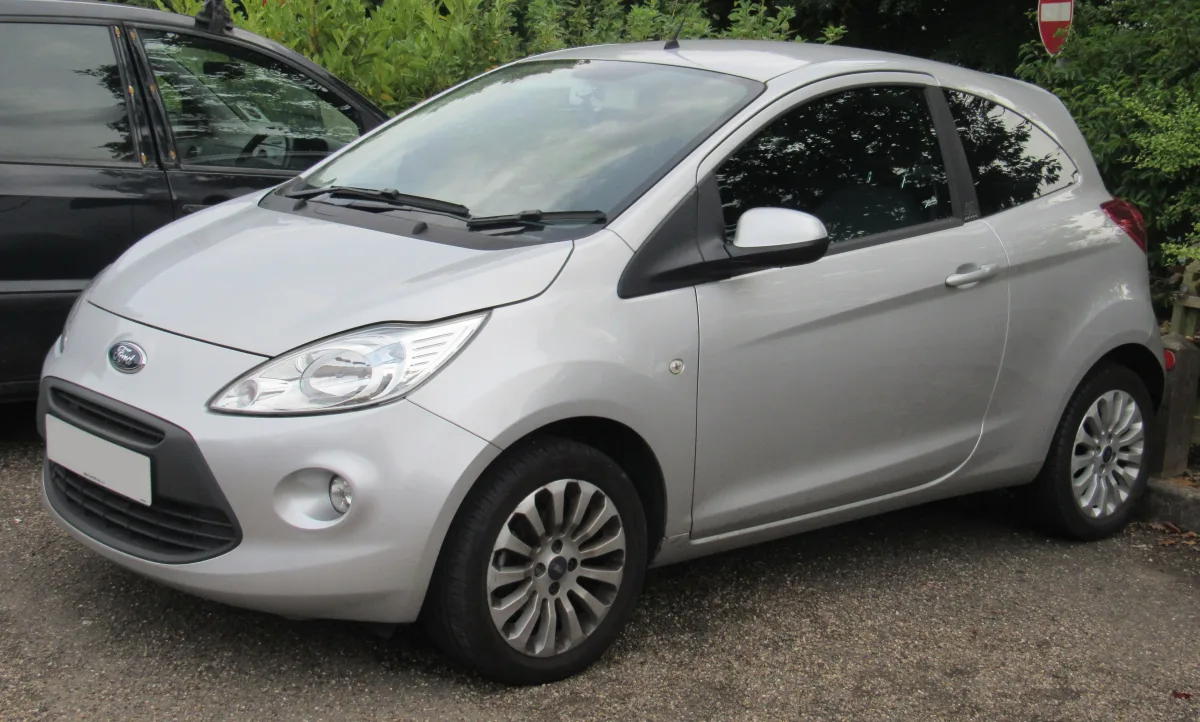
Ford Ka: I and II generations and Ka+, engines and trims
Ford Ka — a small and affordable city car, often chosen as a first or second family car. We look at how the first and second Ka generations differ, as well as the five-door Ka+, which engines are available, how the trims vary, and what to check when buying used.






Ka in brief
The first Ka was launched in 1996 and produced until 2008. The second generation (2008–2016) was developed with Fiat and built in Poland, in the same factory as the Fiat 500 and Panda, so they share many technical similarities. In 2016, the Ka+ was introduced in Europe — a larger five-door hatchback built on an entirely different technical platform.
The first and second generations are three-door, short, and easy to manoeuvre in the city, but there's not much space in the rear seats or boot. The Ka is praised for its simple technology, low fuel consumption, and affordable maintenance.
Which generation to choose
The first generation (1996–2008) stands out with its rounded, distinctive design and well-regarded handling, but these are now ageing cars prone to rust. When buying, focus on the body condition rather than the trim level.
The second generation (2008–2016) is the most popular choice in the used market. It's more modern, safer, and comfortable, with engines derived from Fiat. Many parts are shared with the Fiat 500 and Panda, making them easy to source.
Ka+ (from 2016 onwards, sold in Europe until around 2019) has five doors and is significantly more spacious, making it better suited for families. The 2018 facelifted Ka+ gained an Active crossover-style version and a diesel engine.
Engines and gearboxes
The first-generation Ka most commonly features a 1.3-litre petrol engine (around 60–70 hp), while the sportier SportKa came with a 1.6-litre unit (around 95 hp).
The second-generation Ka offers a 1.2-litre petrol (around 69 hp) and a 1.3 TDCi diesel (around 75 hp) — both of Fiat origin. The gearbox is usually a 5-speed manual.
The Ka+ comes with a 1.2 Ti-VCT petrol engine (around 70 or 85 hp), and from 2018 onwards, a 1.5 TDCi diesel (around 95 hp). All Ka models are front-wheel drive.
What to check when buying a used Ka
For the first-generation Ka, inspect the sills, wheel arches, floor, and front end — corrosion is common in this model and can be dangerous. The engine should start easily, and the cooling system should not leak.
The second-generation Ka's 1.2-litre engine has a timing belt, so ask when it was last replaced. Check if the electric power steering works and if any warning lights illuminate, and listen for suspension and exhaust noises while driving.
The Ka+ is mechanically straightforward, but it's worth checking the exhaust, brakes, and multimedia system. For all cars, verify the service history — small city cars often have multiple owners, and short journeys can wear out the exhaust and emissions system more quickly.


Trim levels
Names and equipment vary by market and year; we list the most common trims found in Europe.
Studio
Second generationBase trim for the tightest budgets.
- Steel wheels
- Basic trim, often without air conditioning
- The most affordable in the used market
Zetec
Second generationThe most popular choice with added comfort.
- Light-alloy wheels
- Often — air conditioning
- Often — fog lights
Titanium
Second generationTop trim with the most equipment.
- Often — climate control
- Light-alloy wheels
- Higher-quality interior trim
Ka+ Zetec
Ka+, from 2016Spacious five-door Ka+ with good equipment.
- Five doors and five seats
- Often comes with air conditioning and alloy wheels
- Often comes with SYNC multimedia system
Ka+ Active
Ka+, from 2018The crossover-style Ka+ version
- Increased ground clearance
- Plastic body protection details
- Roof rails for the boot
Comparison of the second generation and Ka+ trims
| Ka Studio | Ka Zetec | Ka+ Zetec | Ka+ Active | |
|---|---|---|---|---|
| Who it's for | For the tightest budgets | For city driving | For families | For crossover enthusiasts |
| Body | 3-door | 3-door | 5-door | 5-door |
| Alloy wheels (commonly) | Steel | Light alloy | Light alloy | Light alloy |
| Engine | 1.2, around 69 hp | 1.2 or 1.3 TDCi | 1.2, around 70–85 hp | 1.2 or 1.5 TDCi |
| Price in the used market (relatively) | € | € | €€ | €€ |
For the tightest budgets and city driving, the second-gen Ka Zetec is a solid choice. If you need more space for passengers and luggage, consider the Ka+ — it's significantly more practical.
Pros
- Small, easy to handle and park in the city
- Low fuel consumption
- Cheap and easily available parts
- Ka+ — spacious for its class
Cons
- Little room in the back and boot in the first and second generations
- Weak engines in town
- The first generation is prone to rust
Frequently asked questions
Is the Ford Ka suitable for city driving?
Yes, but the 1.2 and 1.3 engines aren't powerful, so you'll feel a lack of oomph when overtaking or driving on the motorway with a full car. If you often drive long distances, it's better to choose the Ka+ or a larger car.
How does the Ford Ka differ from the Fiat 500?
The second-generation Ka and Fiat 500 are built in the same factory, share many parts, and have the same engines. They differ in styling, interior, and suspension settings, and the Ka is often cheaper in the used market.
Is the Ka+ the same as the Ka?
No. The Ka+ is a different car — a larger five-door hatchback built on a different platform and sold in Europe as the Ka. It's more practical than the three-door Ka, but less fun.
Updated 2026-10-09 · Trim levels and equipment vary by market and model year — check the equipment of the specific car. · Translated automatically


