 English
 Lietuvių
 Latviešu
 Eesti
 Polski
 Русский
 Українська
 Deutsch
 Nederlands
 Čeština
 Slovenčina
 Svenska
 Norsk
 Dansk
 Suomi


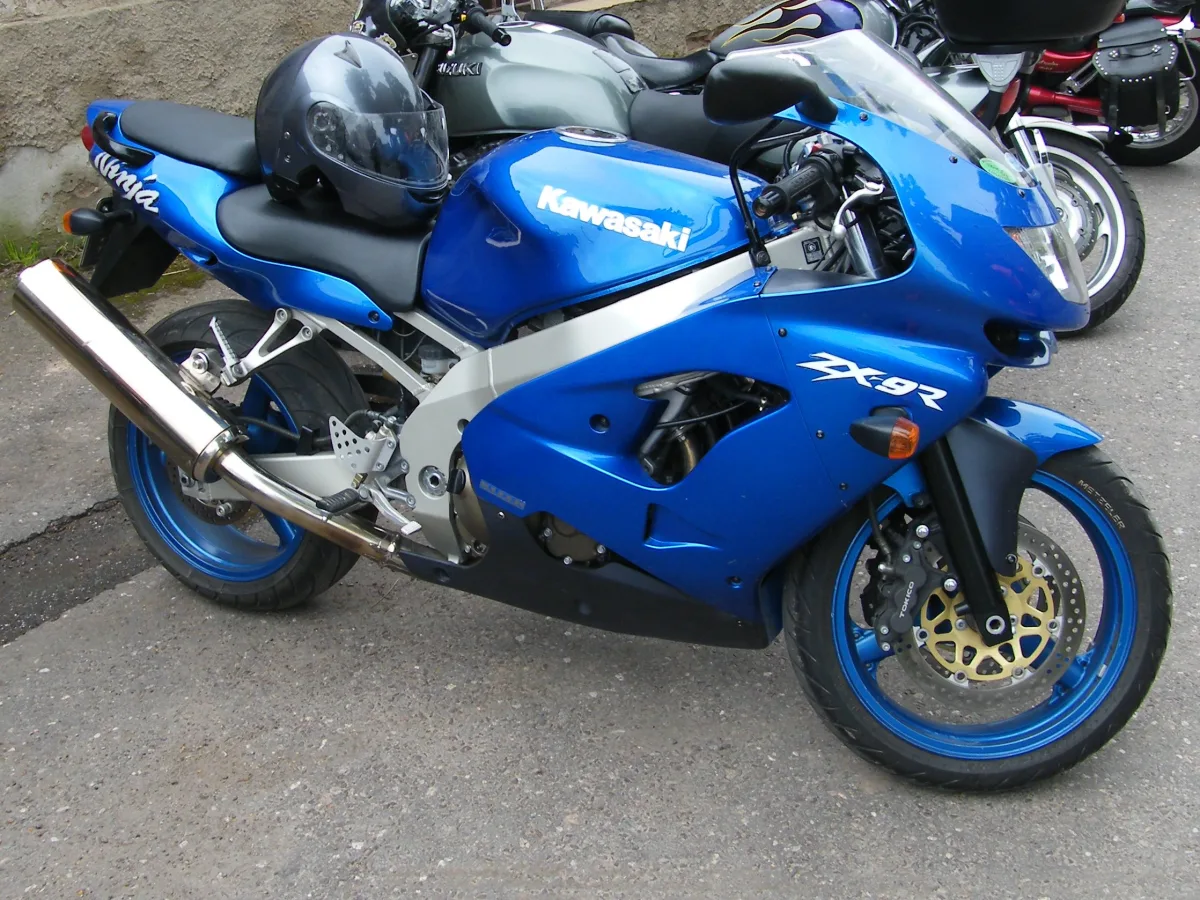
Kawasaki ZX-9R: sport-touring motorcycle, versions and what to check
Kawasaki ZX-9R (1994–2003) — 899 cm³ four-cylinder “Ninja”, blending sporty characteristics with enough comfort for daily riding. We look at the versions, what the engine offers, and what to check when buying used.






ZX-9R in brief
The ZX-9R was designed as a powerful yet fairly comfortable sport bike. It boasts high power, stable handling, and a smooth engine character, making it suitable for both fast rides and daily commutes.
Compared to pure sport bikes, the ZX-9R is a bit heavier and more comfortable, and its build is considered reliable.
Versions — what sets them apart
The ZX-9R was produced for nine years, and its design was updated several times during that period. Early versions have carburetors, while from 1998 onwards, the motorcycle received an updated frame and styling.
Later models (around 2002–2003) already had electronic fuel injection instead of carburetors. Before buying, make sure to check which specific version the motorcycle is, as examples from different years can vary quite a bit.
Engine, transmission, and handling
The engine is an 899 cm³ liquid-cooled inline four-cylinder, typically around 130–140 HP. It pulls smoothly from mid-range revs and is suitable for both city and highway driving.
Transmission — six-speed, rear-wheel drive — chain-driven. The suspension is relatively stiff, the riding position sporty but not overly extreme, so the ZX-9R is also good for longer journeys.
What to check when buying a used ZX-9R
This is an old sports bike, so first look for signs of crashes and accidents — scratches on the fairings, dents in the frame, bent forks. Check the fairing plastic, as old plastic bodywork often cracks.
On carburettor models, check if the engine runs smoothly, and on fuel-injected versions, see if the engine warning light comes on. Inspect the cooling system (radiator, hoses), chain and sprockets, brakes, fork seals, rear shock, and electrical components and battery charge.


Trims and versions
The ZX-9R trims changed little over its production run, so we'll outline the main periods.
ZX-9R (ankstyvoji)
1994–1997The first generation with carburettors.
- 899 cm³ four-cylinder engine
- Carburettors
- Sporty, yet quite comfortable handling
ZX-9R (atnaujinta)
1998–2001Versions with an updated frame and styling.
- Updated frame and styling
- Carburettors
- Similar engine base
ZX-9R (su įpurškimu)
Around 2002–2003Later versions with electronic fuel injection.
- Electronic fuel injection
- Refreshed styling
- Similar overall construction
Version comparison
| Ankstyvoji (1994–1997) | Atnaujinta (1998–2001) | Su įpurškimu (apie 2002–2003) | |
|---|---|---|---|
| Who it's for | For those who love classic sport bikes | For those who prioritise a sturdier build | For those after the latest iteration |
| Fuel system | Carburettors | Carburettors | Electronic injection |
| Price in the used market (relatively) | € | €€ | €€ |
The ZX-9R is worth considering for its power and comfort, but a clear history and well-maintained mechanics are crucial. Look for an example with the fewest miles on the clock.
Pros
- A powerful and smoothly pulling engine
- More practical than pure sports bikes
- Reliable construction
- Not overly common in the used market
Cons
- Quite heavy compared to other sports bikes
- Older examples may have cracked plastic or dodgy electrics
- Limited supply of older parts
Frequently asked questions
Is the ZX-9R suitable for beginners?
No. It's powerful and responsive, so it's only for experienced riders with an A licence.
Is the ZX-9R comfortable for daily use?
Compared to other sports bikes, yes, as its riding position is more relaxed. Still, it can get tiring on long journeys.
Does the ZX-9R have fuel injection?
Later models (around 2002–2003) do, earlier ones have carburetors. Check the documents or VIN before buying.
Updated 2026-10-21 · Trim levels and equipment vary by market and model year — check the equipment of the specific car. · Translated automatically


