 English
 Lietuvių
 Latviešu
 Eesti
 Polski
 Русский
 Українська
 Deutsch
 Nederlands
 Čeština
 Slovenčina
 Svenska
 Norsk
 Dansk
 Suomi


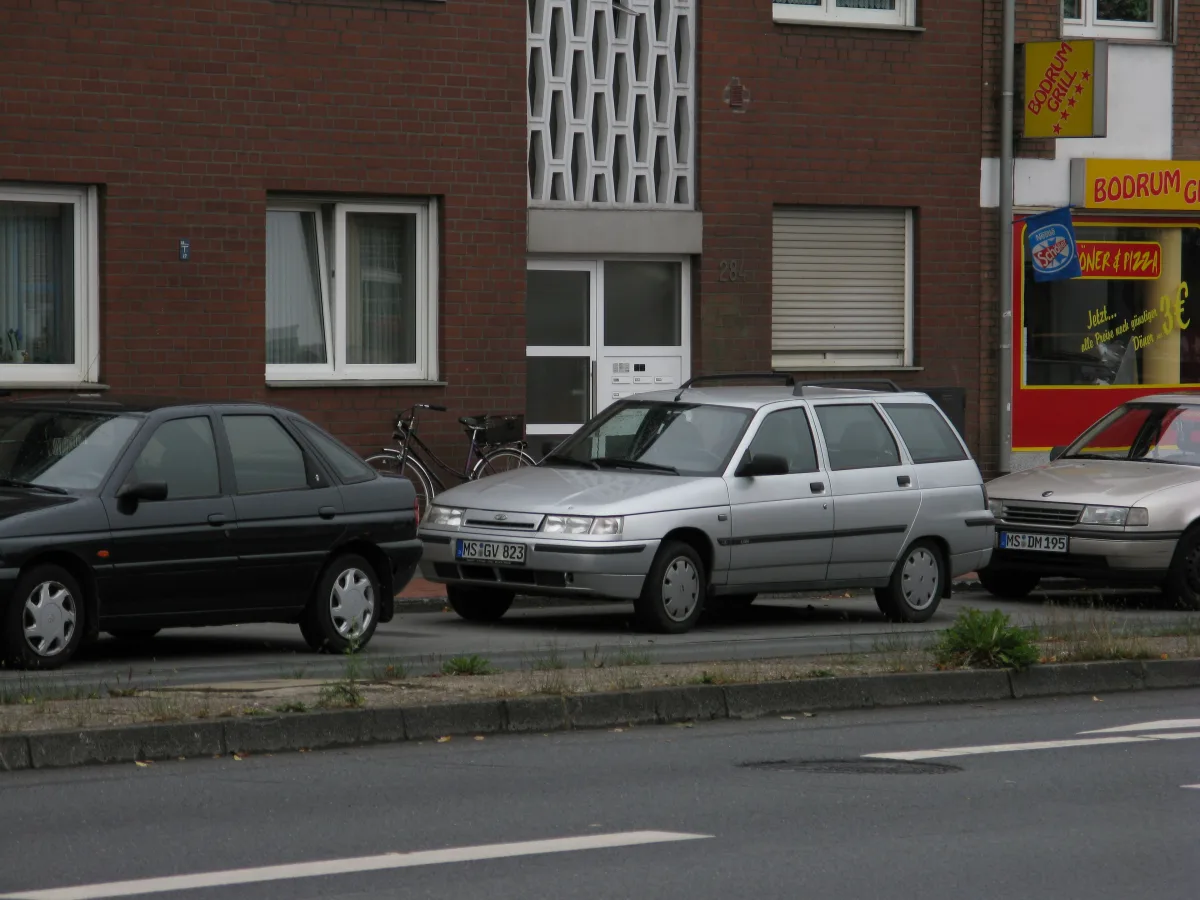
Lada 111: 110 family estate — what to know before buying
Lada 111 (VAZ-2111) — the 110 family estate offers more cargo space than the sedan or hatchback. We look at its engines, trims, and what to check when hunting for a used car.






Lada 111 in brief
The Lada 111 was created as a more practical version of the 110 sedan — an estate with a larger boot and a tailgate that opens upwards. The front end, interior, and mechanics are similar to other models in the range.
This car is popular among those who need simple, affordable, and spacious transport. In Lithuania today, it's often found as a budget workhorse or daily driver.
Which version to choose
The 111 was produced with 8- and 16-valve engine options. The 8-valve cars are simpler and cheaper, while the 16-valve models are more lively but require more meticulous maintenance.
When choosing, pay close attention to the body and chassis condition. Estates often have to carry heavy loads, so the suspension and rear end might be more worn out.
Engines and gearboxes
The most common engines are 1.5 and 1.6-litre petrol units with 8 or 16 valves, producing around 80–95hp.
The gearbox is a five-speed manual. In the case of 16-valve engines, a snapped timing belt often bends the valves, so its replacement history is crucial.
What to check when buying a used Lada 111
Inspect the sills, wheel arches, floor, and boot edges — corrosion and previous repairs are common here. Pay attention to the tailgate and its alignment.
Check the condition of the suspension, brakes, and steering mechanism, as well as the engine's operation when cold and hot. Ask for service documents.


Trim levels
Names and equipment vary by market and year; we describe the most commonly encountered versions.
Bazinė versija
throughout the production runBasic trim with an 8-valve engine.
- 8-valve petrol engine
- Often — steel wheels
- Basic interior with minimal comfort features
Geresnės komplektacijos
throughout the production runVersion with more comfort details.
- Often — electrically operated front windows
- Often — central locking
- Better interior trim
Su 16 vožtuvų varikliu
throughout the production runMore lively version with a 16-valve engine.
- 16-valve petrol engine
- Better dynamics than the 8-valve versions
- Requires meticulous maintenance
Comparing trims
| Bazinė | Geresnė komplektacija | 16 vožtuvų | |
|---|---|---|---|
| Who it's for | A straightforward, budget-friendly all-rounder | Most buyers | Those seeking a more spirited drive |
| Engine | 8-valve | 8 or 16-valve | 16 vožtuvų |
| Boot | Spacious | Spacious | Spacious |
| Price in the used market (relatively) | € | € | € |
Most buyers will be fine with the 8-valve version in good condition. The 16-valve engine is only suitable with a clear service history.
Pros
- Affordable to buy and run
- Spacious boot in the estate body
- Simple tech and plenty of parts
- Easy to maintain
Cons
- Corrosion is a common issue
- Cozy comfort and safety features
- 16-valve engine sensitive to a failed timing belt
Frequently asked questions
What sets the Lada 111 apart from the Lada 112?
The 111 is an estate with a larger boot, while the 112 is a hatchback. The front, interior, and tech are similar.
Is the 111 suitable for daily use?
Yes, if the body is sound and the tech is in order. It's a straightforward car with modest comfort demands.
Which engine is better?
The 8-valve is simpler and cheaper, the 16-valve is more lively. The latter needs timely timing belt changes.
Updated 2026-10-21 · Trim levels and equipment vary by market and model year — check the equipment of the specific car. · Translated automatically


