 English
 Lietuvių
 Latviešu
 Eesti
 Polski
 Русский
 Українська
 Deutsch
 Nederlands
 Čeština
 Slovenčina
 Svenska
 Norsk
 Dansk
 Suomi


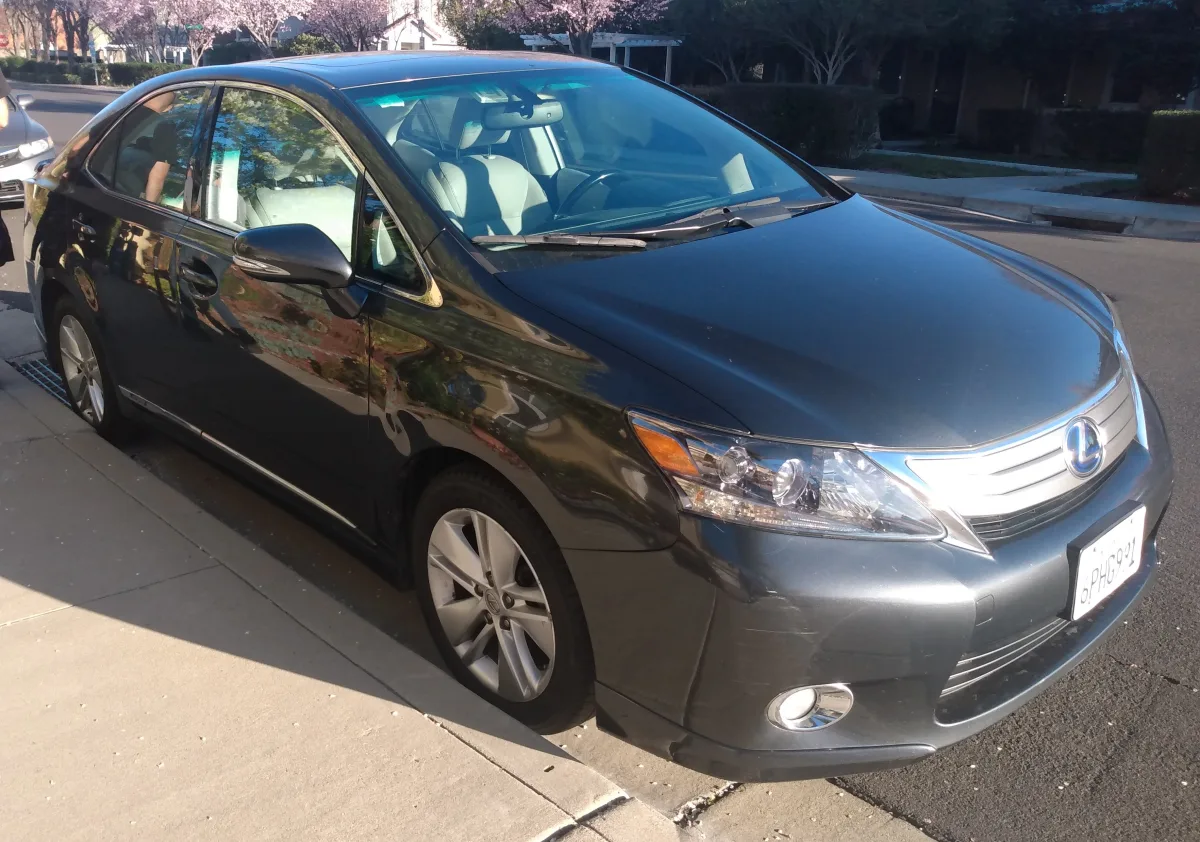
Lexus HS: hybrid sedan, its engines and what to check when buying
Lexus HS 250h — the first Lexus designed purely as a hybrid: a mid-size sedan produced from 2009–2018, though only sold for a few years in Europe. We look at the hybrid system, trims, and what to know when buying used.






HS in brief
The HS 250h was aimed at buyers who value economy and Lexus luxury at the same time. It’s a four-door sedan with a quiet, well-insulated cabin and a hybrid powertrain without a diesel or larger petrol engine.
The car had one generation. It was sold in small numbers in Europe and only for a few years, so some examples in Lithuania come from other markets, such as Japan or the USA.
Which trim to choose
Differences between trims are mainly in comfort and equipment levels. If you value convenience, opt for better-equipped trims with leather, navigation, and more safety systems.
Refreshed models (from around 2012) got a new front end and slightly revised equipment, but the mechanics remained the same.
Engines and transmissions
The HS 250h powertrain combines a 2.4-litre petrol engine with an electric motor, with the total system output around 187 hp. It uses a continuously variable transmission (e-CVT), so there are no traditional gear shifts.
Such a system is very economical in the city, as it can run on electric power for a large portion of the time. On the motorway, fuel consumption is higher, but still lower than many similarly sized petrol cars.
What to check when buying a used HS
The hybrid system should be checked with specialist diagnostic equipment: battery condition (you can request a report), operation of the cooling fans, and the error log. An error is shown on the instrument panel — don’t buy if it’s constantly lit.
Before purchasing, check that all manufacturer recall campaigns have been completed, as such campaigns do occur.
Inspect the suspension and brakes. In hybrid cars, brake discs can wear unevenly due to regenerative braking.


Trim levels
Versions listed are for the Japanese market; names and equipment differ in Europe and the US.
Versija S
Japanese marketBase version with standard equipment.
- Often — cloth or combination interior
- Standard audio system
- Often — alloy wheels
Versija I
Japanese marketMid-range version with more comfort.
- Often — better interior trim
- Often — more safety equipment
- Often — navigation
Versija L
Japanese marketTop version with leather and full comfort.
- Often — single-seater interior
- Often — heated seats
- Often — premium sound system
HS trim comparison
| Versija S | Versija I | Versija L | |
|---|---|---|---|
| Who it's for | Budget-friendly option | Everyday use | For comfort |
| Wheels (most often) | 16–17 inch | 17 inch | 17 inch |
| Interior | More basic | Better trim | Single-seater |
| Engine | 2.4 hybrid | 2.4 hybrid | 2.4 hybrid |
| Price in the used market (relatively) | Budget-friendly | Mid-range | Mid-range |
The mechanical components are the same across all versions, so choose based on features and condition. The best balance of price and comfort is usually offered by the mid-range version.
Pros
- Economical hybrid with Lexus comfort
- Quiet and well-insulated cabin
- Reliable Toyota hybrid technology
- Affordable urban running costs
Cons
- Limited availability in Lithuania
- Not particularly dynamic driving
- Repairing or replacing the hybrid battery can be expensive
Frequently asked questions
Is the HS a reliable car?
Toyota and Lexus hybrid technology is usually reliable, but the key is the condition of the hybrid battery and ensuring all recall campaigns have been completed.
Do you need to charge the HS?
No. The HS 250h isn't a plug-in hybrid — the battery charges while driving and braking.
Is the HS economical?
Yes, according to the manufacturer, combined fuel consumption is around 5 l/100 km, and in the city, the hybrid system helps save even more. Real-world consumption depends on your driving style and battery condition.
Updated 2026-10-14 · Trim levels and equipment vary by market and model year — check the equipment of the specific car. · Translated automatically


