 English
 Lietuvių
 Latviešu
 Eesti
 Polski
 Русский
 Українська
 Deutsch
 Nederlands
 Čeština
 Slovenčina
 Svenska
 Norsk
 Dansk
 Suomi


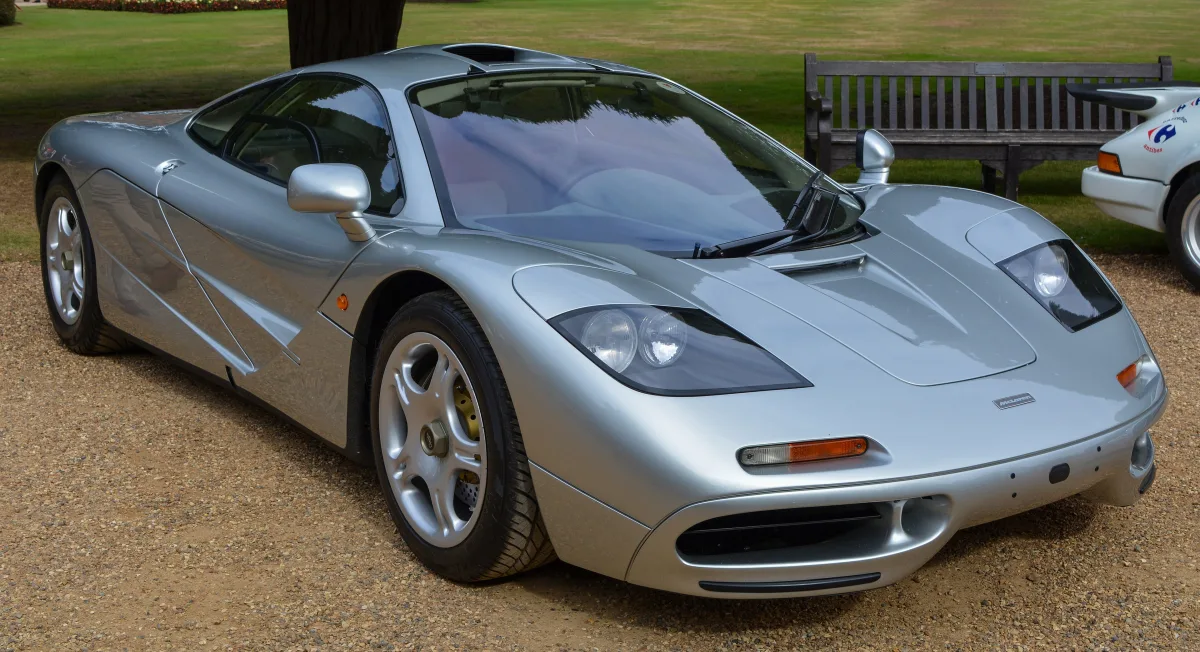
McLaren F1: features, engine and what to know before buying
The McLaren F1 is a 1990s supersports car with a central driving seat and a BMW V12 engine, which was the fastest production car in the world for a long time. In this article, we look at the technology, versions and what you need to know about this extremely rare collectible model.






McLaren F1 in brief
The McLaren F1 was designed by Gordon Murray and produced from 1993 to 1998. The car stands out because the driver sits in the middle of the cabin, while the two passengers sit lower and to the sides. The body is a carbon fibre monocoque, and the engine bay is lined with gold foil that reflects heat.
Around 106 cars were made in total, including race versions, with roughly 64 road cars. Due to its rarity and historical significance, the F1 is one of the most valuable collectible cars.
Versions and variants
The main version is the road-going F1. In addition, a few limited-series road variants were produced: the F1 LM, which is lighter and more powerful, and the F1 GT, with an extended rear and aerodynamics tailored for homologation.
Separately, the race-ready F1 GTR was produced, which competed in sports car races, including the 24 Hours of Le Mans. These cars are even rarer and are highly sought after by collectors.
Engine and transmission
The F1 is powered by a BMW-built 6.1-litre naturally aspirated V12 petrol engine, producing around 627 hp. The car is rear-wheel drive.
The 1998 McLaren F1 reached speeds of around 386 km/h, and for many years, it was the fastest production car. It has a 6-speed manual gearbox with no electronic aids.
What to know when buying a McLaren F1
The F1 is sold very rarely and usually through private deals or specialist auctions. The key is a full history: factory documents, service records, ownership chain, and confirmation that the car is original.
Maintenance is carried out at a specialist McLaren facility or by certified mechanics. If you're interested in a genuine car, an independent expert appraisal is essential, not just the seller's word.


Trim levels
Names and equipment vary by market and year; we list the most commonly found trims in Europe.
McLaren F1 (gatvinis)
1993–1998The base road-going version with a central driving seat.
- 6.1-litre V12, around 627 hp
- 6-speed manual gearbox
- Carbon fibre monocoque
McLaren F1 LM
1995A lighter and more powerful road-going version.
- More power than the road-going version
- Reduced weight
- Very limited production
McLaren F1 GT
1997 model yearRoad version with extended aerodynamics
- Stretched rear end
- Aerodynamic modifications
- Very limited production
McLaren F1 GTR
1995–1997 model yearsRace version for tracks
- Built for racing
- Tailored for the track
- Competed in the 24 Hours of Le Mans
Comparison of McLaren F1 versions
| F1 (gatvinis) | F1 LM | F1 GT | |
|---|---|---|---|
| Who it's for | For collectors | For collectors seeking the most powerful | For aerodynamics enthusiasts |
| Engine | BMW 6.1 l V12 | BMW 6.1 l V12 | BMW 6.1 l V12 |
| Power (approx.) | 627 AG | More than the road-going version | 627 AG |
| Transmission | 6-speed manual | 6-speed manual | 6-speed manual |
| Price in the used market (relatively) | €€€ | €€€ | €€€ |
The choice here is uniquely collectible: the base road car is the most accessible, while the LM and GT are very rare and even more valuable.
Pros
- Legendary design and Gordon Murray ideas
- Central driving seat
- BMW V12 with a unique sound
- Extremely rare and valuable collectible model
Cons
- Practically unavailable in the market
- Expensive maintenance and parts
- Lacks modern safety and comfort systems
Frequently asked questions
How many McLaren F1s were produced?
In total, around 106 cars, of which about 64 are road-going. The rest are racing and special variants.
Why is the McLaren F1 so special?
Thanks to its central driving seat, carbon fibre body, BMW V12, and the fact it became the fastest production car in 1998. It's historically significant.
What is the McLaren F1's engine power?
Around 627 hp, provided by BMW's 6.1-litre V12.
Updated 2026-10-19 · Trim levels and equipment vary by market and model year — check the equipment of the specific car. · Translated automatically


