 English
 Lietuvių
 Latviešu
 Eesti
 Polski
 Русский
 Українська
 Deutsch
 Nederlands
 Čeština
 Slovenčina
 Svenska
 Norsk
 Dansk
 Suomi


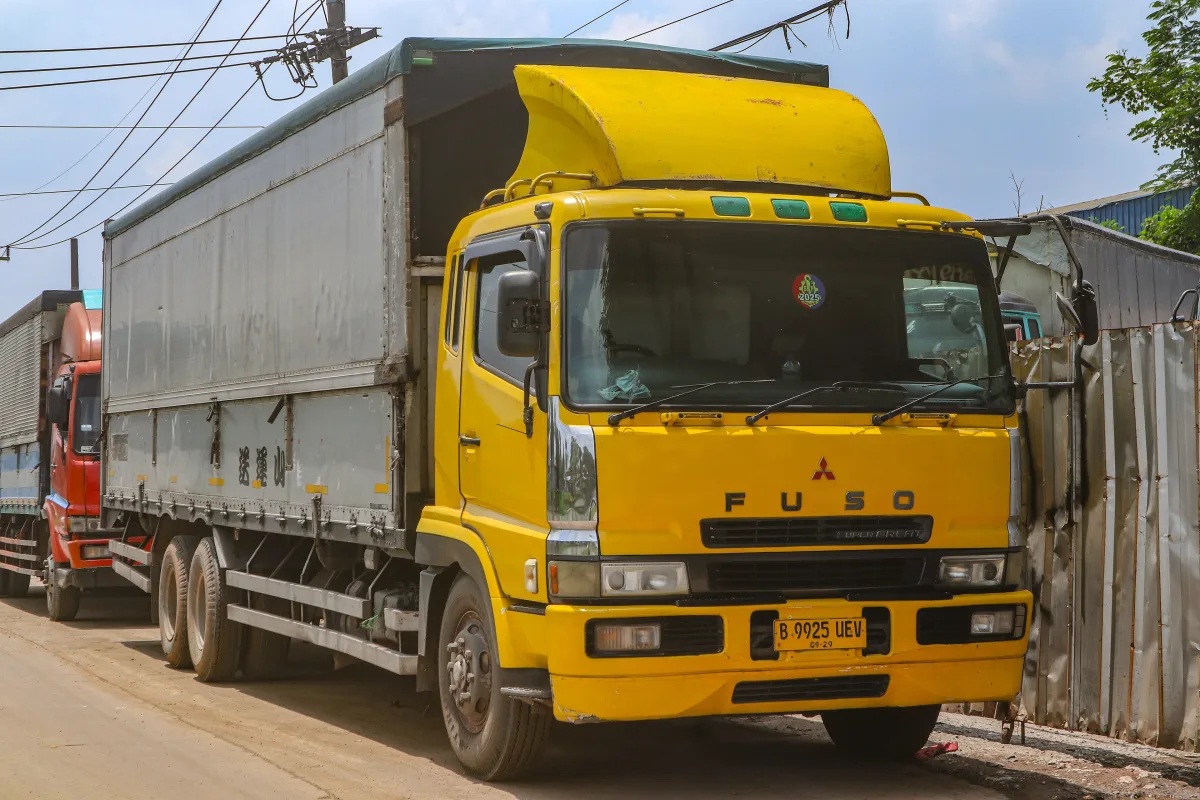
Mitsubishi Fuso Super Great: generations, engines, and what to check
The Mitsubishi Fuso Super Great is a heavy-duty Japanese truck that has been in production since 1996 and is used for long-haul journeys, construction, and specialist tasks. We look at its generations, engines, bodies, and what to check if you're after a used Super Great.






Super Great in brief
The Super Great is Fuso's heaviest model—it's designed for large loads and long journeys. In Japan, Indonesia, and other Asian markets, it's common with flatbed, van, box, tanker, or crane bodies, while in Europe, it mostly arrives as a used import.
The factory designation (e.g., FS, FU, or FV) indicates the axle formula and purpose. Before buying, always check the specific truck's axle count, gross vehicle weight, and body type.
Generations—what's the difference
The first generation (circa 1996–2007) is more basic, with robust mechanics and fairly long-lasting engines. Most of these trucks are now quite old, so corrosion, chassis, and suspension condition are key.
The second generation (circa 2007–2017) features a more modern cab, more economical engines, and the automated 'Shift Pilot' transmission. This generation is common among used imports.
The latest generation (from circa 2017) boasts an even more modern cab and safety equipment, but there aren't many of these in Europe yet. When buying an import, ensure it can be registered and check the driver's side—Japanese trucks often have the steering wheel on the right.
Engines and transmissions
Superb engines — large-displacement diesels: six-cylinder units are often found (e.g., 6M70 around 12.8 litres and 6R10 around 10.7 litres), and in some older versions, a V8 engine. Power ranges roughly from 350 to over 500 hp.
Transmissions come in manual or automated 'Shift Pilot'. The automated box is more comfortable for long journeys, but maintenance can be pricier, so it's worth testing it on the road.
Before buying, ask for the specific engine code and emission class of the car: this determines the availability of spare parts and the ability to operate in low-emission zones.
What to check when buying a used Superb
Firstly, inspect the frame, cabin mounts, and body attachments. Imported cars may show significant corrosion if they've been used in wet or salt-affected areas. Check if the frame hasn't been repaired or extended.
Start the engine cold and assess the smoke, noises, oil, and coolant leaks. In newer cars, check the DPF and SCR systems, and test the transmission while driving.
Check additional equipment like hydraulic tailgates, automatic tailgate mechanisms, or cranes separately. Verify the trailer and towing capacity according to documents and auction reports, and the tachograph according to local regulations.


Versions and bodies
Badges and equipment vary by generation and market; we list the most commonly found Superb versions.
Vilkikas
All generationsHeavy-duty tractor unit with a semi-trailer.
- Often — 4x2 or 6x2
- High cab with sleeping area
- Often — air suspension in the cab
Bortinė ar furgono važiuoklė
All generationsThe most common commercial body type
- Often — hydraulic tailgate
- Simple body construction
- The condition of the body affects the value
Savivartis
Common versionsFor construction and quarry work
- Often — 6x4 or 8x4
- Reinforced chassis
- High-mileage vehicles
Kranas ar specialioji versija
Less common versionsWith crane, tank, or other special superstructure
- Often — additional hydraulic units
- The condition of the special equipment is important
- Many used car dealers
Antroji karta su „Shift Pilot“
About the 2007–2017 modelsWith an automated gearbox and a more modern cabin.
- Easier to drive
- More economical engines
- More expensive maintenance
Comparing the Super Great versions
| Vilkikas | Bortinė važiuoklė | Savivartis | Su krano antstatu | |
|---|---|---|---|---|
| Who it's for | For long-distance trips | For distribution | For construction | For specialist tasks |
| Cabin | High, sleeper | Often sleeper | Most basic | Most basic |
| Most important to check | Engine and gearbox | Body and trim | Suspension and hydraulics | Steering and hydraulics |
| Price in the used market (relatively) | Mid-range | Mid-range | Mid-range | High-end |
For long-distance trips, the second-gen Super Great with Shift Pilot is often the best choice. It's especially crucial to check the documents, steering side, and frame condition for imported cars.
Pros
- Robust build and powerful engines
- Spacious cabin for long journeys
- Wide range of body styles and trims
- Imported cars are often well-maintained
Cons
- Spare parts availability is limited in Europe
- Right-hand drive imports are often seen
- Corrosion and body condition can vary greatly
Frequently asked questions
What do FS, FU, and FV mean in the Super Great name?
These are factory designations indicating the axle configuration and purpose, such as a tow vehicle or a chassis with a specific number of axles. Always check the exact meaning in the vehicle's documents.
Can a Super Great be registered in Lithuania?
Usually yes, if the car meets technical requirements and has proper documents, but it depends on the specific vehicle. Before buying, check the registration requirements and consult with experts.
Is it easy to find spare parts?
Parts for popular engines and other components are usually easy to find, but they might take longer to order than parts from local manufacturers. Before buying, make sure you have a reliable mechanic and parts supplier.
Updated 2026-10-21 · Trim levels and equipment vary by market and model year — check the equipment of the specific car. · Translated automatically


