 English
 Lietuvių
 Latviešu
 Eesti
 Polski
 Русский
 Українська
 Deutsch
 Nederlands
 Čeština
 Slovenčina
 Svenska
 Norsk
 Dansk
 Suomi


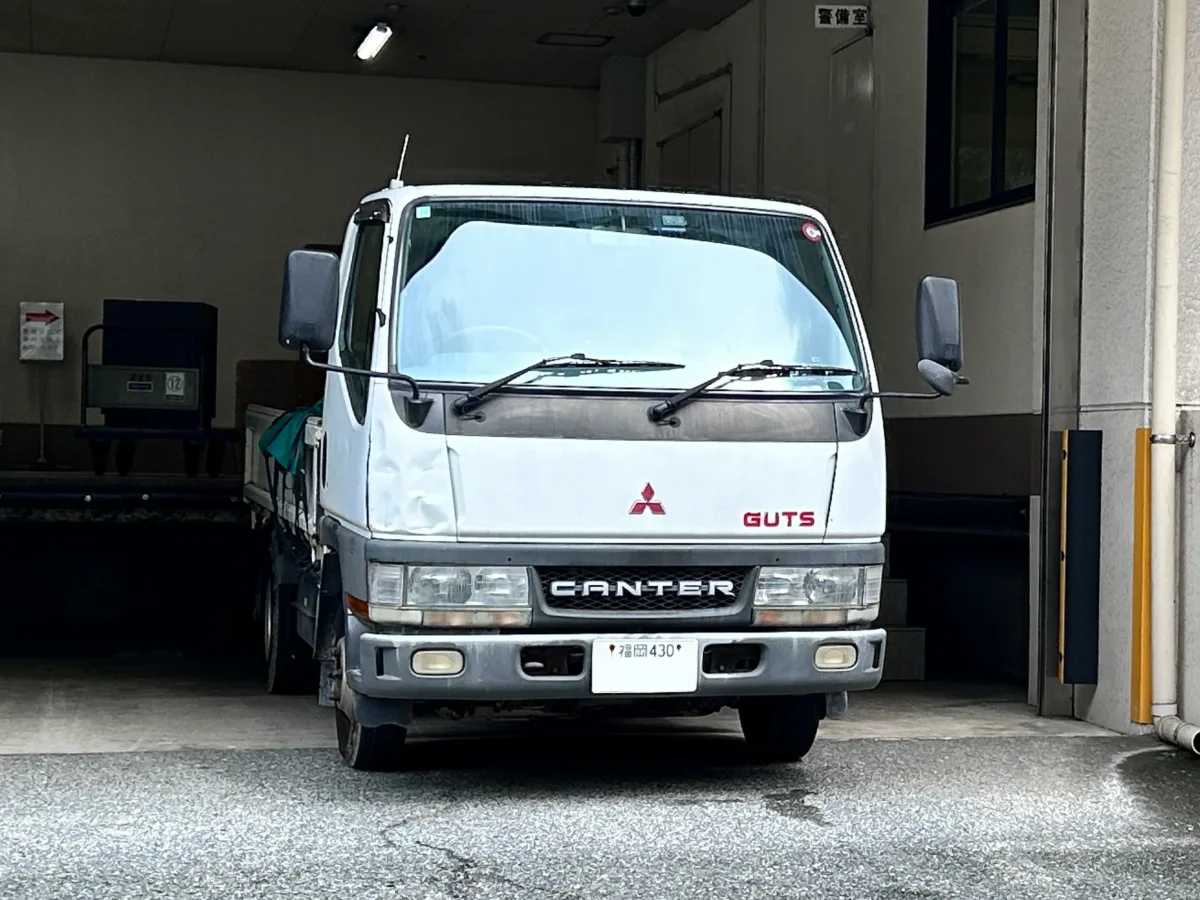
Mitsubishi Fuso Canter: generations, engines and what to check
The Mitsubishi Fuso Canter is a light-duty truck that has been in production since 1963 and is widely used for urban deliveries, municipal services, and construction. We look at how the Canter generations differ, what cabins and engines are available, and what to check when buying a used vehicle.






Canter in brief
The Canter occupies the niche of light and medium-duty trucks: these are typically 3.5–8.5 tonne gross weight vehicles that can be found with a flatbed, van, refrigerated, tipper, crane, or special bodies. Smaller versions often can be driven with a B category license if the gross weight does not exceed 3.5 tonnes.
The Canter is valued for its compact dimensions, good manoeuvrability, and simple construction. In addition to diesel versions, the latest generations also include the electric 'eCanter'.
Generations — what sets them apart
Earlier Canter generations, which make up the majority of used vehicles, are known for their simple mechanics, sturdy frame, and relatively long-lasting engines. However, many of them are now quite old, so the main concerns are body corrosion, frame, and suspension condition.
From around 2010, Canters destined for the European market received more modern Euro 5 and Euro 6 engines, a more comfortable cabin, and an automated transmission. These vehicles are suitable for cities with low-emission zones, but their exhaust systems are more expensive to repair.
Separately, it's worth mentioning the 4x4 versions, which are popular in municipal and forestry work, and the 'eCanter', whose value greatly depends on the condition of the batteries.
Engines and Gearboxes
In newer Canters, you'll often find a roughly 3-litre four-cylinder turbodiesel, with power ranging from about 110 to 175 hp. Heavier versions use a roughly 5-litre four-cylinder engine.
Gearboxes come in manual or the automated 'Duonic' with two clutches. The latter is more convenient in the city, but when buying, check if it shifts smoothly and hasn't had clutch or control unit repairs.
In older models, engine options are wider, so before buying, check the specific engine code and Euro class in the documents.
What to check when buying a used Canter
First, inspect the frame and cabin seams—corrosion is a common issue in Canters, especially those that have worked extensively in winter. Check if the frame hasn't been welded or otherwise repaired.
In newer Euro 5/6 models, assess the condition of the diesel particulate filter (DPF) and AdBlue system: warning lights or constant regeneration signs may indicate an expensive repair. Test the clutch and gearbox, especially the 'Duonic'.
Evaluate the body separately: check the hydraulic tailgate, tailgate mechanism, or refrigerator unit. Inspect the bed and toolboxes according to the service history, and in the documents, check the gross weight and permitted category.


Cabins and Trims
Names and equipment vary by generation and market; we list the most commonly found Canter trims.
Siauroji kabina
Common in earlier generationsCompact cabin for city delivery.
- 2–3 seating positions
- Nimble handling in tight city streets
- Simpler interior trim
Plačioji kabina
More common in later generationsRoomier cabin with more comfortable seats
- More space at shoulder level
- Often comes with automatic air conditioning
- More comfortable driver's seat
Dviguba kabina
All generationsCabin with a second row of seats for the crew
- Two rows of seats
- Common in municipal and construction fleets
- Shorter body
Canter 4x4
Separate variantsFour-wheel drive version for tougher conditions
- Greater ground clearance
- Often — municipal or forestry workhorses
- More expensive to maintain than 4x2
eCanter
Latest generationElectric version for urban delivery
- No diesel engine
- Value depends on battery condition
- Suitable for low-emission zones
Canter variants compared
| Siaura kabina | Plačioji kabina | Dviguba kabina | 4x4 | |
|---|---|---|---|---|
| Who it's for | Urban delivery | Daily work | Crews with tools | For tougher conditions |
| Space | 2–3 | 2–3 | Two rows of seats | Mostly 2–3 |
| Most common body type | Pickup, van | Van, refrigerated | Pickup, special | Tipper, special |
| Price in the used market (relatively) | € | €€ | €€ | €€€ |
For urban deliveries, the best bet is usually a newer Canter with a wider cab and suitable body. The 4x4 version is worth considering only if you really need to go off-road, as maintenance is more expensive.
Pros
- Compact dimensions and good manoeuvrability
- Simple, reliable construction
- Wide range of body options
- Newer models come with Euro 5/6 and automated gearbox
Cons
- Older cars are often damaged by corrosion
- Repairing Euro 5/6 emission systems can be expensive
- The condition of the cab and additional equipment can vary greatly
Frequently asked questions
Can a Canter be driven with a B category licence?
Yes, but only when the maximum permitted gross weight of the specific vehicle does not exceed 3.5 t. Heavier versions require a C1 or C category licence, so check the exact weight in the registration documents.
Which gearbox is better – manual or “Duonic”?
The manual is simpler and cheaper to repair, while the “Duonic” is more convenient in the city and reduces driver fatigue. When buying a car with “Duonic”, make sure to test drive it and ask about clutch repairs.
Is it worth buying an electric eCanter?
This could be a smart choice for city routes, but the value of a used vehicle is determined by the condition of the batteries. Before purchasing, ask for a diagnostic report and check the remaining warranty.
Updated 2026-10-21 · Trim levels and equipment vary by market and model year — check the equipment of the specific car. · Translated automatically


