 English
 Lietuvių
 Latviešu
 Eesti
 Polski
 Русский
 Українська
 Deutsch
 Nederlands
 Čeština
 Slovenčina
 Svenska
 Norsk
 Dansk
 Suomi


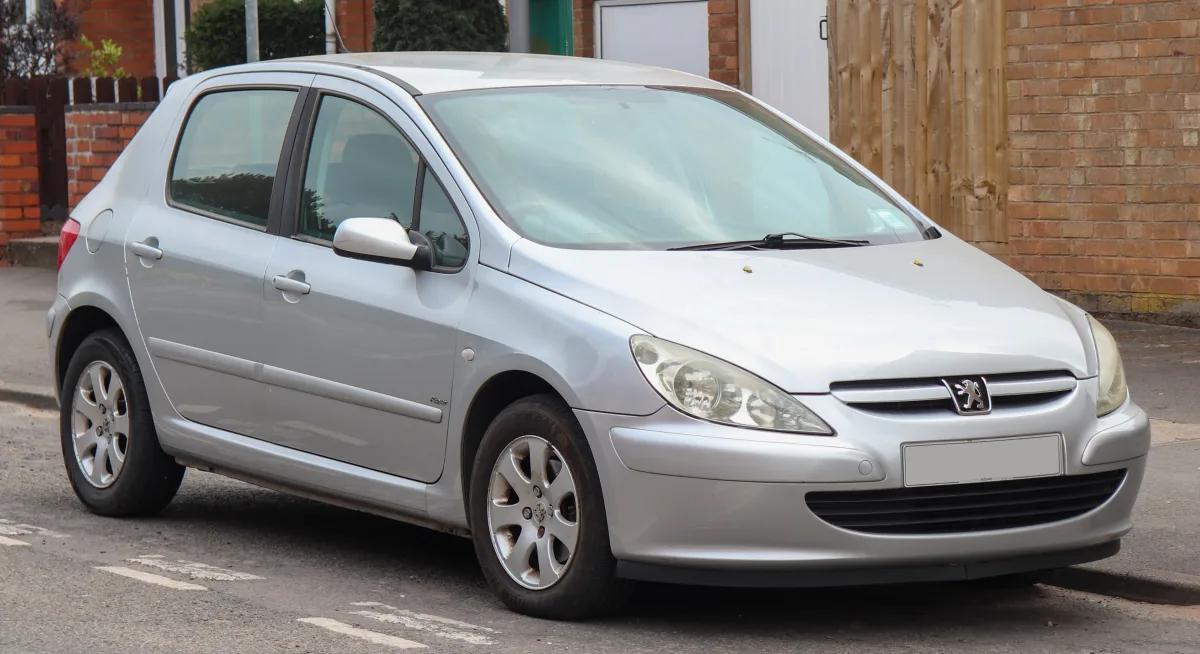
Peugeot 307: bodies, engines and trims
The Peugeot 307 is a compact car produced between 2001 and 2009 as a hatchback, SW estate and CC convertible. In this article, we look at the bodies, engines, trims and what to check when buying a used 307.






307 in brief
The 307 replaced the 306 and was significantly roomier, taller and more modern. In 2002, it was named European Car of the Year. It features a large glass area, good visibility and a comfortable interior.
In the used market, the 307 is often seen as a family car that combines space, comfort and an affordable price. Due to its age, the condition of the cars varies greatly, so it's important to thoroughly check the mechanics.
Which version to choose
Produced in one generation, but in 2005 the car was refreshed — the front, headlights and some trim details were changed. Refreshed cars are usually a bit more refined, but they cost more.
For families, the SW estate with a larger boot and often a glass roof is suitable. The CC convertible with a folding hardtop is geared towards comfort, while the standard hatchback is for everyday use.
Engines and gearboxes
Petrol engines — 1.4, 1.6 and 2.0 litres (power from around 75 to 140 hp). Diesels — 1.4 HDi and 1.6 HDi and 2.0 HDi with varying power outputs (around 90–136 hp).
Gearboxes — 5 or 6-speed manual or 4-speed automatic. Automatic boxes need to be tested, as repairs can be expensive.
What to check when buying a used 307
Electronics may fail: windows, central locking, air conditioning, lighting. Test all functions, check the instrument panel indicators and error messages. In HDi diesel engines, pay attention to injectors, the turbo, and the particulate filter.
Test the automatic transmission smoothly while driving and moving off. Listen to the rear axle and suspension, check for rust-related creaks.


Trim levels
Names and equipment vary by market and year; we list the most common trims found in Europe.
XR
all periodsBase trim.
- Often — electric front windows
- Often — central locking
- Simpler alloy wheels
XT
all periodsMore comfortable version.
- Often — air conditioning
- Often — lightweight alloy wheels
- Often — more interior trim
XS
all periodsSportier, better-equipped version.
- Often — climate control
- Often — lightweight alloy wheels
- Often — sport trim
Sport
all periodsSporty appearance version.
- Sporty accents and alloys
- Often — sport seats
- Often — more powerful engine
Trim comparison
| XR | XT | XS | Sport | |
|---|---|---|---|---|
| Who it's for | For everyday use | For families and comfort | For comfort and gadget lovers | Sporty looks |
| Alloys (usually) | 14–15 inch | 15–16 inch | 16 inch | 16–17 col. |
| Air conditioning | Not always | Often | Climate control | Climate control |
| Engine | 1.4–1.6, 1.4 HDi | 1.4–2.0, 1.6 HDi | 1.6–2.0, 2.0 HDi | 2.0, 2.0 HDi |
| Price in the used market (relatively) | € | € | €€ | €€ |
Most buyers will be happy with an XT or XS with a 1.6 or 2.0 engine. The sporty option is for those who prioritise looks and sporty driving.
Pros
- Spacious and comfortable interior
- Comfortable to drive with good visibility
- Wide range of body styles and engines
- Large selection and affordable prices
Cons
- Minor electronic issues can occur
- Older cars may have rust
- Automatic gearbox repairs can be expensive
Frequently asked questions
Which 307 engine is the best?
Most will be happy with the 1.6 petrol or 1.6 HDi diesel. The 2.0 HDi is more powerful, but it requires more careful maintenance.
Is it worth buying a 307 SW?
Yes, if you need more boot space or room for the family. The SW often comes with a glass roof and is practical for long journeys.
Is the 307 reliable?
Generally, yes, if it's well-maintained. Due to its age and electronics, it's important to check all functions and service history.
Updated 2026-10-17 · Trim levels and equipment vary by market and model year — check the equipment of the specific car. · Translated automatically


