 English
 Lietuvių
 Latviešu
 Eesti
 Polski
 Русский
 Українська
 Deutsch
 Nederlands
 Čeština
 Slovenčina
 Svenska
 Norsk
 Dansk
 Suomi


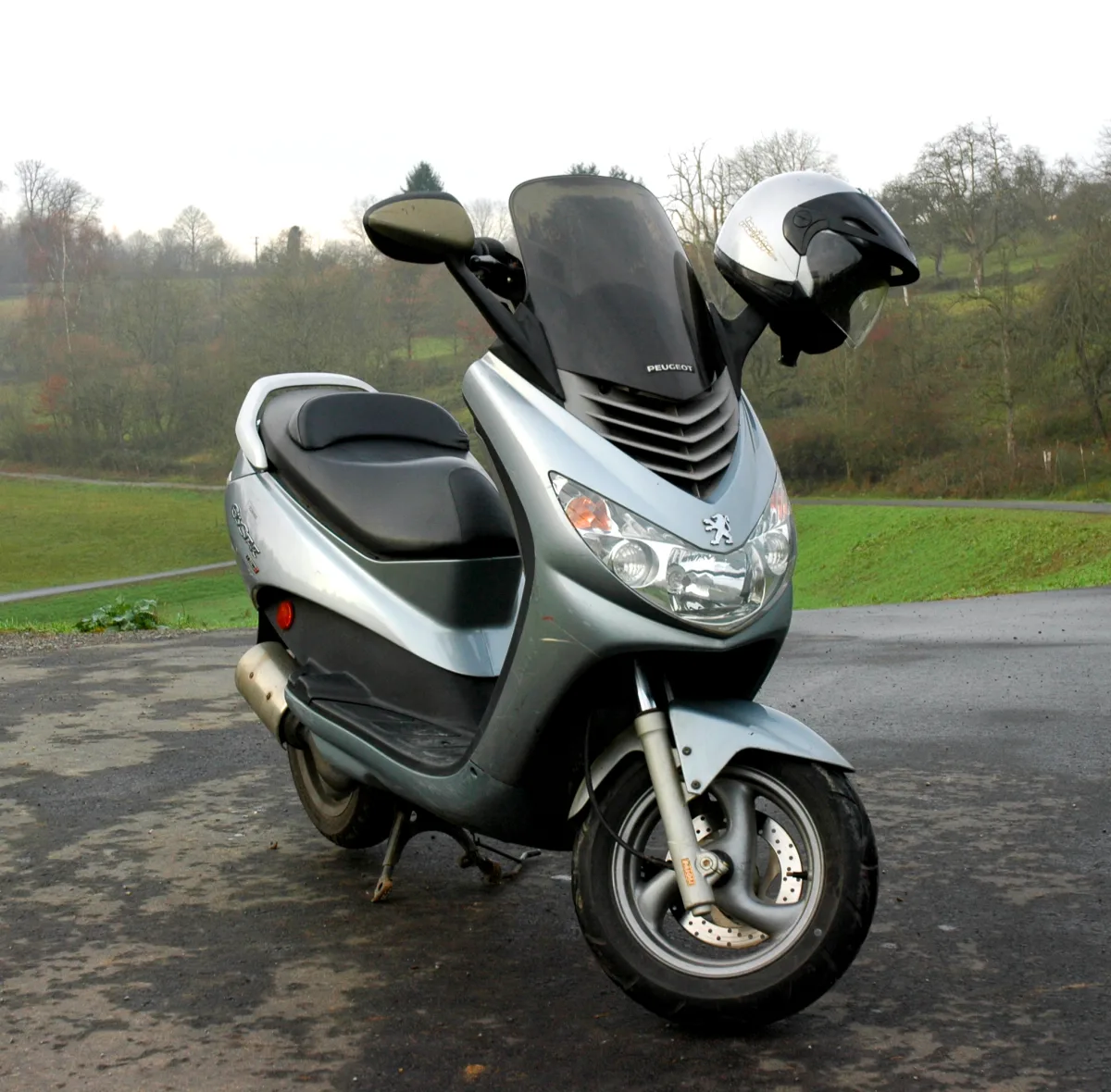
Peugeot Elystar: city runabout, versions and what to check used
Peugeot Elystar — the French manufacturer's city runabout, produced from 2002–2012. We look at how the versions differ, which engines are used, and what to check when buying used.






Elystar in brief
Elystar — a mid-sized city runabout, geared towards comfort and practicality. It offers a comfortable seat, under-seat storage, and smooth, steady driving.
It's an affordable choice for daily city driving, suitable for both young drivers and older folks looking for simple, reliable transport.
Versions — how they differ
The main Elystar versions are 50 cm³ and 125 cm³. The 50 cm³ version is for the AM category, and the 125 cm³ is for the A1 category; they differ in engine capacity, power, and suitability for longer distances.
It's worth verifying the specific year versions and engine specs according to the technical logbook.
Engine and transmission
Elystar engines are single-cylinder, 50 cm³ (two-stroke or four-stroke, depending on the version) and 125 cm³ four-stroke. They are simple and don't require complex maintenance.
The automatic transmission is a CVT, so there's no need to shift gears. The CVT belt and pulleys need to be replaced periodically.
What to check when buying a used Elystar
Check if the engine starts easily, if there's no smoke, and if the CVT operates smoothly without juddering. Ask when the engine oil, belt, and pulleys were last changed.
Check the plastics, locking system, brakes, tyres, suspension and electrics. Many of these have been left outdoors, so check for corrosion and signs of damp.


Trim levels
Trim levels vary by market and year; we provide general descriptions of the variants.
Elystar 50
2002–2012 model yearsSmaller-capacity version.
- Often — AM category
- Light and economical
- Often — two-stroke or four-stroke engine
Elystar 125
2002–2012 model yearsLarger-capacity version.
- Often — A1 category
- Suitable for out-of-town driving
- Four-stroke engine
Elystar su aksesuarais
general descriptionOften comes with a rear boot or other accessories.
- Often — rear boot
- Often — the windscreen
- Check the paperwork
Compare variants
| Elystar 50 | Elystar 125 | Su aksesuarais | |
|---|---|---|---|
| Who it's for | For short city trips | For city and occasional longer drives | For daily driving |
| Engine | 50 cm³ | 125 cm³ | By version |
| Category | AM | A1 | By version |
| Price in the used market (relatively) | € | €€ | €€ |
50 cm³ is fine for city use, but for those venturing beyond, 125 cm³ is more suitable. When buying, check the condition of the variator and overall state.
Pros
- Frugal and economical
- Comfortable and spacious
- Simple design
- Easy to handle in the city
Cons
- Older models may have a worn-out variator
- The 50 cm³ version isn't speedy
- Some models have been left standing outside for extended periods
Frequently asked questions
What category is required for an Elystar?
The 50 cm³ version needs an AM category, while the 125 cm³ version requires an A1. Check the specific requirements according to current Lithuanian laws.
What is commonly replaced during Elystar maintenance?
Engine oil, variator belt and pulleys, brake pads, spark plug, and air filter.
Is the Elystar suitable for daily use?
Yes — it's simple, practical and economical, especially in the city.
Updated 2026-10-21 · Trim levels and equipment vary by market and model year — check the equipment of the specific car. · Translated automatically


