 English
 Lietuvių
 Latviešu
 Eesti
 Polski
 Русский
 Українська
 Deutsch
 Nederlands
 Čeština
 Slovenčina
 Svenska
 Norsk
 Dansk
 Suomi


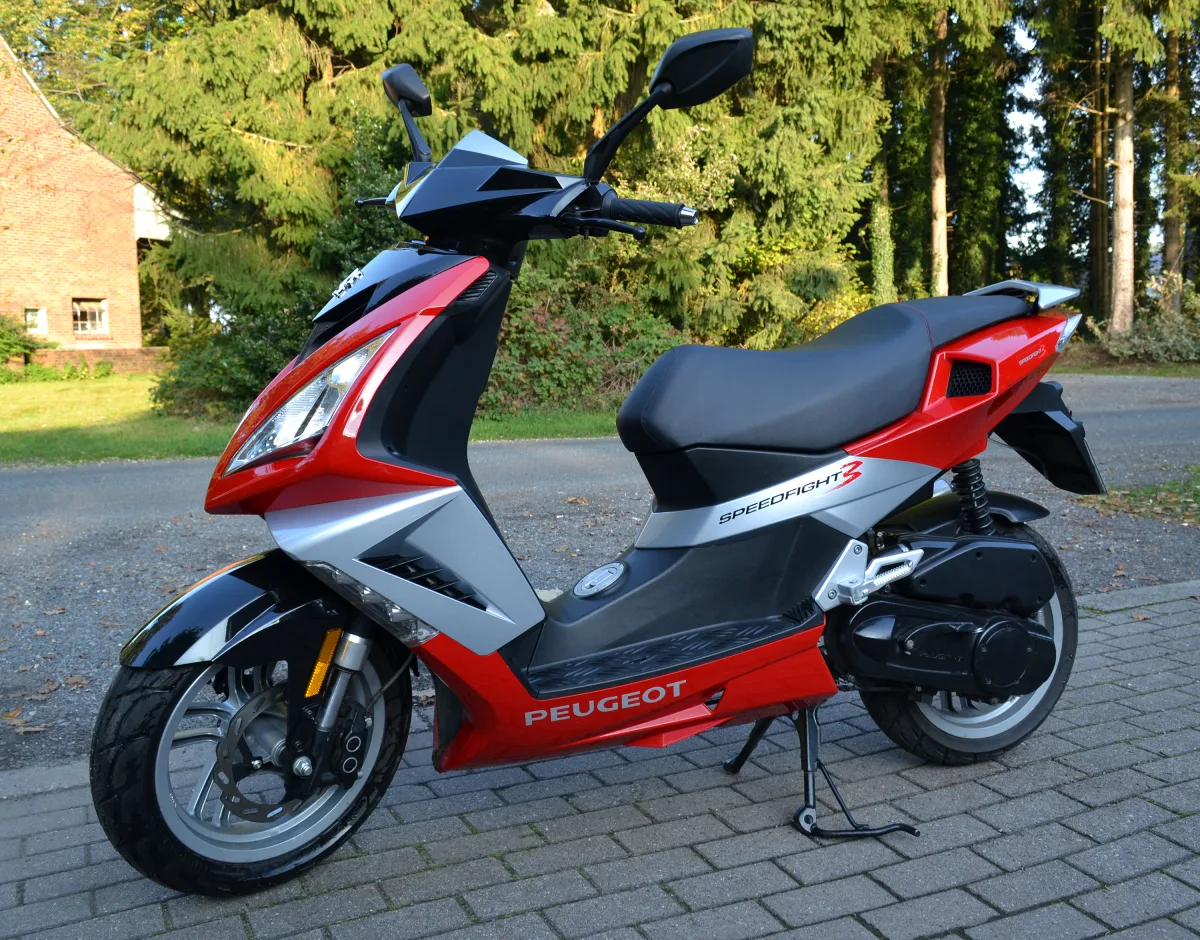
Peugeot Speedfight: generations, 50 and 100 cm³ engines and what to check
The Peugeot Speedfight is a sporty, compact scooter that has been in production since 1997. We look at the generations, engines, and what to check when buying a used Speedfight.






Speedfight in brief
The Speedfight gained popularity as a sporty and affordable scooter for young riders. It boasts an aggressive look, light weight, and strong acceleration from a standstill, making it lively in urban traffic.
Due to its popularity, the Speedfight is often modified: sporty engine kits, exhaust systems, and wheels are common. When buying used, it's important to determine what has been changed.
Generations — what sets them apart
The first generation (1997) features simpler technology and a distinctive, bold design. The second generation (Speedfight 2) became popular among young riders and is one of the most common used models on the market.
The third and fourth generations received a more modern design, and later versions introduced four-stroke engines. The Speedfight 4 also offers higher-power variants.
Engines and transmission
Most commonly, it's a 50 cm³ two-stroke engine, liquid-cooled, designed for the AM category. There are also 100 cm³ and 125 cm³ variants, as well as four-stroke 50 cm³ versions.
The transmission is automatic (CVT), making it easy to handle. Brakes are disc at the front and either disc or drum at the rear, depending on the version.
What to check when buying a used Speedfight
Firstly, check if the engine hasn't been 'tuned'. Listen for any unusual noises and ensure the engine starts without prolonged cranking and doesn't smoke excessively.
Check the engine cooling, CVT transmission, and belt, as well as the brakes and tyres. Inspect the plastic bodywork and steering for damage.
Many Speedfights have modified parts: sport cylinders, exhausts, and more. Ensure they match the documentation and that the scooter doesn't exceed the speed limit for its category.


Trim levels and versions
Names and equipment vary by market and year; below are the main versions.
Speedfight 50
All generationsThe most common version for young drivers.
- 50 cm³ engine
- Speed limited according to AM category
- Often — two-stroke
Speedfight 100 / 125
Separate versionsMore powerful versions for broader use.
- 100 or 125 cm³ engine
- More power
- Appropriate category required
Comparison of Speedfight versions
| Speedfight 50 | Speedfight 100 / 125 | |
|---|---|---|
| Who it suits | For new drivers and city use | For those who need more power |
| Engine | 50 cm³ | 100 or 125 cm³ |
| Price in the used market (relatively) | Budget-friendly | Mid-range |
The Speedfight 50 is a cheap and sporty choice for new drivers. A more powerful version is worth considering if you need more oomph and the appropriate category.
Pros
- Sporty looks
- Light and agile in the city
- Not flashy
- Simple tech and plenty of parts
Cons
- Often modified and aggressively used
- A two-stroke engine requires maintenance
- Limited comfort on longer journeys
Frequently asked questions
What category is needed for a Speedfight 50?
Most often, the AM category, but rules vary by country. Check the exact requirements with your local authority.
Is the Speedfight often tuned?
Yes, many have sport parts. Before buying, find out what's been changed and if it matches the documents and category.
Is the Speedfight suitable for daily driving?
For short urban trips, yes. It's not designed for longer journeys due to its lack of comfort and power.
Updated 2026-10-21 · Trim levels and equipment vary by market and model year — check the equipment of the specific car. · Translated automatically


