 English
 Lietuvių
 Latviešu
 Eesti
 Polski
 Русский
 Українська
 Deutsch
 Nederlands
 Čeština
 Slovenčina
 Svenska
 Norsk
 Dansk
 Suomi


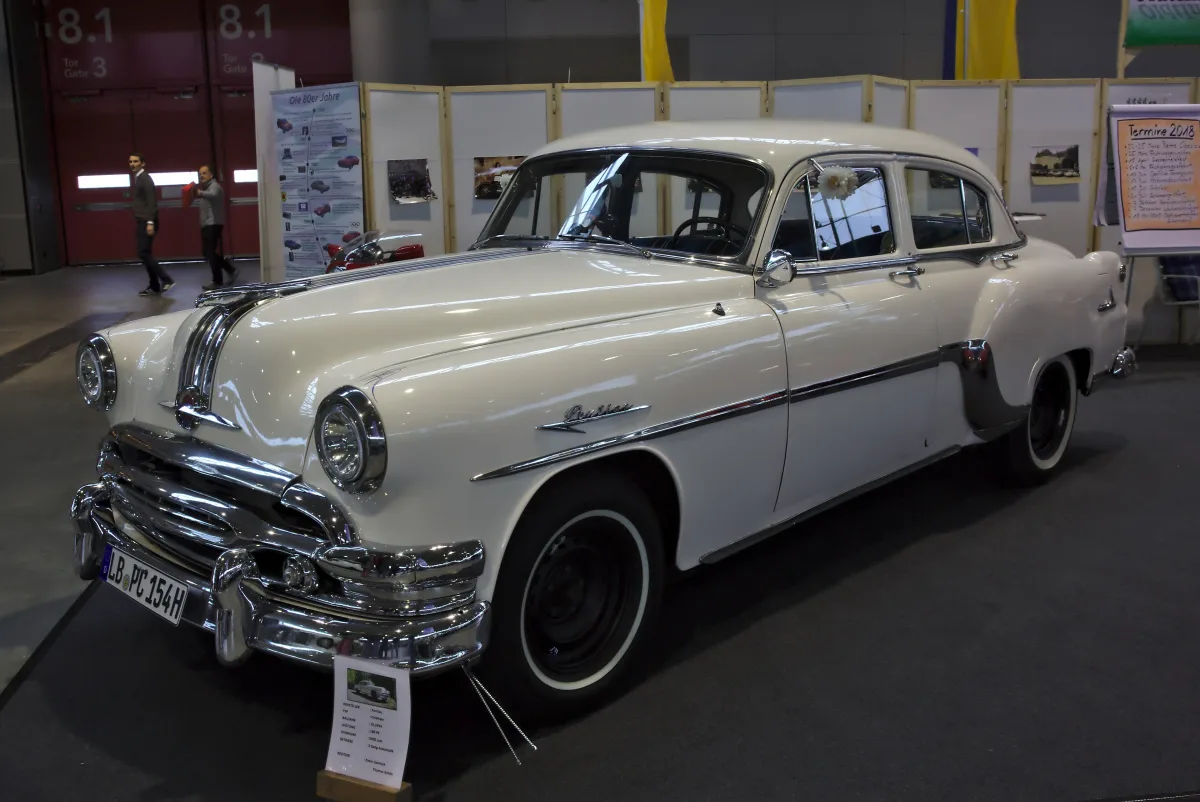
Pontiac Chieftain: a classic American car
The Pontiac Chieftain was the flagship Pontiac model, produced around 1949–1958. In this article, we look at how its generations differ, which engines were fitted, and what to check if you're considering buying this classic car in Lithuania.






Chieftain in brief
The Chieftain was introduced in 1949 as the first completely new post-war Pontiac model. It featured rounder, more modern body contours and became one of the most popular Pontiac cars of the time.
A variety of body styles were offered: sedan, coupe, convertible, and station wagon. Today, the Chieftain is a classic enthusiast's choice and in Lithuania, it only appears as a private import from the USA.
Generations — what sets them apart
Early Chieftains (1949–1954) have a distinctive Pontiac design with long chromed strips on the hood. They were still equipped with inline engines.
In 1955, Pontiac introduced its first V8 engine, and the model received a new, more modern body. Later Chieftains (up to 1958) were longer, wider, and had more chrome.
Engines and transmissions
Early Chieftains were fitted with inline six or eight-cylinder engines. From 1955, the V8 became the main engine, with its capacity increasing over the years.
The transmission was either a manual or automatic Hydra-Matic. The drive is to the rear wheels. Check the exact power and engine according to the specific car's documents.
What to check when buying a Chieftain
The most important thing is the condition of the body and frame. Rust on sills, floors, wings and boot floor is a common issue, and restoring chromed parts is expensive. Check the interior trim as well.
Test the engine and gearbox — there should be no leaks, hesitation or excessive smoking. Check the brakes and steering mechanism, as parts on older cars can wear out.
Parts need to be sourced through classic Pontiac clubs and overseas suppliers. Also, check if such a car can be registered in Lithuania.


Trim levels
Names and equipment vary by market and year; we list the versions most commonly found in Europe.
Chieftain
1949–1954 m.Early model with an inline engine.
- Inline six or eight-cylinder engine
- Distinctive chrome stripes on the bonnet
- Often — manual or Hydra-Matic transmission
Chieftain
1955–1958 m.More modern model with a V8 engine.
- V8 engine
- Newer, wider body
- More chrome details
Comparing generations
| 1949–1954 m. | 1955–1958 m. | |
|---|---|---|
| Who it suits | For enthusiasts of early classics | For fans of more modern classics |
| Engine | Inline six or eight cylinders | V8 |
| Body | Earlier, more rounded | Wider, more chrome |
| Price in the used market (relatively) | €€ | €€€ |
Most collectors find the 1955–1958 version with the V8 more interesting, but the earlier Chieftain is cheaper and has a distinctive design.
Pros
- A striking classic look
- Plenty of room for passengers and luggage
- Simple mechanics
- A collector's dream classic model
Cons
- High fuel consumption
- Finding specific parts can be tricky
- Rust and body condition can lead to significant costs
Frequently asked questions
Is the Pontiac Chieftain suitable for daily use?
Better suited to weekend drives and shows. It lacks modern safety features, and fuel costs are high.
How does the Chieftain differ from the Star Chief?
The Star Chief was a higher-end model with more luxury and comfort, while the Chieftain was simpler and more affordable.
Where to source Chieftain parts?
Mostly from the USA, through Pontiac classic car clubs and specialist suppliers.
Updated 2026-10-21 · Trim levels and equipment vary by market and model year — check the equipment of the specific car. · Translated automatically


