 English
 Lietuvių
 Latviešu
 Eesti
 Polski
 Русский
 Українська
 Deutsch
 Nederlands
 Čeština
 Slovenčina
 Svenska
 Norsk
 Dansk
 Suomi


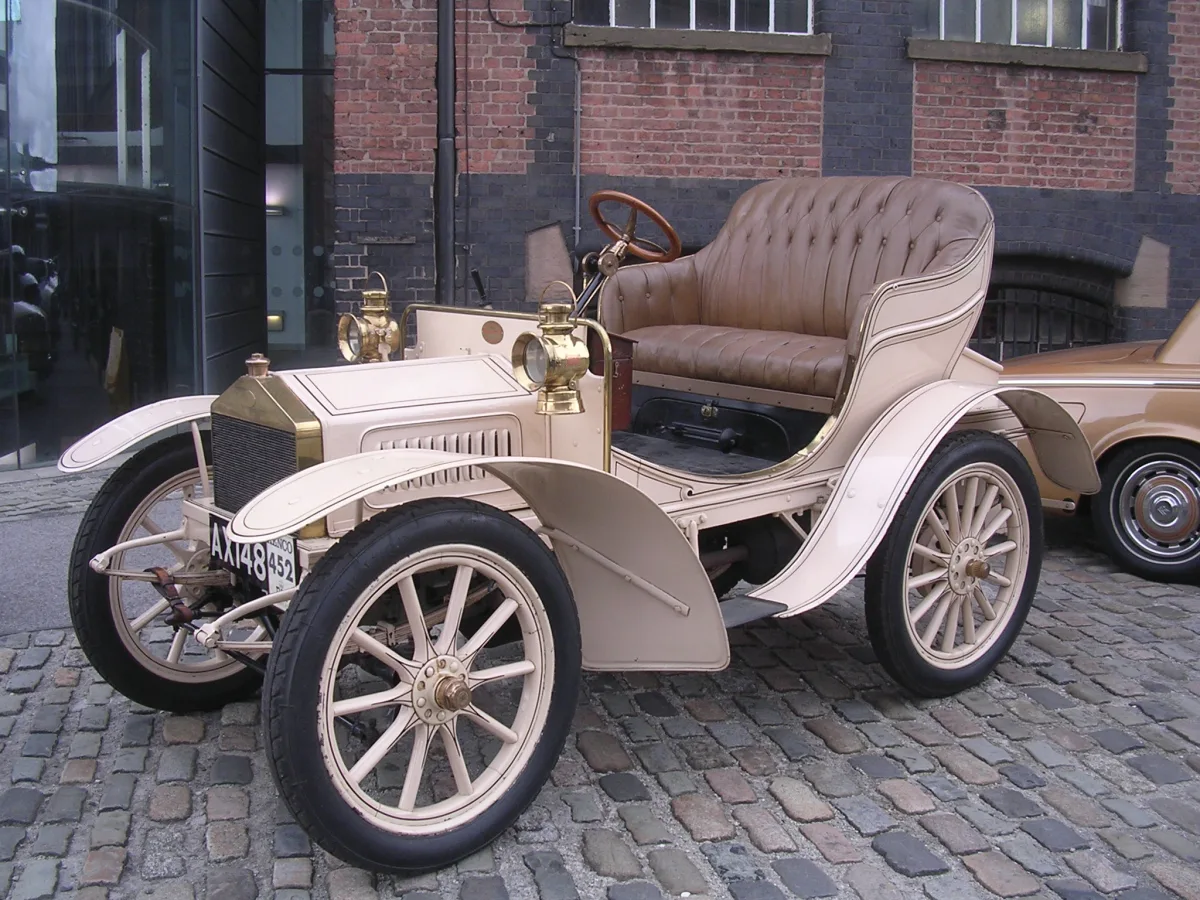
Rolls-Royce 10 hp: the first Rolls-Royce car and what you need to know
The Rolls-Royce 10 hp — a two-cylinder car that debuted in 1904 and is considered the first model sold under the Rolls-Royce name. In this article, we briefly review its history, technology, and why this model is not just a used car today, but a historic rarity.






10 hp in brief
The Rolls-Royce 10 hp was created by engineer Henry Royce, and sold by Charles Rolls. This agreement gave birth to the Rolls-Royce name. The car was produced from 1904 to 1906 and was the first series model of the brand.
This is an early-era car: open-top, two-seater, with solid tyres, headlamps, and brass details. For its time, this was cutting-edge and well-engineered technology.
Why this isn't a typical used car
The 10 hp was produced in very limited numbers, with only a few examples surviving. Therefore, it rarely appears in the regular used car market: today, it's a museum exhibit or a highly prized collector's item.
If you see a car advertised as a 10 hp, the most important thing is to verify its provenance. A significant portion of such offers could be replicas or later restorations, so proper documentation and expert appraisal are essential.
Engine and technology
The 10 hp features a two-cylinder petrol engine with an approximate capacity of 1.8 litres. Power is transmitted to the rear wheels via a manual gearbox — principles of construction that were also adopted by later Rolls-Royce models.
At the time, the car stood out for its quiet and smooth operation, although by today's standards it was slow and basic: no enclosed body, no power steering or electronic aids.
What to check if you're considering buying one
Firstly — authenticity: factory records, chassis number, documented history, and previous owners. Without this information, it's impossible to assess the car's value and authenticity.
Then — condition: engine, wooden and metal body parts, wheels, and brakes. These vintage cars require special care, and parts are often made to order.
Before signing any deal, we recommend enlisting an independent classic car specialist to check if the car can be exported or registered under heritage car rules.


Trim levels
Names and equipment vary by market and year; we list the versions most commonly found in Europe.
10 hp
1904–1906The sole version of this model was a two-cylinder open car.
- Two-cylinder engine, around 1.8 litres
- Open body for two passengers
- Brass details and spoked wheels
Comparing originals and replicas
| Originalus automobilis | Restauruotas originalas | Replika | |
|---|---|---|---|
| Who it's for | A museum or a collection | For the collector, we present | For enthusiasts and fun |
| The most important thing to check | Provenance and documents | How many original parts remain | How well it’s been restored to original spec |
| Price in the used market (relatively) | €€€ | €€€ | €€ |
A genuine 10 hp is a historic gem, and when buying, the most important thing is the paperwork and an independent appraisal. If you’re just after the vintage car experience, a high-quality replica might be more suitable.
Pros
- The first series-production Rolls-Royce
- A significant piece of history
- A distinctive, recognisable appearance
- Suitable for a collection and shows
Cons
- Very limited production, hardly any on offer
- Not your everyday car
- Maintenance and parts are very expensive
Frequently asked questions
How many years was the Rolls-Royce 10 hp produced?
Produced between 1904–1906, making it one of the earliest Rolls-Royce models.
Can you buy a 10 hp as a used car?
Practically no: there are very few original cars left, and they usually belong to museums or collectors. Offers need to be evaluated very carefully.
Can you use a 10 hp daily in Lithuania?
No — it's an open car from an early era, suitable for shows, rally events, and collections.
Updated 2026-10-19 · Trim levels and equipment vary by market and model year — check the equipment of the specific car. · Translated automatically


