 English
 Lietuvių
 Latviešu
 Eesti
 Polski
 Русский
 Українська
 Deutsch
 Nederlands
 Čeština
 Slovenčina
 Svenska
 Norsk
 Dansk
 Suomi


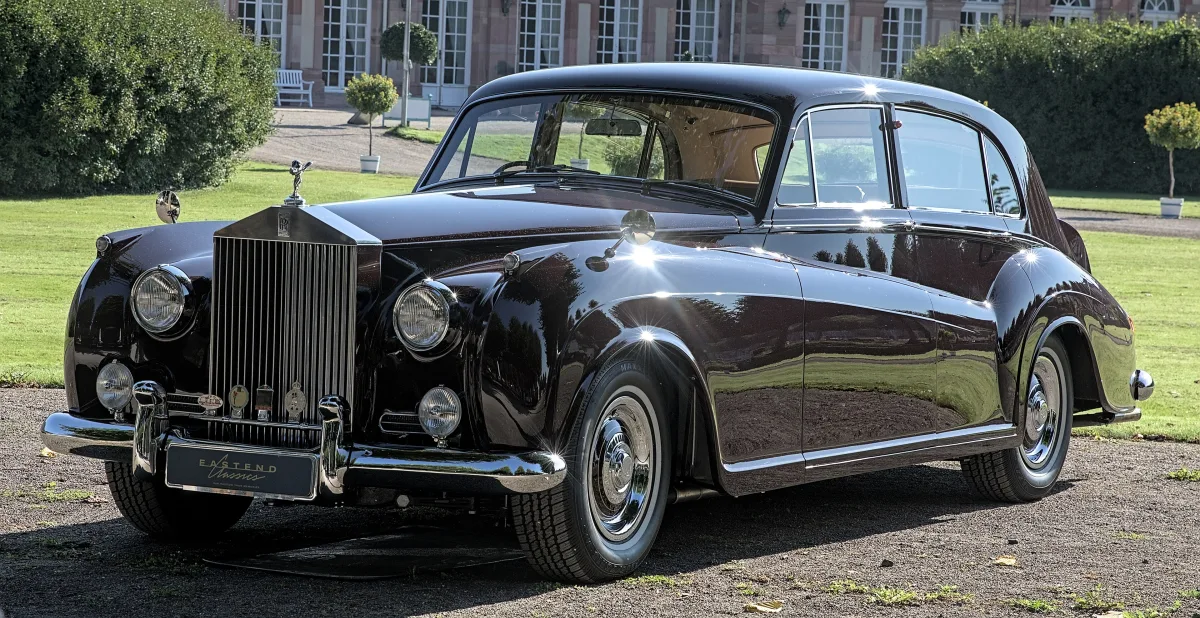
Rolls-Royce Phantom V: 1959–1968, the grand luxury limousine and what the collector needs to know
The Rolls-Royce Phantom V is the grand luxury limousine produced from 1959 to 1968, designed for governments, dignitaries, and the ultra-wealthy. In this article, we delve into its history, body styles, and what you need to know if you're considering buying one of these iconic cars.






The Phantom V in brief
The Phantom V was the largest Rolls-Royce of its time—a long, tall, formal car with a spacious rear cabin. It was used in state functions and official ceremonies, and due to its prestige, it became one of the most iconic models in Rolls-Royce history.
Around eight hundred units were produced, making it a highly rare collector's item today.
Which version to choose
The Phantom V chassis was fitted with various bodies, crafted by different coachbuilders. The most commonly mentioned are the Park Ward limousines, James Young bodies, and the rarer landaulette variants.
For the buyer, the body type, originality, and history are key. Cars with a known history or unique specifications command much higher prices.
Engines and transmissions
The Phantom V features an approximately 6.2-litre V8 engine, with power output officially unspecified. The engine is renowned for its smooth operation and high torque.
The transmission is automatic, with rear-wheel drive. Due to the car's size and weight, driving and parking require experience.
What to check when buying a Phantom V
First and foremost — the body condition and corrosion: check the sills, floors, wheel arches, roof, and chassis condition. Many parts are unique, so any bodywork can be very expensive.
Also, check the engine, automatic transmission, hydraulic brake system, interior wood and leather trim, and electrical equipment. Before buying, hire a Rolls-Royce classic specialist and delve into the car's history.


Trim levels
Names and equipment vary by market and year; we list the versions most commonly found in Europe.
Park Ward Touring Limousine
1959–1968The most commonly encountered limousine version.
- Approximately 6.2-litre V8 engine
- Automatic transmission
- Spacious rear cabin, often with a partition between driver and passengers
James Young kėbulai
1959–1968More bespoke bodies, often rarer.
- Approximately 6.2-litre V8 engine
- Automatic transmission
- Often — distinctive body shape
Landaulette
1959–1968Limousine with a lowered rear roof section.
- Approximately 6.2-litre V8 engine
- Automatic transmission
- Lowered rear roof section
Comparison of Phantom V versions
| Park Ward limuzinas | James Young | Landaulette | |
|---|---|---|---|
| Who it suits | For those seeking a classic formal sedan | For collectors looking for a rarer body style | For enthusiasts of special occasions |
| Engine | Approximately 6.2-litre V8 | Approximately 6.2-litre V8 | Approximately 6.2-litre V8 |
| Price in the used market (relatively) | €€€ | €€€ | €€€ |
The value of a Phantom V is determined by its body type, originality, and history. Expert inspection is essential before purchase.
Pros
- A prestigious, historic Rolls-Royce
- Very spacious and luxurious interior
- Smooth V8 and comfortable ride
- Extremely rare collector's car
Cons
- Very expensive and hard to find
- Expensive specialist maintenance
- Large size and weight — challenging to drive and store
Frequently asked questions
When was the Phantom V made?
1959–1968
What engine does the Phantom V have?
About a 6.2-litre V8 engine with an automatic gearbox.
Why is the Phantom V so rare?
It was produced in small numbers — around eight hundred cars — and was mainly intended for official or very wealthy buyers.
Updated 2026-10-21 · Trim levels and equipment vary by market and model year — check the equipment of the specific car. · Translated automatically


