 English
 Lietuvių
 Latviešu
 Eesti
 Polski
 Русский
 Українська
 Deutsch
 Nederlands
 Čeština
 Slovenčina
 Svenska
 Norsk
 Dansk
 Suomi


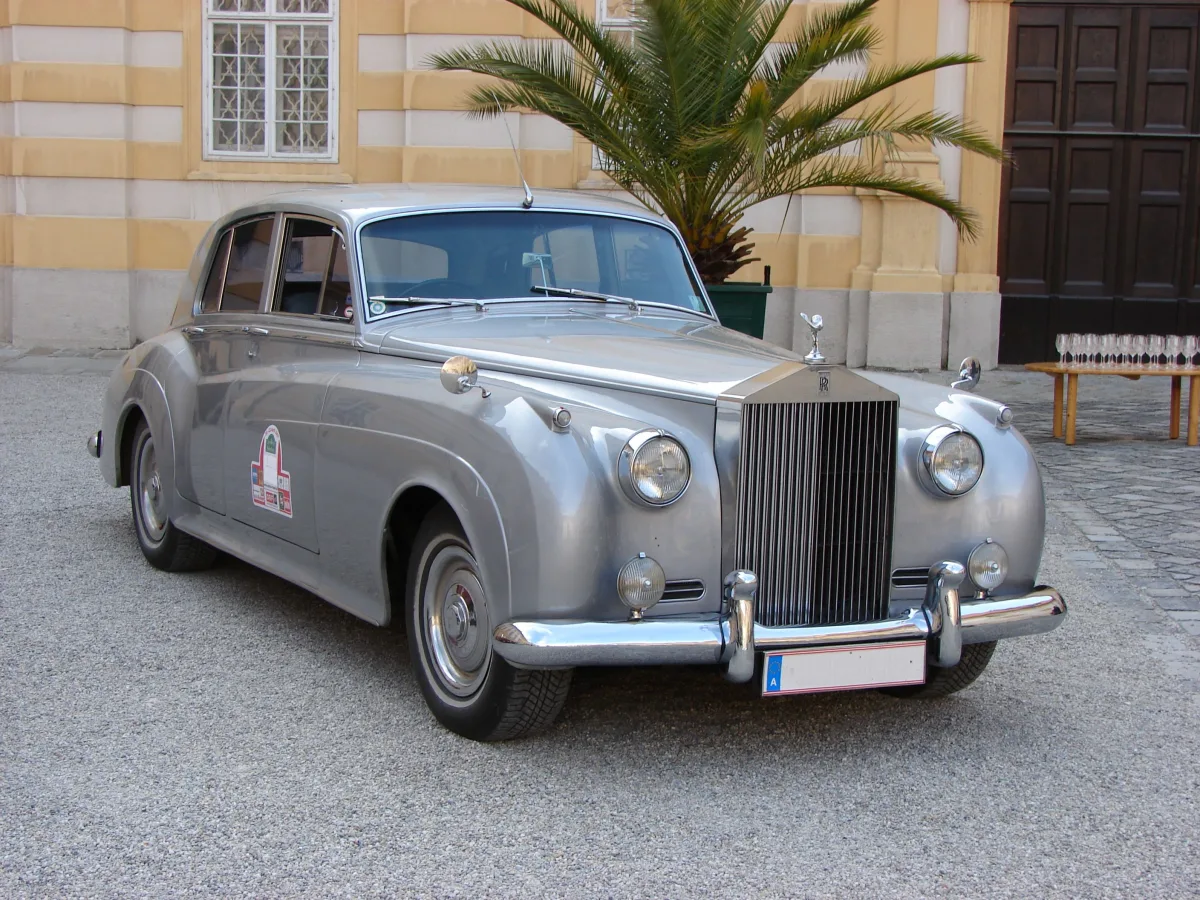
Rolls-Royce Silver Cloud: I, II and III series and what to know before buying
Rolls-Royce Silver Cloud — the luxurious limousine produced from 1955 to 1966, one of the most iconic post-war Rolls-Royce models. In this article, we review the three series, their engines, and what to check if you're considering buying such a classic car.






Silver Cloud in brief
The Silver Cloud replaced the Silver Dawn and became a very well-known post-war Rolls-Royce. Its sibling is the Bentley S series cars, which mainly differ in grilles and badges.
Most cars have the standard steel body, but there are also custom-built bodies (cabriolets, coupés) made by Mulliner Park Ward and other coachbuilders.
What sets the I, II and III series apart
The Silver Cloud I (1955–1959) has an inline six-cylinder engine (around 4.9 L). From 1957, a longer-wheelbase version was also offered.
The Silver Cloud II (1959–1962) received an aluminium V8 engine, with a capacity of around 6.2 L, and power steering. This is the first series that drives like a more modern car.
The Silver Cloud III (1962–1966) got an improved V8 engine and a redesigned front with four headlights. It is considered the final and most refined Cloud car.
Engine and transmission
The Silver Cloud I has an inline six-cylinder engine, while the II and III series have V8s. As is typical for Rolls-Royce, the manufacturer did not officially disclose power figures.
Most cars have an automatic transmission as standard. In the I series, the steering often lacks power assistance, making it heavier than in later series.
What to check when buying a used Silver Cloud
The most important thing is body and chassis corrosion: check the sills, wings, boot area and chassis mounting points. Repairs can be expensive, especially when talking about separately built bodies.
Check the brakes and power steering (in the II and III series), cooling system and oil leaks. Test the automatic gearbox — it should shift smoothly.
Verify the body's originality and history: Silver Cloud bodies are often restored, and the quality varies greatly. It's recommended to call in an independent specialist.


Trim levels
Names and equipment vary by market and year; we list the versions most commonly found in Europe.
Silver Cloud I
1955–1959The first series with an inline six-cylinder engine.
- Approximately 4.9-litre inline six-cylinder engine
- Classic looks with two headlights
- From 1957 — and the long-wheelbase version
Silver Cloud II
1959–1962The second series with a V8 engine.
- Aluminium V8 engine (approximately 6.2 litres)
- Power steering
- More power and comfort
Silver Cloud III
1962–1966The final series with an improved engine and a new front design.
- Improved V8 engine
- Four front headlights
- The most refined Cloud
Series comparison
| Cloud I | Cloud II | Cloud III | |
|---|---|---|---|
| Who it's for | For enthusiasts of early classics | The balance between classic charm and drivability | For collectors seeking the ultimate Cloud |
| Engine | Inline six-cylinder | V8 | V8 |
| Price in the used market (relatively) | €€ | €€ | €€€ |
Most buyers opt for the Silver Cloud II or III for their V8 engines and more comfortable ride, while early I models are chosen for their classic spirit. As always, value greatly depends on condition and bodywork.
Pros
- Classic post-war luxury looks
- Quiet and comfortable driving
- Aluminium V8 engine in the II and III series
- Collector's value
Cons
- Expensive maintenance and restoration
- Risk of corrosion
- Some tasks can only be performed by specialist mechanics
Frequently asked questions
How does the Silver Cloud II differ from the I?
The II series gained a V8 engine and hydraulic power steering, making it easier to drive and more powerful.
Which Cloud series is the best?
Often, the III series is considered the most refined, but the II series is also highly regarded. The choice depends on budget, aesthetics, and the specific condition of the car.
Is the Silver Cloud suitable for daily use?
May be suitable for occasional use, but due to its age and maintenance costs, it is often considered a collector's or weekend car.
Updated 2026-10-21 · Trim levels and equipment vary by market and model year — check the equipment of the specific car. · Translated automatically


