 English
 Lietuvių
 Latviešu
 Eesti
 Polski
 Русский
 Українська
 Deutsch
 Nederlands
 Čeština
 Slovenčina
 Svenska
 Norsk
 Dansk
 Suomi


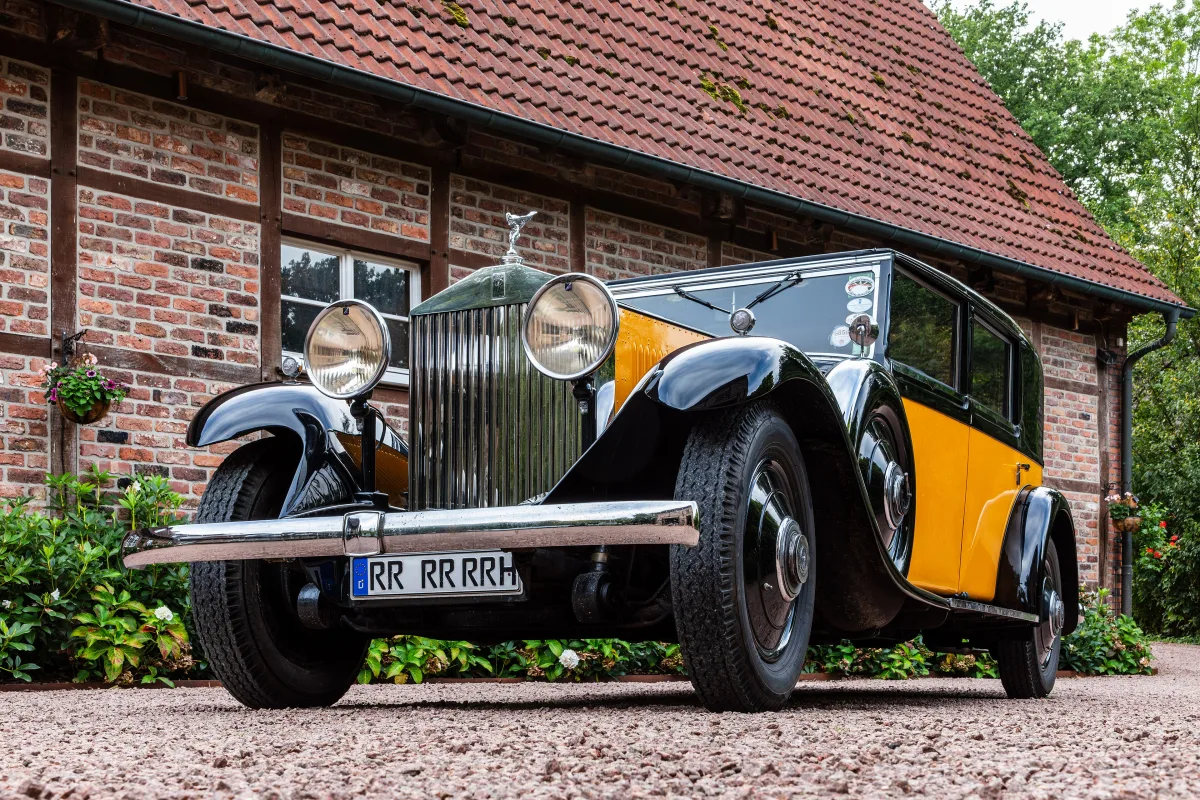
Rolls-Royce Phantom II: 1930s opulence and what to know about it
The Rolls-Royce Phantom II — a pre-war luxury car produced from 1929 to 1935 and replacing the Phantom I. It's a collectible model rarely found on the used market, so in this article we'll look at its history, technology, and what to know when considering such a classic car.






Phantom II in brief
The Phantom II debuted in 1929 and was produced until 1935. Like its predecessor, it was sold as a chassis with an engine, with the body built by separate coachbuilders, so each example can differ in shape and trim.
The main change compared to the Phantom I is an improved chassis and a newer engine and gearbox design. This was the last 'big' Rolls-Royce Phantom before the war, with the Phantom III following later.
What sets the Phantom II apart
The Phantom II is often praised as being more technically advanced than the Phantom I: it features a more refined chassis and better ride comfort. The engine and gearbox are designed as a single-unit assembly.
There's also a sportier version, the 'Continental', designed for faster long-distance driving — it usually had a lower chassis and different tuning. Such cars are highly valued by collectors.
Engine and gearbox
The Phantom II has a six-cylinder inline engine with a capacity of around 7.7 litres, just like the Phantom I, but with an improved design. At the time, the manufacturer did not officially declare the engine's power.
Four-speed manual gearbox. The car is heavy and large, so driving requires patience and experience with pre-war technology.
What to know before buying a Phantom II
The most important thing is provenance and documentation: engine and chassis numbers, body builder and restoration history. An unclear history or frequently changed body can significantly reduce value.
Due to its age, it is essential to assess the condition of the body frame, chassis, and brakes. Expensive parts are made individually, so repairs are usually carried out by specialists.
Before buying, it is recommended to invite an independent appraiser who is knowledgeable about pre-war Rolls-Royces and to engage with clubs and suppliers who can help with parts.


Trim levels
The Phantom II was sold as a chassis, so bodies varied; we present the main versions.
Phantom II
1929–1935 model yearsStandard version with a separately built body.
- Inline six-cylinder engine
- Custom body
- Comfortable driving
Phantom II Continental
Early 1930sA sportier version for faster driving.
- Often features a lower chassis
- Often — a different setup for fast driving
- Most prized by collectors
Comparing versions
| Phantom II | Continental | |
|---|---|---|
| Who it's for | For lovers of classic luxury | For those who prefer sportier classics |
| Character | Comfort and luxury | Faster and more dynamic |
| Price in the used market (relatively) | €€€ | €€€ |
Both versions are expensive collector's cars. Choose based on the body, history, and condition, and Continental versions are particularly valuable to collectors.
Pros
- The symbol of pre-war luxury
- Improved technology compared to the Phantom I
- Each example is unique due to the body
- Collector's value
Cons
- Very expensive maintenance
- Requires specific knowledge to drive
- Condition hard to assess without a specialist
Frequently asked questions
Is the Phantom II suitable for daily use?
No: this is a collector's car, meant for shows and rare outings.
How does the Phantom II differ from the Phantom I?
The Phantom II received an improved chassis and a newer engine and gearbox design.
What is the Phantom II Continental?
This is a sportier version of the model, designed for faster long-distance driving. It's highly prized by collectors.
Updated 2026-10-21 · Trim levels and equipment vary by market and model year — check the equipment of the specific car. · Translated automatically


