 English
 Lietuvių
 Latviešu
 Eesti
 Polski
 Русский
 Українська
 Deutsch
 Nederlands
 Čeština
 Slovenčina
 Svenska
 Norsk
 Dansk
 Suomi


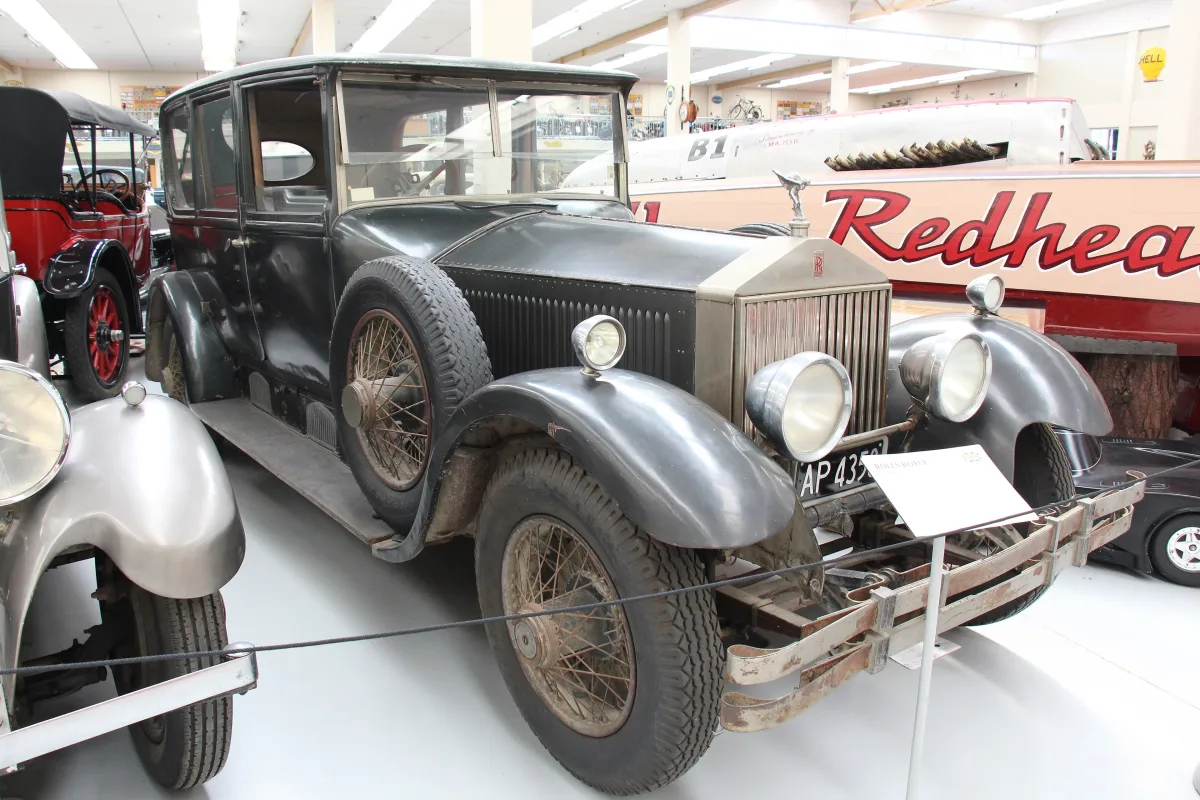
Rolls-Royce Phantom I: 1920s opulence and what to know about it
Rolls-Royce Phantom I — the pre-war luxury car introduced in 1925 after the Silver Ghost. This is a collector's model that you'll practically never see on the used car market, so in this article we briefly look at its history, technology, and what to consider if you're thinking of buying such a classic.






Phantom I in brief
The Phantom I was initially simply called the 'New Phantom' — the 'I' designation came later with the introduction of the Phantom II. It replaced the Silver Ghost and was produced in Derby, with production starting in the US in Springfield in 1926, where cars were built until 1931.
At the time, Rolls-Royce sold only the chassis and engine, with the body built to order by separate coachbuilders. Therefore, even cars from the same generation can vary greatly in appearance — from open tourers to closed limousines, like those built by Barker, Hooper or Windovers.
How the Phantom I differs from the rest
The Phantom I is the earlier generation before the Phantom II, so it has older technology. The Phantom II (1929–1935) received an improved chassis and engine, so buyers often compare the two.
Choosing between different bodies is far more important than choosing between 'versions': value depends greatly on the coachbuilder, originality and the car's history. Springfield cars are also valued, but their bodies and some technical solutions differ from the British ones.
Engine and gearbox
The Phantom I features a six-cylinder inline engine with a capacity of around 7.7 litres. The manufacturer did not officially declare the power output at the time — Rolls-Royce believed it to be 'adequate'. The engine is renowned for its quiet and smooth operation.
The gearbox is manual, and the brakes act on all four wheels with a secondary system. Driving such a car requires learning anew: it's not a modern automobile, but pre-war technology demanding patience.
What to know before buying a Phantom I
The most important thing is provenance and documentation. You need a clear history where the engine and chassis numbers match the documents, as well as reliable records of the body builder and any restoration work.
Wooden body frames and interiors deteriorate over time, so assess the body condition and the quality of previous restorations. Before buying, hire a specialist in pre-war Rolls-Royces — it's almost impossible to evaluate the price and condition without one.
Also, check the registration, insurance, and storage conditions: such cars are usually kept as collectibles and used rarely.


Trim levels
The Phantom I was sold as a chassis, so bodies varied; we list the differences by production location.
Derbio gamybos Phantom I
1925–1929British-built cars, often with work by local body builders.
- Inline six-cylinder engine
- Body to order (tourer, limousine, others)
- Most prized by collectors
Springfieldo Phantom I
1926–1931Built in the USA, Springfield, often with work by American body builders.
- Technically akin to a British model
- Often — a different body style
- Often found in the US market
Comparison of Phantom I production locations
| Derbis | Springfieldas | |
|---|---|---|
| Who it suits | For enthusiasts of British classics | For collectors seeking an alternative |
| Production period | 1925–1929 | 1926–1931 |
| Price in the used market (relatively) | €€€ | €€€ |
Both versions are collector cars, so the choice comes down to the body, history, and condition. Most importantly, trust a specialist's appraisal.
Pros
- Symbol of pre-war opulence
- A smooth, quiet six-cylinder engine
- Each example is unique due to its bespoke body
- Collector value
Cons
- Very expensive maintenance and restoration
- Requires specialist knowledge to drive
- Difficult to assess condition without an expert
Frequently asked questions
Can the Phantom I be used daily?
Practically no: it's a collector's car, meant for shows, events, and rare outings.
How does the Phantom I differ from the Phantom II?
The Phantom II is a later generation with improved technology. The Phantom I has an older design and is the earlier model.
How to evaluate the Phantom I's value?
Value is determined by the body, history, originality, and quality of restoration, so it's hard to do without an independent appraiser.
Updated 2026-10-21 · Trim levels and equipment vary by market and model year — check the equipment of the specific car. · Translated automatically


