 English
 Lietuvių
 Latviešu
 Eesti
 Polski
 Русский
 Українська
 Deutsch
 Nederlands
 Čeština
 Slovenčina
 Svenska
 Norsk
 Dansk
 Suomi


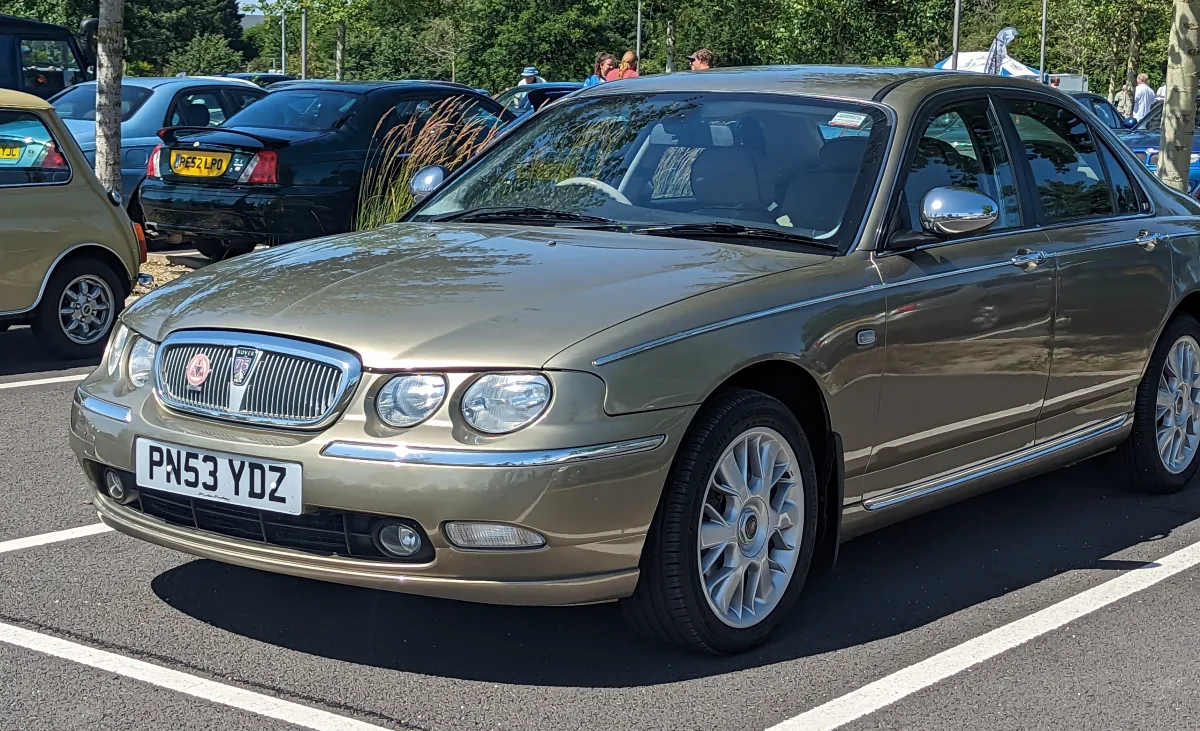
Rover 75: features, engines, and what to know when buying
The Rover 75 is a mid-size British saloon and estate car produced between 1999 and 2005. In this article, we look at its features, engines, trims, and what to check before buying.






The Rover 75 in brief
The Rover 75 was the company's attempt to regain prestige through classic design and comfort. It was offered as a saloon and estate (Tourer), with the interior standing out for its wood and leather.
On the used market, the Rover 75 is often bought for its comfort and style at a reasonable price.
Which version to choose
The Rover 75 was made in one generation with a facelift in 2004. The choice mainly depends on the engine, body style, and condition.
The estate is more practical, while the saloon is more common. The diesel engine is more economical, but the most important thing is the specific car's service history.
Engines and transmissions
The Rover 75 had a 1.8-litre four-cylinder petrol engine (with or without a turbocharger), 2.0 and 2.5-litre V6 petrol engines, and a 2.0-litre diesel engine supplied by BMW.
The transmission is either manual or automatic.
What to check when buying a used Rover 75
The 1.8-litre K-series engine is known for head gasket failures, so it's crucial to check for coolant leaks and engine oil consumption. For V6 engines, the service history, including the timing belt, is important.
Check the electrical equipment, air conditioning, and suspension. Inspect the body and interior.
Since the company no longer exists, some parts may be harder to find, but there are clubs and specialists.


Trims
Names and equipment vary by market and year; we list the most commonly found versions in Europe.
Classic
1999–2005The base model.
- Standard equipment
- Often — electric windows and air conditioning
- Simpler interior trim
Club
1999–2005Mid-range version with more equipment.
- Often — larger alloy wheels
- Often — additional comfort features
- Higher-quality interior trim
Connoisseur
1999–2005Top-of-the-range model.
- Often — leather interior
- Often — wood trim
- Often — extensive comfort equipment
Contemporary
1999–2005A more modern design version.
- A more modern interior.
- Often — additional comfort features.
- Light-alloy wheels.
Comparison of versions.
| Classic | Club | Connoisseur | Contemporary | |
|---|---|---|---|---|
| Who it's for | For everyday driving. | For comfort. | For luxury. | For a modern look. |
| Interior | Basic | Better trim. | Leather, wood. | Modern trim. |
| Price in the used market (relatively) | € | € | €€ | €€ |
For most buyers, the Club or Connoisseur trims with a well-maintained engine are a good fit. The key factor is the specific condition of the car.
Pros
- Comfortable, quiet ride
- Elegant, classic design
- Luxurious interior for a modest price
- Option to choose the Tourer estate
Cons
- Potential for cylinder head gasket issues on K-series engines
- Parts can be hard to find
- Aging electronics
Frequently asked questions
What engines were available in the Rover 75?
1.8-litre petrol (with and without turbo), 2.0 and 2.5-litre V6 petrols, and a 2.0-litre diesel.
Who supplied the diesel engine?
The diesel engine was supplied by BMW.
Is the Rover 75 suitable for daily driving?
It might be, if the example is well-maintained, but due to its age, expect more frequent repairs.
Updated 2026-10-19 · Trim levels and equipment vary by market and model year — check the equipment of the specific car. · Translated automatically


