 English
 Lietuvių
 Latviešu
 Eesti
 Polski
 Русский
 Українська
 Deutsch
 Nederlands
 Čeština
 Slovenčina
 Svenska
 Norsk
 Dansk
 Suomi


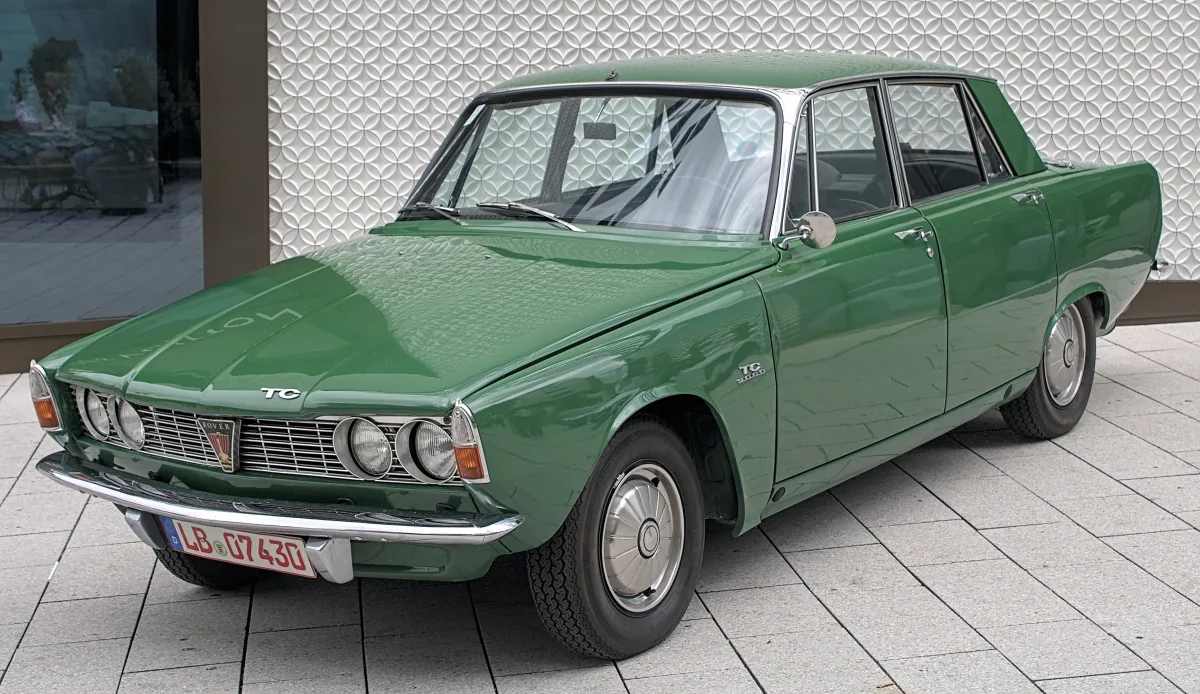
Rover P6: 2000, 2200 and 3500 V8 — the classic British saloon
Rover P6 — a series of mid-size saloons produced from 1963 to 1977, which was the first European Car of the Year (1964). We review the 2000, 2200 and 3500 versions, their tech and what buyers need to know.






P6 in brief
The P6 stood out with its advanced construction: a sturdy chassis with bolt-on body panels, disc brakes on all wheels and a more complex rear suspension. It was one of the modern and safe saloons of its time.
It belongs to the Rover tradition of prestige and rationality: understated styling, a quality interior and good driving dynamics. Today, the P6 is valued as an attractive and fairly accessible classic saloon.
Which version to choose
The first cars were the Rover 2000 with a four-cylinder engine. Later came the twin-carburettor 2000 TC, and in 1968 the Rover 3500 with a V8 engine. In 1973, the 2000 was replaced by the 2200 version.
V8 versions are considered more dynamic and highly regarded, but four-cylinder models are simpler and cheaper to maintain. The choice depends on whether you want performance or simplicity.
Engines and gearboxes
The main engine is a 2.0-litre four-cylinder with an overhead camshaft, later a 2.2-litre. The 3500 had a 3.5-litre V8 (derived from the US aluminium V8 design).
The gearbox is manual or automatic. Drive is to the rear wheels.
What to check when buying a P6
The most important thing is rust. Check the sills, floors, and the undersides of the wings, doors, and boot. The P6 body is mostly welded, so rust spots are easy to see.
Check the engine, cooling system, gearbox, and suspension. Ask for the service history and check the engine and chassis numbers.
The P6 has an active club community and good parts availability, but before buying, make sure you know where you can service the car.


Trim levels
Names and equipment vary by market and year; we list the versions most commonly found in Europe.
Rover 2000
1963–1973The first version with a 2.0-litre engine.
- 2.0-litre four-cylinder engine
- Disc brakes on all wheels
- High-quality interior
Rover 2000 TC
From 1966A more powerful version with twin carburettors.
- Twin carburettor system
- More power
- Sportier character
Rover 3500
From 1968V8-powered version.
- 3.5-litre V8
- Often — automatic transmission
- Dynamic driving
Rover 2200
From 1973Replaced the 2000, with a 2.2-litre engine.
- 2.2-litre four-cylinder engine
- Greater torque
- Often — improved interior
Comparison of versions
| 2000 | 2000 TC | 3500 | 2200 | |
|---|---|---|---|---|
| Who it's for | Budget-friendly classic saloon | For a livelier drive | For dynamic driving | A well-maintained classic daily driver |
| Engine | 2.0-litre four-cylinder | 2.0-litre with two carburetors | 3.5-litre V8 | 2.2-litre four-cylinder |
| Price in the used market (relatively) | € | €€ | €€ | € |
Most buyers will opt for a tidy 2000 or 2200. The V8 is worth considering if you want a livelier drive and don't mind higher fuel consumption.
Pros
- Advanced construction for its time
- A quality, comfortable interior
- Excellent parts and club support
- A noticeable but not extravagant classic
Cons
- Corrosion is the main issue
- An old car with limited safety features
- Greater fuel consumption in V8 versions
Frequently asked questions
What sets the P6 apart from other sedans of its time?
Cutting-edge construction: a base frame with sliding panels, disc brakes on all wheels and the 1964 European Car of the Year title.
What engines does the P6 have?
2.0 and 2.2-litre four-cylinder and 3.5-litre V8.
Is the P6 suitable for daily use?
Well-maintained and in good condition — yes, but remember that this is a classic car with limited safety features.
Updated 2026-10-21 · Trim levels and equipment vary by market and model year — check the equipment of the specific car. · Translated automatically


