 English
 Lietuvių
 Latviešu
 Eesti
 Polski
 Русский
 Українська
 Deutsch
 Nederlands
 Čeština
 Slovenčina
 Svenska
 Norsk
 Dansk
 Suomi


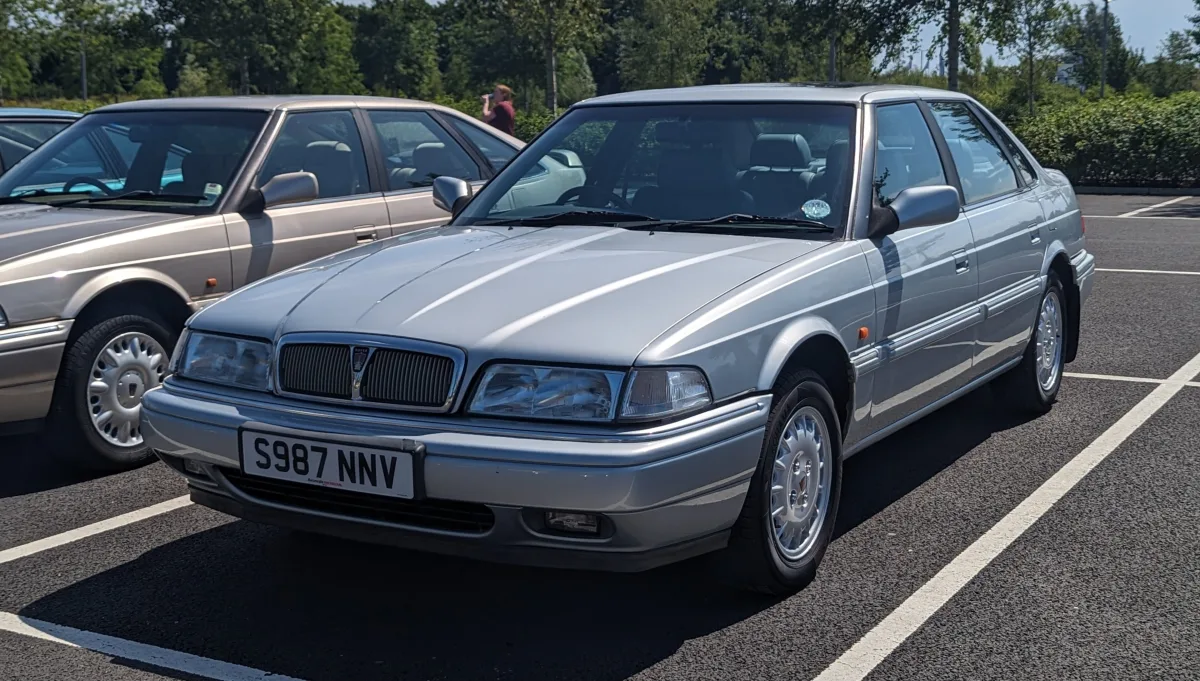
Rover 800: bodies, engines and what to know when buying used
The Rover 800 is a mid-size to executive car from Britain, produced from 1986 to 1999 in collaboration with Honda. In this article, we'll look at the bodies, engines, trims, and what to check if you're hunting for one of these in Lithuania.






The Rover 800 in brief
The Rover 800 was developed with Honda and shared its underpinnings with the Honda Legend. The model was offered as a saloon and a five-door hatchback, and from 1992, as a two-door coupé.
Today, it's a rare car, often sought after as a retro or collector's item. Its strengths include a spacious, comfortable interior and smooth ride, while the main risk is its age and body condition.
Updates and which to choose
The Rover 800 was produced in one generation, but during this time, it was updated several times: around 1991, the car received a new look and revised interior, and in 1996, another update with a revised front end.
Later models are usually better protected against corrosion and have more modern equipment, but the most important thing is the condition of the specific example and its service history.
Engines and gearboxes
Most commonly found are the 2.0-litre four-cylinder petrol engines and larger V6 units, developed with Honda (2.5 and 2.7 litres). There were also 2.0-litre turbo versions offered, and later, a diesel variant.
Gearboxes are manual or automatic. Drive is to the front wheels.
What to check when buying a used Rover 800
First things first — the body: check for rust on the sills, wheel arches, door bottoms, and boot lid.
For a V6 engine, it's crucial to find out if the timing belt and coolant were changed on time. Also, inspect the interior trim — leather and wood trim can wear out over many years. Less common body and interior parts might take longer to find.


Trim levels
Names and equipment vary by market and year; we list the versions most commonly found in Europe.
820
All versionsBase versions with the 2.0-litre engine.
- Often — simpler interior trim
- Mostly a 2.0-litre four-cylinder engine
- Often — electric windows
SLi
All versionsBetter-equipped version than the base model.
- Often — alloy wheels
- Often — air conditioning or climate control
- More comfortable seats
Sterling
All versionsLuxury version with better interior trim.
- Often — leather seats
- Often — wood imitation trim
- Often — a larger V6 engine
Vitesse
All versionsSportier version.
- Often — a more powerful engine
- Often — a sportier suspension setup
- Distinctive exterior styling
Comparing Rover 800 variants
| 820 | Sterling | Vitesse | |
|---|---|---|---|
| Who it's for | For the budget-conscious daily driver | For comfort and luxury | For sportier driving |
| Engine (often) | 2.0-litre four-cylinder | V6 | More powerful 2.0-litre or V6 |
| Interior | More basic | More luxurious trim | Sportier trim |
| Price in the used market (relatively) | € | €€ | €€ |
For most buyers, condition is more important than the spec. If you want more comfort, go for the Sterling, or for sportier driving, the Vitesse.
Pros
- Spacious and comfortable interior
- Quiet, comfortable ride
- Rare, unique car
- Engineering platform shared with Honda
Cons
- Age and body rust
- Harder to find parts than for popular models
- Few available in Lithuania
Frequently asked questions
Is the Rover 800 related to Honda?
Yes, it was developed in conjunction with Honda and shared its underpinnings with the Honda Legend. Some versions even featured Honda-designed V6 engines.
What body styles are available?
The sedan and five-door hatchback, and from 1992, a two-door coupe.
Is the Rover 800 worth buying as a daily driver?
If the car is in good condition, it's comfortable and spacious. However, due to its age and limited parts availability, it's more of a retro car than a frugal daily commuter.
Updated 2026-10-21 · Trim levels and equipment vary by market and model year — check the equipment of the specific car. · Translated automatically


