 English
 Lietuvių
 Latviešu
 Eesti
 Polski
 Русский
 Українська
 Deutsch
 Nederlands
 Čeština
 Slovenčina
 Svenska
 Norsk
 Dansk
 Suomi


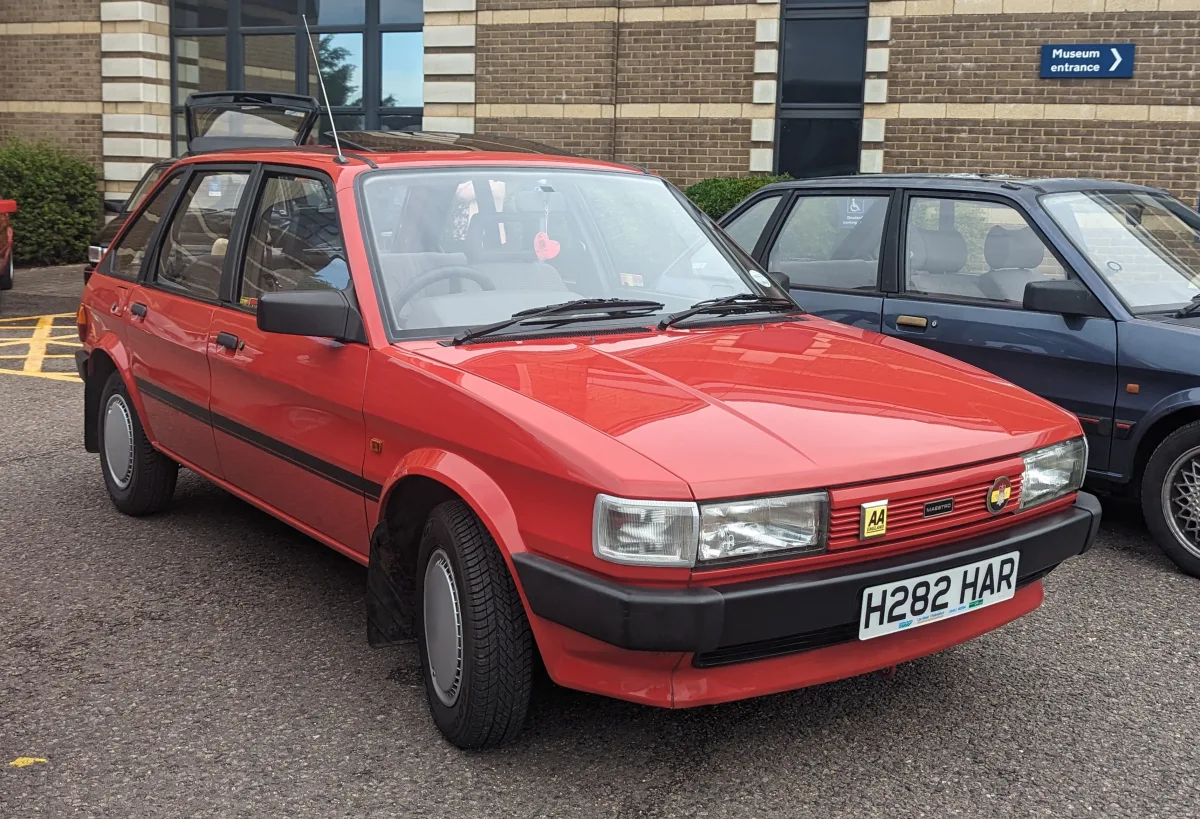
Rover Maestro: the British hatchback, engines and what to know when buying
Rover Maestro – the British compact-class hatchback, produced from 1983 to 1994 (initially as the Austin Maestro). In this article, we look at its versions, engines, and what you need to know to buy this increasingly rare classic car.






Maestro in brief
The Maestro was a five-door hatchback with front-wheel drive, offering plenty of interior space and a practical boot. Initially sold as the Austin Maestro, it was rebranded as the Rover in the late 1980s.
Today, the Maestro is quite rare, but it has enthusiast clubs and parts suppliers, so a well-maintained example can be an interesting 1980s classic.
Which version to choose
The main versions were aimed at everyday use, while the sporty MG Maestro offered a more powerful engine and different trim. MG versions are the most sought-after today.
Later models received a new front end and interior updates. When buying, pay more attention to the condition and signs of rust than the specific version.
Engines and gearboxes
The Maestro was offered with 1.3 and 1.6-litre petrol engines, while the sporty MG came with a 2.0-litre unit. There were also diesel versions. Exact power outputs varied by year and version.
The gearbox was usually manual, with some models featuring an automatic. Check the car's documents to determine the exact engine version.
What to check when buying a used Maestro
The main thing to look out for is rust. Check the rear wheel arches, sills, boot lid and floor. British cars from the 1980s are particularly susceptible to rust.
Check the electrical equipment, engine operation and gearbox. The choice of parts is limited, but clubs and specialist suppliers can help.
Only buy well-maintained cars, as poor condition can cost more than the car itself.


Trim levels
Names and equipment vary by market and year; we list the versions most commonly found in Europe.
City
Late 1980sBase trim.
- Simpler engine
- Basic trim
- Often — manual gearbox
Clubman
Late 1980sHigher trim with more comfort.
- More interior trim
- Often — larger engine
- More comfortable driving
MG Maestro
Late 1980sSporty version with a more powerful engine.
- 2.0-litre engine
- Sportier looks
- Rarer and more desirable
Comparing versions
| City | Clubman | MG Maestro | |
|---|---|---|---|
| Who it's for | Everyday driving | Comfort | Sporty driving |
| Engine | Smaller 1.3 or 1.6-litre | 1.3 or 1.6-litre | 2.0-litre |
| Price in the used market (relatively) | Budget | Budget | Mid-range |
Many buyers will find a well-maintained, non-faulty example worth considering, regardless of the version. The MG Maestro is a collector's item.
Pros
- Spacious interior and practical hatchback body
- Simple technology
- Active clubs and parts suppliers
- A rare classic choice from the 1980s
Cons
- Risk of corrosion
- Limited parts availability
- Outdated equipment and safety levels
Frequently asked questions
Is the Rover Maestro the same car as the Austin Maestro?
Yes. Initially, the model was sold as the Austin Maestro, later as the Rover Maestro.
What engines does the Maestro have?
Most common are the 1.3 and 1.6-litre petrol engines, with the sporty MG featuring a 2.0-litre, and there were also diesel versions.
Can the Maestro still be used daily?
A well-maintained one, yes, but it's an old car with limited safety and parts availability.
Updated 2026-10-21 · Trim levels and equipment vary by market and model year — check the equipment of the specific car. · Translated automatically


