 English
 Lietuvių
 Latviešu
 Eesti
 Polski
 Русский
 Українська
 Deutsch
 Nederlands
 Čeština
 Slovenčina
 Svenska
 Norsk
 Dansk
 Suomi


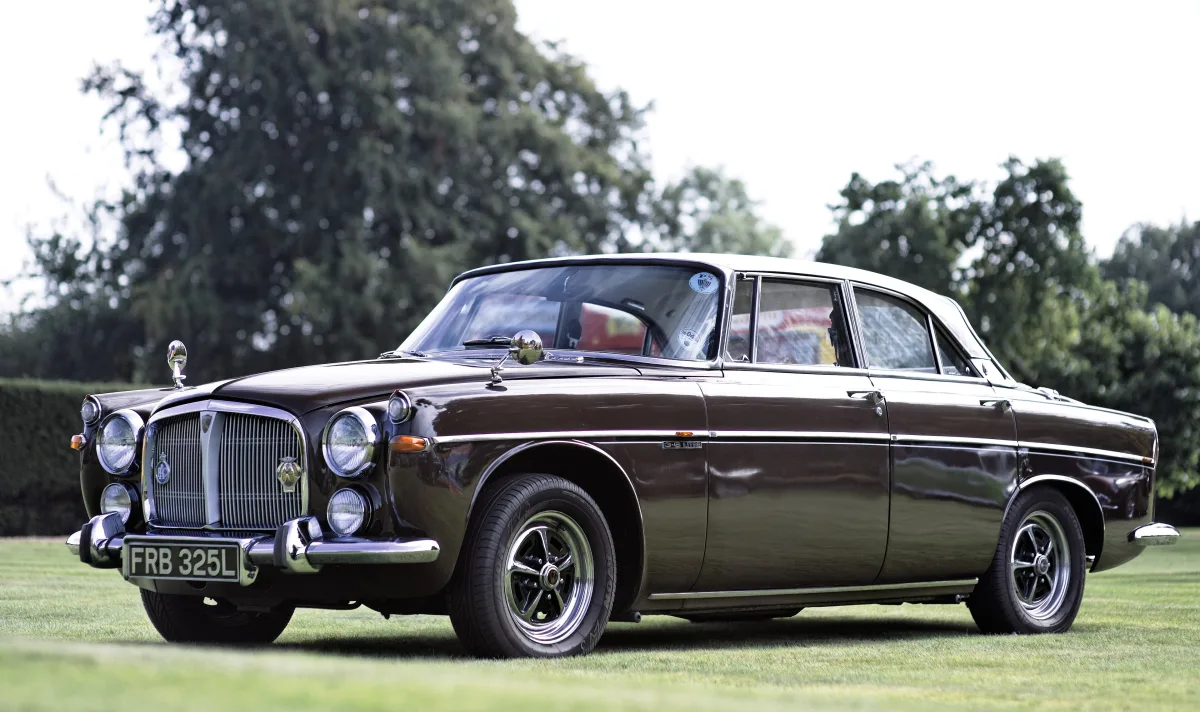
Rover P5: the prestigious British saloon and coupé, variants and what to know when buying
Rover P5 — the prestigious British saloon and 'coupé' (lower roof) variant, produced from 1958 to 1973. In this article, we review its versions, engines, and what to check when looking to buy this classic car.






The P5 in brief
The P5 was Rover's top-of-the-range car, aimed at buyers who value solidity, comfort, and a high-quality interior. The cabin is trimmed with leather and wood, while the ride is smooth and quiet.
The car was renowned as the transport of choice for government officials and high-ranking executives in Great Britain. Today, it's a prized classic with enthusiast clubs and a healthy supply of parts.
Versions — what's the difference?
The earliest P5s with the 3-litre (2,995 cm³) inline six-cylinder engine were produced from 1958 to 1967 and are marked Mk I, Mk II, and Mk III. Later versions received various technical and comfort upgrades.
In 1967, the P5B arrived with a 3.5-litre V8 engine, which replaced the inline six. This is the most popular and sought-after variant, as the engine is more powerful and the ride is smoother. There was also a coupé with a lower roof — more elegant, but slightly less spacious.
Engines and gearboxes
Early P5s used the 3.0-litre inline six-cylinder engine. The P5B has a 3.5-litre V8 with around 160 HP — a Rover-tuned lightweight alloy engine derived from Buick.
The gearbox is manual (with overdrive) or automatic. The P5B usually has an automatic box, and the drive is to the rear wheels.
What to check when buying a used P5
Corrosion is the biggest risk: check the sills, wheel arches, underbody and boot floor. Repairs can be expensive, so don’t buy a rusty car cheaply – repairs often cost more.
Check the engine and gearbox operation, cooling system, brakes and suspension. Many cars have been restored, so ask for restoration documents and photos.
It’s worth joining the P5 club and seeking specialist workshops, as parts need to be ordered from specialist suppliers.


Trim levels
Names and equipment vary by market and year; we list the versions most commonly found in Europe.
3 Litre Mk I–III
1958–1967Early P5s with a six-cylinder engine.
- 3.0-litre straight-six engine
- Leather and wood interior
- Manual or automatic gearbox
3 Litre Coupé
1958–1967Lower-roof variant with an elegant silhouette.
- Lower roof
- Less space in the rear seat
- Often – additional trim
3½ Litre (P5B)
1967–1973The most popular option with a V8 engine.
- 3.5-litre V8 engine, around 160 hp
- Often comes with an automatic gearbox
- More comfort and power
3½ Litre Coupé
1967–1973The coupé with a V8 engine – the most elegant option.
- Lower roof
- V8 engine
- Highly sought after by collectors
Comparing versions
| 3 Litre | 3 Litre Coupé | 3½ Litre | 3½ Litre Coupé | |
|---|---|---|---|---|
| Who it suits | For classic car enthusiasts | For stylish driving | For everyday use of a classic | For collectors |
| Engine | 3.0-litre R6 | 3.0-litre R6 | 3.5 L V8 | 3.5 L V8 |
| Price in the used market (relatively) | €€ | €€€ | €€ | €€€ |
For most buyers, the best choice is the P5B with the V8 engine for better driving and familiar technology. The coupé for its distinctive looks, but at a higher price.
Pros
- A solid, prestigious British car
- Quiet and comfortable ride
- Advanced lightweight V8 engine (P5B)
- Strong clubs and parts suppliers
Cons
- Risk of rust
- High fuel consumption
- Restoration and parts costs
Frequently asked questions
What’s the difference between the P5 and P5B?
The P5 has a 3.0 L inline six-cylinder engine, while the P5B (from 1967) has a 3.5 L V8.
Is the P5 suitable for daily use?
A well-maintained car can be tempting, but it's an old classic with limited safety features and high fuel consumption.
How does the P5 Coupé differ from the sedan?
The Coupé has a lower roof and a more elegant silhouette, but there's less space in the rear seats.
Updated 2026-10-21 · Trim levels and equipment vary by market and model year — check the equipment of the specific car. · Translated automatically


