 English
 Lietuvių
 Latviešu
 Eesti
 Polski
 Русский
 Українська
 Deutsch
 Nederlands
 Čeština
 Slovenčina
 Svenska
 Norsk
 Dansk
 Suomi


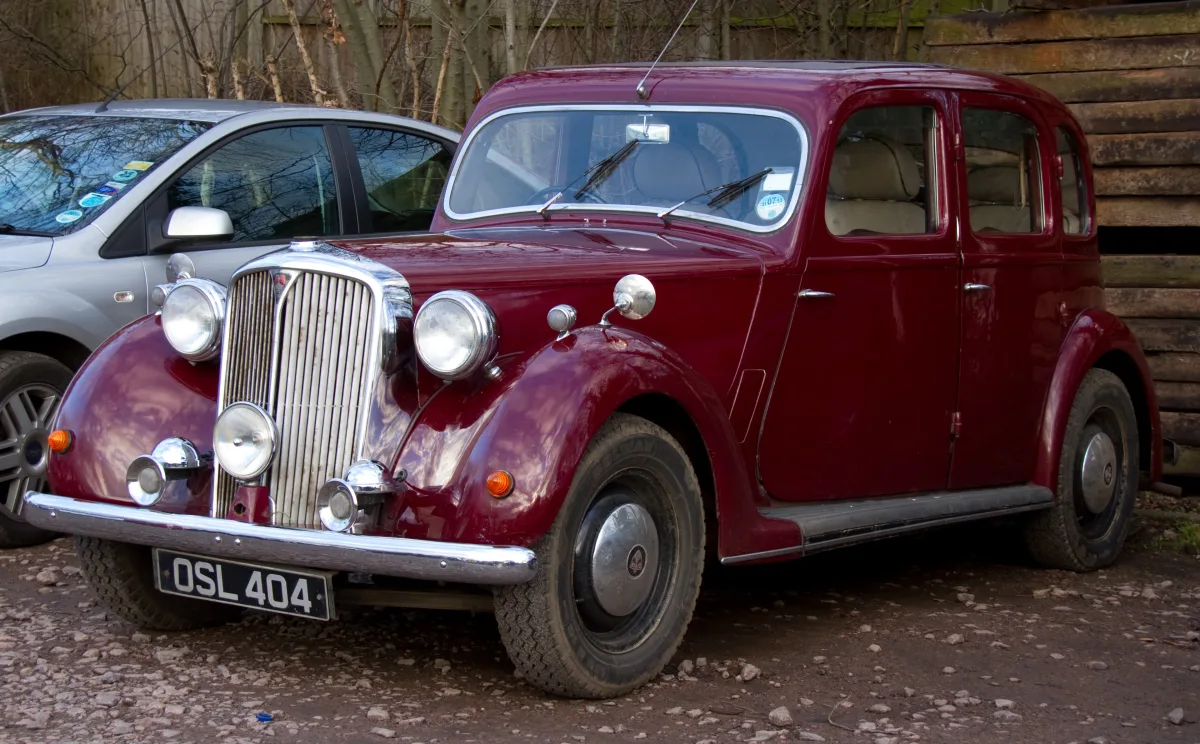
Rover P3 (Sixty and Seventy-Five): variants, engines and what to know
The Rover P3 is a post-war range of Rover executive saloons introduced in February 1948 and produced until 1949. It comprised the Rover Sixty (60) and Rover Seventy-Five (75). This is a classic car, so we'll look at its history, engines and what to know when considering buying one.






Rover P3 in brief
The Rover P3 was introduced in mid-February 1948 and produced until the summer of 1949. It was a range of two engine versions — 1.6 and 2.0-litre executive saloons. Just two months after its introduction, the Land Rover appeared, whose engine was based on the Sixty unit.
The car's body was similar to the Rover 12 and 16, but many of the body panels were new. Rover first adopted independent front suspension, which was a novelty for this marque. The chassis was of box-section design, but did not extend to the rear axle, so the rear springs were attached to the body.
Sixty and Seventy-Five — what's the difference
The Rover 60 had a four-cylinder 1595 cc engine, while the Rover 75 had a six-cylinder 2103 cc version. Both engines had overhead inlet and side exhaust valves.
Two body styles were offered: a six-window saloon with a rear quarterlight and a four-window sports saloon without it. A total of 1274 Rover 60s and 7837 Rover 75s were produced, and in September 1949 the model was replaced by the new Rover 75 (P4).
Engines and gearboxes
The four-cylinder 1595 cm³ engine was the mainstay of the Rover 60, while the six-cylinder 2103 cm³ powered the Rover 75. The same engine and gearbox were used in the first Land Rover. Roughly six Rover 75 examples were built with three SU carburettors.
The gearbox was carried over from the previous model, retaining the traditional Rover free-wheeling mechanism. Brakes are hydraulic and mechanical.
What to check when buying a P3
This classic car is worth buying only from a trusted seller or a member of a classic car club. Check the body shell, chassis, and underbody for corrosion, as well as the wheel arches and floor.
Inspect the engine, gearbox, braking system, and front suspension, and request documents verifying its provenance and restoration history. Spare parts are limited, but there are specialist clubs that help in finding them.


Trim levels
This model came in two engine variants and two body styles.
Rover 60
1948–1949Four-cylinder version.
- 1595 cm³ four-cylinder engine
- Six-window or four-window saloon
- 1,274 units produced.
Rover 75
1948–1949Six-cylinder version.
- 2103 cm³ six-cylinder engine
- Six-window or four-window saloon
- 7,837 units produced.
P3 comparison
| Rover 60 | Rover 75 | |
|---|---|---|
| Who it's for | For a simpler classic car | For a more powerful and popular version |
| Engine | 1595 cm³, four cylinders | 2103 cm³, six cylinders |
| Produced | 1274 | 7837 |
| Price in the used market (relatively) | €€€ | €€€ |
If you're after a classic car, the Rover 75 is more common and easier to find, while the Rover 60 is rarer. The key is the condition of the body and chassis, plus the quality of any restoration work.
Pros
- Classic British styling
- The first Rover with independent front suspension
- Engine associated with the first Land Rover
- Rare, collectible model
Cons
- Very old car, few parts available
- Expensive to restore
- Low safety by today's standards
Frequently asked questions
How does the Rover 60 differ from the Rover 75?
The Rover 60 has a four-cylinder 1595 cm³ engine, while the Rover 75 has a six-cylinder 2103 cm³ engine.
How many P3s were produced?
1274 Rover 60 and 7837 Rover 75.
What was changed in the P3?
Production continued until the summer of 1949, when the model was replaced by the new Rover 75 (P4), introduced that September.
Updated 2026-10-21 · Trim levels and equipment vary by market and model year — check the equipment of the specific car. · Translated automatically


