 English
 Lietuvių
 Latviešu
 Eesti
 Polski
 Русский
 Українська
 Deutsch
 Nederlands
 Čeština
 Slovenčina
 Svenska
 Norsk
 Dansk
 Suomi


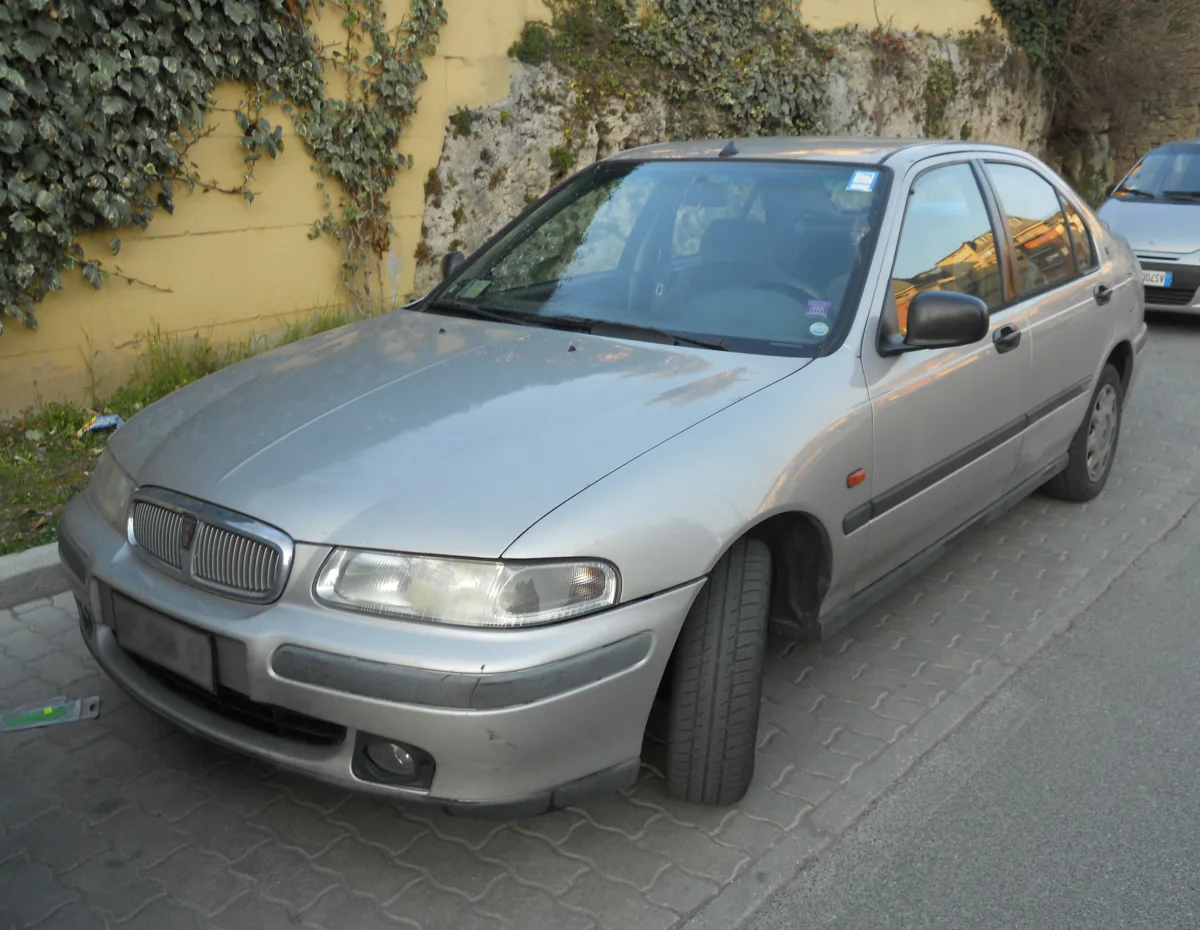
Rover 400 and 45: generations, engines and what to know when buying used
The Rover 400 and its successor, the Rover 45, are compact class cars produced from 1990 to 2005. In this article, we'll look at the generations, engines, and what to check if you're hunting for one of these in Lithuania.






Rover 400 and 45 in brief
The Rover 400 was produced from 1990 as a compact hatchback and saloon, then in 1995, a completely new generation arrived. In 1999, this generation was significantly updated and renamed the Rover 45, which was produced until 2005.
These cars are known for their quiet, comfortable interiors and smooth ride. They're rare in Lithuania, and many examples are old, so when buying, it's crucial to assess the technical condition and service history.
Which generation to choose
The first Rover 400 generation (from 1990) is technically close to contemporary Honda models, with an angular body. It's a simpler, older variant, with very few examples in Lithuania.
The second generation (from 1995) features smoother lines, is more modern, and offers more choice. The Rover 45 is its updated version with a new front end, improved interior, and fewer issues, making it the preferred choice for most buyers.
Engines and gearboxes
The most common engines are the 1.4, 1.6, and 1.8-litre four-cylinder K-series petrol units. The Rover 45 also had a 2.0-litre V6 petrol and a 2.0-litre diesel engine.
Gearboxes are manual or automatic. Front-wheel drive is standard.
What to check when buying a used Rover 400 or 45
The key thing — the 'K' series engines: they're known for head gasket failure, so it's crucial to check if the coolant isn't leaking, if the engine isn't overheating, and if there's no white smoke. Ask if the coolant and head gasket have been replaced.
Inspect the body for rust, check the electrical equipment, sunroof (if present) and suspension. After buying such a car, parts need to be sourced from specialist dealers, so check their availability.


Trim levels
Names and equipment vary by market and year; we list the versions most commonly found in Europe.
Club
Rover 45The base trim with standard equipment.
- Often comes with steel or standard wheels
- Often features electric windows
- More basic interior trim
Impression
Rover 45A popular trim with better equipment.
- Often comes with alloy wheels
- Often features air conditioning
- More comfortable seats
Connoisseur
Rover 45The luxury trim.
- Often features leather or more luxurious interior trim
- Often — climate control
- More chrome details
Bazinė 400
1995–1999 model yearsThe base second-generation Rover 400.
- More basic equipment
- Most commonly a 1.4–1.6 l engine
- Basic interior
Rover 400 vs 45 comparison
| Bazinė 400 | Club | Impression | Connoisseur | |
|---|---|---|---|---|
| Who it's for | Ideal for daily commuting | A straightforward city car | A versatile choice | More comfort |
| Engine | 1.4–1.6 l | 1.4–1.6 l | 1.4–1.8 L | Often 1.8 L or V6 |
| Interior | Basic | Basic | More Comfortable | Luxurious trim |
| Price in the used market (relatively) | Budget-friendly | Budget-friendly | Budget-friendly | Mid-range |
For most buyers, the best bet is a well-maintained Rover 45 Impression or Connoisseur. The key is to check the condition of the engine and cooling system.
Pros
- Quiet and comfortable interior
- Smooth, comfortable ride
- Often affordable to buy
- Simple, familiar manual transmission
Cons
- Known issues with the 'K' series engines
- Rare model, limited parts selection
- Age and rust
Frequently asked questions
What's the difference between the Rover 400 and Rover 45?
The Rover 45 is the facelifted second-generation Rover 400, introduced in 1999 with a new front end and improved interior.
Are the 'K' series engines reliable?
They're known for head gasket issues, so before buying, check the cooling system's condition and service history.
Which generation to choose?
Most would opt for the Rover 45, as it's the newer and better-developed version compared to the earlier 400.
Updated 2026-10-19 · Trim levels and equipment vary by market and model year — check the equipment of the specific car. · Translated automatically


