 English
 Lietuvių
 Latviešu
 Eesti
 Polski
 Русский
 Українська
 Deutsch
 Nederlands
 Čeština
 Slovenčina
 Svenska
 Norsk
 Dansk
 Suomi


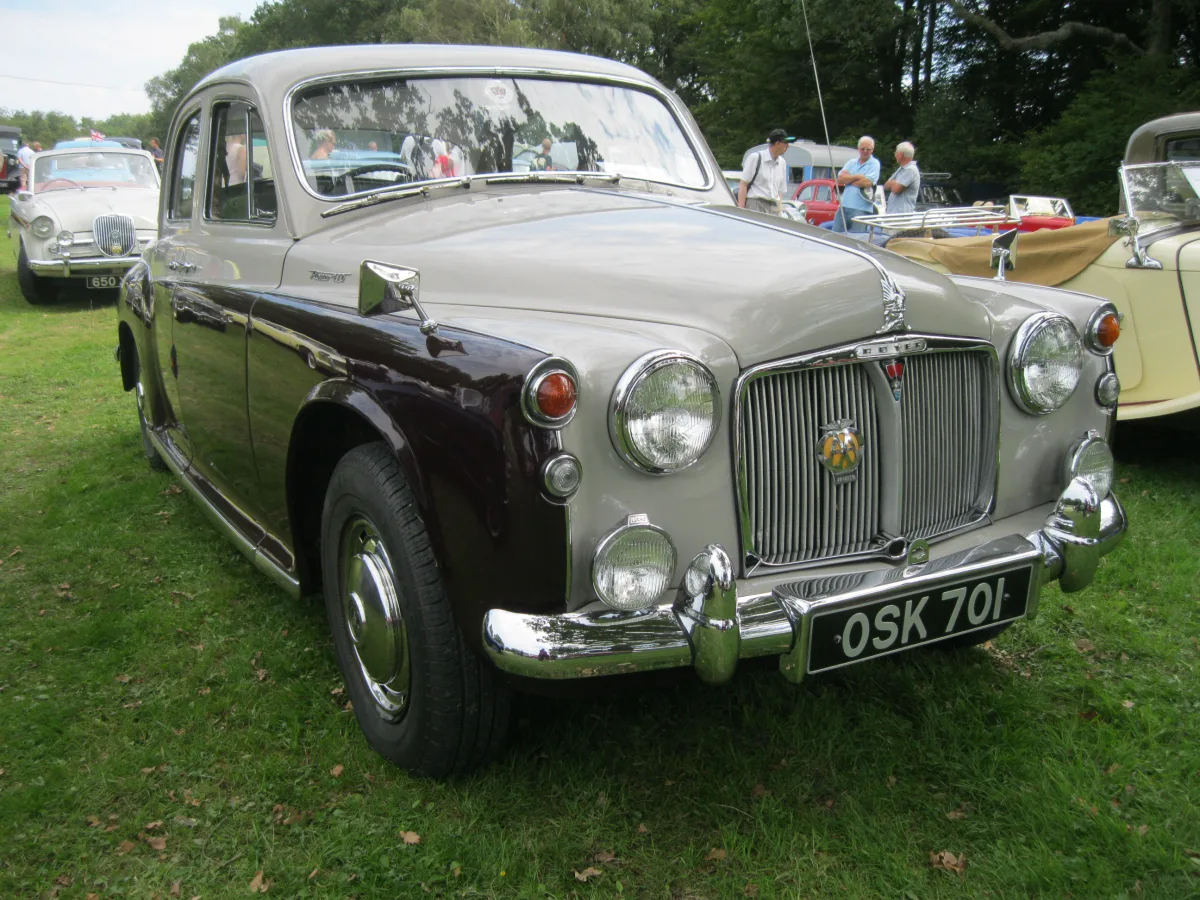
Rover P4: 1949–1964 classic, versions and what to check
The Rover P4 is a British luxury mid-size sedan produced from 1949 to 1964 and nicknamed the “Auntie Rover”. It’s a collector’s car that you’ll only find in Lithuania on rare occasions. We’ll look at the versions, engines, and what to check before buying.






The P4 in brief
The P4 was introduced in 1949 as the Rover 75 and was produced for over 15 years, continually refined during that time. The total number of cars produced exceeds 130,000.
The car was renowned for its high-quality wood and leather interior, sturdy construction, and smooth ride. It was for these reasons that the P4 was considered the “gentleman’s” car, and today, it’s an accessible piece of British classic motoring.
Versions and generations — what’s the difference
Early 75 models (1949–1952) featured a distinctive central “Cyclops” headlight, later replaced by two headlights. In 1954, the body was updated with a larger rear window and boot, making these later cars more practical for everyday collector use.
Later, more versions emerged: the 60 and 80 with 4-cylinder engines, and the 90, 100, 105, and the final 95 and 110 with 6-cylinder engines. The later models were the best equipped and often had better brakes.
Engines and gearboxes
Most P4s came with a 6-cylinder inline engine, while more economical versions had 4-cylinder units. Engine capacities ranged from around 2.1 litres to 2.6 litres, with power outputs from roughly 75 hp to around 120 hp in the sportiest models.
The gearbox was usually manual; some models featured the semi-automatic “Roverdrive” system or an overdrive gear. Check the exact version in the vehicle’s documents.
What to check when buying a used P4
The most important thing is corrosion. Check the wings, sills, underbody, and chassis parts, as repairs can be expensive and labour-intensive.
Inspect whether the car is original: swapped engines or interior details are common. Check the steering mechanism, oil leaks, wood details in the cabin, and the electrical installation.
Spare parts from the United Kingdom are available through clubs and specialist shops, but some components might take longer to find. Documentation and provenance are very important.


Trim levels
Names are based on the model index; each version has a different engine and equipment level.
Rover 75
1949–1954Early P4s with a 2.1-litre 6-cylinder engine.
- Early models with the “Cyclops” headlight
- Around 75 hp
- Wood and leather interior
Rover 60 / 80
1953–1962More economical versions with a 4-cylinder engine.
- 4-cylinder engine
- Base trim
- Less commonly found
Rover 90 ir 100
1953–1962More powerful 6-cylinder versions with a 2.6-litre engine.
- 2.6-litre straight-six
- Often — an overdrive gear
- Higher-spec trim
Rover 105
1956–1958Sportier version with twin carburettors.
- More power than 90
- Often — Roverdrive semi-automatic gearbox
- Sportier details
Rover 95 / 110
1962–1964The final and best-equipped P4 versions.
- 2.6-litre 6-cylinder engine
- Enhanced equipment
- Often — an overdrive gear
Comparing Rover P4 generations
| 75 | 90 | 105 | 110 | |
|---|---|---|---|---|
| Who it's for | First encounter with the P4 | For balanced driving | For sportier driving | For the top-tier version |
| Engine | 2.1-litre "six" | 2.6-litre "six" | 2.6-litre "six", twin carburettors | 2.6-litre "six" |
| Interior | Wood and leather | Wood and leather | Wood and leather, sportier details | Wood and leather, best equipment |
| Price in the used market (relatively) | Mid-range | Mid-range | High-end | High-end |
Most collectors will find the 90 or 100 to be a good balance of power and price. The 105 and 110 are worth considering if a sporty character and better equipment are important.
Pros
- Classic British design and a high-quality interior
- Long production run — plenty of surviving cars
- Solid and comfortable ride
- Active enthusiast community and parts availability
Cons
- Corrosion can be a serious issue
- It's hard to assess the true condition of the bodywork without a specialist
- Very few available in Lithuania
Frequently asked questions
How does the P4 differ from later Rovers?
The P4 is of an older style, with a separate chassis and classic construction. Later Rovers, such as the P5 or P6, are more modern and have a different technical concept.
Is the P4 suitable for daily driving?
Rarely. It's a collector's car that requires meticulous maintenance. It's great for short drives and events, but for daily use, it's better to choose a more modern car.
Is the P4 an easy part to find?
Mostly from the United Kingdom via specialist dealers and clubs. Commoner parts are more readily available, but rarer ones can cost more and take time.
Updated 2026-10-21 · Trim levels and equipment vary by market and model year — check the equipment of the specific car. · Translated automatically


