 English
 Lietuvių
 Latviešu
 Eesti
 Polski
 Русский
 Українська
 Deutsch
 Nederlands
 Čeština
 Slovenčina
 Svenska
 Norsk
 Dansk
 Suomi


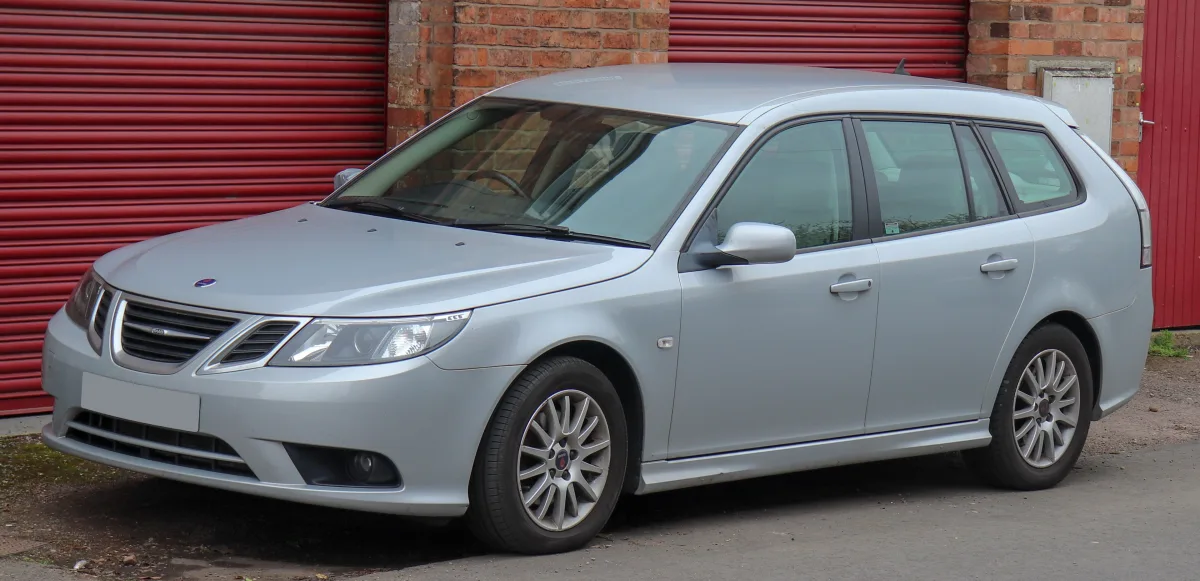
Saab 9-3: I and II generations, engines and trims
The Saab 9-3 is a mid-size Saab model produced from 1998 to 2011 and became one of the brand's most popular cars. In the used market, you'll most often encounter the second generation with sedan, estate, and convertible body styles. We'll look at how the generations differ, which engines are most popular, how the trims vary, and what you need to check before buying.






Saab 9-3 in brief
The first generation (1998–2002, convertible until 2003) was an improved Saab 900 with 3 and 5-door hatchback and convertible bodies. The second generation (2002–2011) was built on the General Motors Epsilon platform, shared with the Opel Vectra C: the sedan came first, followed by the convertible in 2003 and the estate SportCombi in 2005.
The 9-3 is praised for its comfortable seats, smooth ride, and responsive turbo engines. Saab traditions are evident in the centre console between the front seats and the Night Panel function, which turns off the instrument panel lighting at night, leaving only the speedometer illuminated.
Saab production ceased in 2011. Spare parts are still available: some are supplied by the former Saab parts company, while many mechanical parts are shared with Opel and other GM models. Finding specific body and interior details can sometimes take longer.
Which generation to choose
The first-generation 9-3 is now an older car, so it's mainly bought for the convertible or sporty Aero and Viggen versions. The second generation is more practical for daily driving.
Second generation 2007 (2008 model year) refreshed: received a new front end and engine cover, different headlights and a refreshed interior, and soon after came the all-wheel-drive system XWD. In 2009, the 9-3X arrived — a raised SportCombi with plastic body protection elements.
The best choice for many buyers is the refreshed second generation (2008–2011), especially the SportCombi estate. Pre-facelift models are cheaper, but condition and service history are more important than the year.
Engines and gearboxes
In the second generation, you'll most commonly find petrol engines like the 1.8i (around 122 hp, naturally aspirated), 1.8t and 2.0t (around 150–175 hp), 2.0T (around 210 hp) and the 2.8 V6 turbo (around 250–280 hp). BioPower versions can use E85 bioethanol fuel.
Diesels include the 1.9 TiD (around 120–150 hp) and the 1.9 TTiD with twin turbos (around 180 hp); early second-generation models also had the 2.2 TiD (around 125 hp). In the first generation, the most common engines were the 2.0 turbo petrol and the 2.2 TiD diesel.
Gearboxes come in 5 or 6-speed manual and automatic. Most cars are front-wheel drive, with the all-wheel-drive system XWD offered on select refreshed second-generation models.
What to check when buying a used Saab 9-3
The intake manifold on 1.9 TiD and TTiD diesels has swirl flaps that can stick or seize — ask if they've been serviced. For diesel cars that have done a lot of city driving, check the diesel particulate filter (DPF) and EGR valve.
In the case of turbocharged petrol engines, a regular oil change history is crucial. Check if the engine isn't using too much oil, if the turbo is pulling smoothly and isn't whistling. The automatic gearbox should shift smoothly, without any jolts.
The convertible roof should open and close without any issues, and there should be no moisture in the cabin. As the car ages, electronic faults can occur, so check all connectors, the information display, and the climate control. Verify the mileage against service records and MOT history.


Trim levels
Names and equipment vary by market and year; we list the most commonly found second-generation trims in Europe.
Linear
Second generationThe base trim is simpler but still well-equipped.
- Cloth seats
- Often includes automatic climate control
- Often features smaller alloy wheels
Arc
Second generationA comfort-focused version with more luxurious trim.
- Often includes leather seats
- Often features wood trim
- Often includes cruise control
Vector
Second generationThe most popular choice is the sportier-looking version with more equipment.
- Larger lightweight alloy wheels
- Sportier seats
- Often — xenon headlights
Aero
First and Second GenerationThe sportiest standard version with the most powerful engines.
- More powerful turbo engine
- A more upscale ride, sporty seats
- Often — leather interior and the largest alloy wheels
Turbo X
2008 model yearLimited edition black version — one of the rarer and most coveted.
- 2.8 V6 turbo engine, around 280 hp
- All-wheel drive XWD
- Distinctive interior and body styling
Comparison of Second Generation trims
| Linear | Vector | Aero | Turbo X | |
|---|---|---|---|---|
| Who it's for | For daily driving | Comfort and style | Dynamic driving | For the collector |
| Wheels (most common) | 15–16 inch | 16–17 inch | 17–18 inch | 18 inch |
| Interior | Upholstery | Sportier seats | Sport seats, often leather | Distinctive trim |
| Engine (most common) | 1.8i, 1.8t, 1.9 TiD | 1.8t–2.0t, 1.9 TiD / TTiD | 2.0T, 2.8 V6, 1.9 TTiD | 2.8 V6 turbo, around 280 hp |
| Price in the used market (relatively) | Budget-friendly | Mid-range | Mid-range | Premium |
For most buyers, the best choice is the refreshed second-gen Vector trim with a 1.8t, 2.0t, or 1.9 TiD engine. The Aero is worth considering for its dynamics, while the Turbo X is for those seeking a rarer, collector's item.
Pros
- Comfortable seats and smooth ride
- Responsive turbo engines
- Safe, sturdy body
- Choice between sedan, estate, and four-seat convertible
Cons
- Production halted — finding certain specific parts can take time
- 1.9 TiD diesel turbocharger snails and DPF
- Older models may have electronic faults
Frequently asked questions
Is it worth buying a Saab 9-3 when Saab no longer makes cars?
Yes, if the car is in good condition and has a service history. Many mechanical parts are shared with Opel and other GM models, and specific Saab parts can still be found, although some may take longer to source.
Which Saab 9-3 engine is the best?
For most buyers, the 1.8t or 2.0t turbo petrol engines are the most suitable — they're responsive and relatively straightforward. The 1.9 TiD diesel is economical, but before buying, check the turbochargers, EGR valve, and diesel particulate filter.
What's the difference between the 9-3 SportCombi and 9-3X?
The SportCombi is the standard 9-3 estate. The 9-3X is a raised SportCombi with plastic body protection, aimed at those who need a bit more ground clearance.
Is the Saab 9-3 convertible suitable for daily use?
Yes, it has four seats and a reasonably large boot when the roof is up. However, before buying, it's essential to check the roof mechanism and seals, as repairs can be expensive.
Updated 2026-10-09 · Trim levels and equipment vary by market and model year — check the equipment of the specific car. · Translated automatically


