 English
 Lietuvių
 Latviešu
 Eesti
 Polski
 Русский
 Українська
 Deutsch
 Nederlands
 Čeština
 Slovenčina
 Svenska
 Norsk
 Dansk
 Suomi


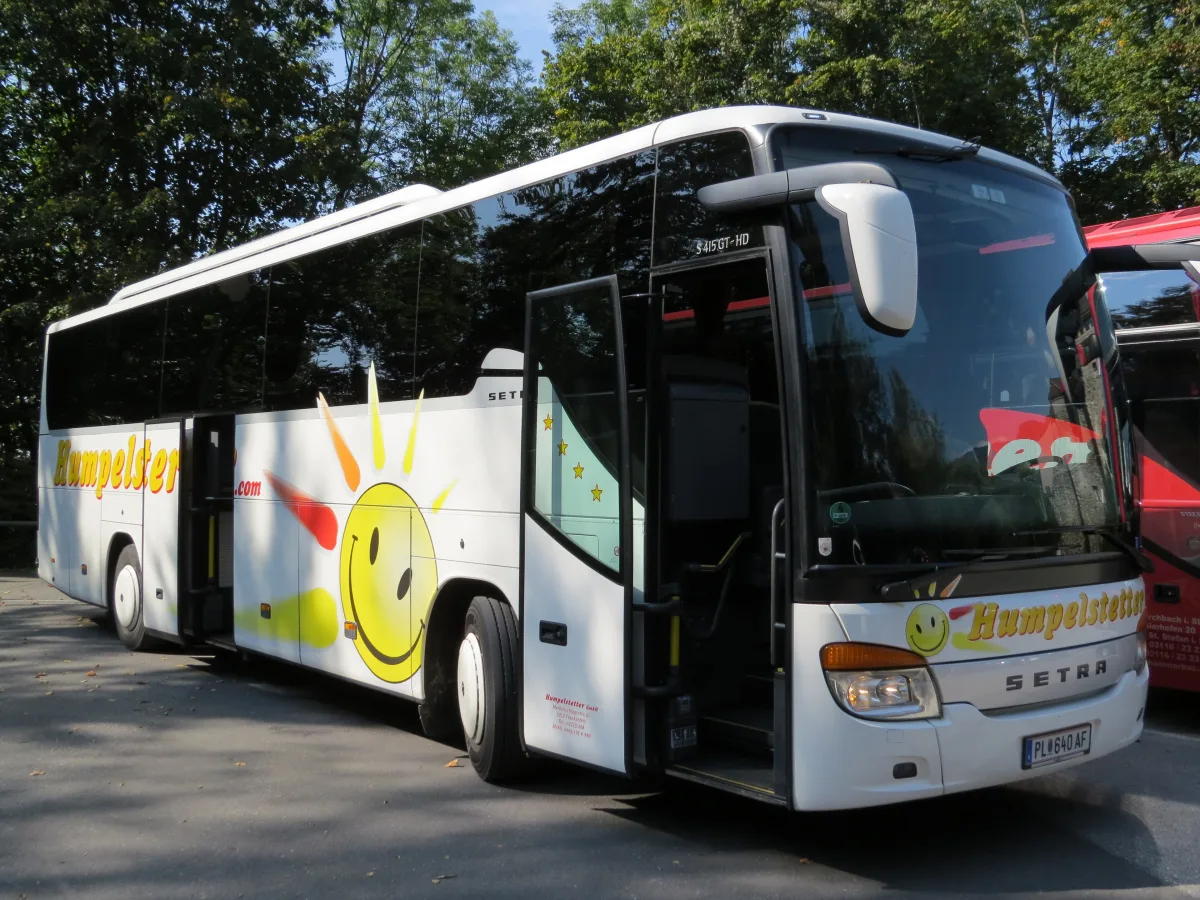
Setra ComfortClass: 300, 400 and 500 series, engines and trims
Setra ComfortClass — balancing cost and comfort for long-distance and tour coaches, widely used in Europe since 2001. We look at the series, engines, and what to check when buying a used coach.






ComfortClass in brief
ComfortClass is the mid-range Setra comfort class between the more basic MultiClass and the top-tier TopClass. These are high-floor coaches designed for touring and intercity travel.
They're popular in the used market due to predictable running costs and the well-known Mercedes-Benz mechanics. Unlike the TopClass, the standard equipment is more basic, so the price is often lower.
Which series to choose
ComfortClass 300 are older-generation coaches, while the 400 series started production in 2001. They are often cheaper but come with higher mileage and older emissions standards, so it's crucial to thoroughly check the condition.
The ComfortClass 500 series arrived in 2012: a more modern body, Euro VI engines, and more safety features. It's a pricier but more future-proof choice if long-term use is planned.
Engines and transmissions
In older ComfortClass series, you'll often find six-cylinder Mercedes-Benz diesels with Euro 3–5 standards. In the newer 500 series, Euro VI engines with SCR and particulate filters are fitted.
Transmissions are manual or automated. Automated ones often provide more economical driving, but their maintenance is more expensive.
What to check when buying a used ComfortClass
Check the tachograph readings, service records, engine oil and coolant leaks, gearbox and clutch condition. In Euro IV–VI buses, it's important to inspect the SCR / AdBlue system.
Look for corrosion around door sills and wheel arches, check the air suspension, climate control system, sunroof and tailgate. Interior trim and seats often show wear, so factor in their refurbishment in your budget.


Versions and trims
Names and equipment vary by market and production year; we list the versions most commonly found in Europe.
ComfortClass 300
older generationSimpler, older buses with manual controls.
- Often — manual gearbox
- Simpler interior trim
- Often — older emission standards
ComfortClass 400 HD
from 2001The most common generation on the used market.
- Often — Euro 3–5 diesel
- Climate control system and kitchenette (optional)
- Spacious boot
ComfortClass 400 GT-HD
from 2001With a larger boot and a focus on long-distance travel.
- Often — more boot space
- Often — a higher ground clearance
- More comfortable seats
ComfortClass 500
From 2012New generation with Euro VI engines and a more modern interior.
- Euro VI diesels
- Often — modern safety systems
- A more modern body design
Comparing the ComfortClass series
| 300 | 400 | 500 | |
|---|---|---|---|
| Who it's for | For budget-conscious road trips | For versatile use | For long-term use |
| Engine | Older standard diesel | Euro 3–5 diesel | Euro 6 diesel |
| Safety equipment | Basic | Mid-range | Modern |
| Price in the used market (relatively) | Budget-friendly | Mid-range | Premium |
The 400 series is great for those on a budget with a good service history. If modern safety systems and Euro 6 compliance are important, go for the 500 series.
Pros
- Reliable and widely recognised technology
- Wide network of service centres and parts
- More affordable than TopClass
- Many different lengths and configurations
Cons
- The standard equipment is more basic than the TopClass
- Corrosion can be found in older examples
- High mileage is common among used models
Frequently asked questions
How does the ComfortClass differ from the TopClass?
The technical base is often similar, but the TopClass offers a more luxurious level of interior equipment and more standard features. The ComfortClass is the more economical choice.
Is the ComfortClass suitable for long journeys?
Yes, especially the GT-HD and high-roof versions. They have ample luggage space and comfortable seats for long trips.
Which ComfortClass series is the best in the used market?
It depends on your budget: the 400 series is usually the most economical, while the 500 series is more modern and comes with Euro VI engines.
Updated 2026-10-21 · Trim levels and equipment vary by market and model year — check the equipment of the specific car. · Translated automatically


