 English
 Lietuvių
 Latviešu
 Eesti
 Polski
 Русский
 Українська
 Deutsch
 Nederlands
 Čeština
 Slovenčina
 Svenska
 Norsk
 Dansk
 Suomi


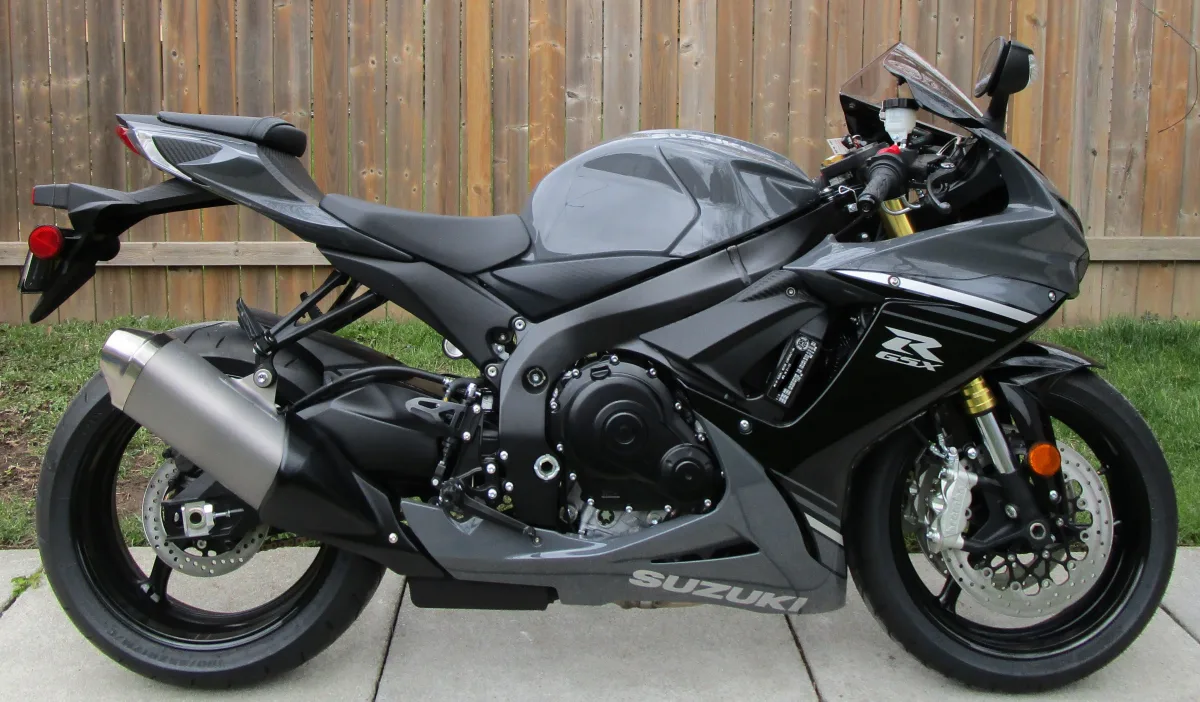
Suzuki GSX-R 750: generations, engine and what to check when buying used
The Suzuki GSX-R 750 — introduced in 1985 — is a supersport motorcycle often hailed as one of the first modern 'sportbikes'. We'll look at the generations, engine, typical used motorcycle issues, and how the 750 differs from the 600 and 1000 models.






GSX-R 750 in brief
The GSX-R 750 — Suzuki's sporty classic, first introduced in 1985. The early models were light and sporty for their time, setting the standard for many supersport bikes that followed.
The 750 sits between the GSX-R 600 and GSX-R 1000: it's got significantly more power than the 600 but is easier to handle than the 1000. Most used models in Europe are A-category bikes, with newer generations pushing around 140–150 hp.
Which generation to choose
The earliest models (1985–1991) have air- and oil-cooled engines and are often bought as classics or collector's items. They're simpler but also older, so the condition of the bodywork and engine is crucial.
From 1992, engines were liquid-cooled, and the 1996 SRAD generation introduced ram-air intake from the front. The most popular used models are from the 2004–2010 generations (K4–L0): they feature modern fuel injection and a wide range of parts. The latest generations from 2011 are lighter and more modern.
Engine and gearbox
The model's engines are around 750 cm³ four-cylinder in-line units, paired with a six-speed manual gearbox. Newer generations are powerful, with high torque and better acceleration off the line than 600 cm³ rivals.
Older motorcycles have carburetors, newer ones have fuel injection. In all cases, it's important to stick to the maintenance schedule: check the oil, air filter, and valve clearance.
What to check when buying a used GSX-R 750
The most important thing is to determine if the motorcycle wasn't used on the track or crashed. Inspect the plastics, crash protectors, handlebar ends, frame, and forks for signs of impact, and ask to see the service history.
Check the chain, sprockets, brakes, tyres, and fork seals. For older models, check for corrosion, oil leaks, and carburettor issues; for newer ones, ensure the electronics work flawlessly.


Trims and versions
This model's versions differ by generation; we present the main generations.
Klasikinė karta (oru/alyva aušinama)
1985–1991The first GSX-R 750s, valued as classics.
- Air and oil-cooled engine
- Simple technology
- Often — collector's value
SRAD karta
1996–1999Liquid-cooled generation with front-mounted air intake.
- More aerodynamic fairing
- Often — already high mileage
- Important body and electrical condition
K4–K5
2004–2005A more modern, compact generation.
- Often — fuel injector issues
- Wide range of parts available
- Often — lacks electronic driving aids
K6–K7
2006–2007A sportier, lighter generation.
- Improved suspension
- Often — better brakes
- Wide range of accessories available
L1 ir vėlesni
from 2011The latest generation with a more advanced suspension.
- Lighter construction
- More advanced brakes and suspension
- Often — a higher price
Generation comparison
| SRAD | K4–K5 | K6–K7 | L1+ | |
|---|---|---|---|---|
| Who it's for | For classic car enthusiasts | Budget supercar | Sporty driving | Newer technology |
| Engine | ~750 cm³ | ~750 cm³ | ~750 cm³ | ~750 cm³ |
| Tech | Simpler | Modern | Enhanced | Most advanced |
| Price in the used market (relatively) | € | €€ | €€ | €€€ |
Many buyers will appreciate a well-maintained K4–K7 motorcycle; the latest generation is for those who value technology, while the classic is for collectors.
Pros
- A balanced choice between the 600 and 1000 models
- A powerful engine with high torque
- Plenty of spare parts and accessories available
- Historical significance and demand
Cons
- Uncomfortable seating for daily use
- Many motorcycles are track-used
- Insurance and fuel costs can be high
Frequently asked questions
How does the GSX-R 750 differ from the GSX-R 600?
The 750 has a larger engine, more power at low and mid-range revs, while the 600 is lighter and loves high revs.
Is the GSX-R 750 suitable for a beginner?
It's a powerful supersport that requires an A category license. It's often too powerful and too complex for a beginner.
When should you opt for your first supersports car?
If your budget is tight, go for a well-maintained K4–K7. Newer generations offer more tech, but they come at a higher price.
Updated 2026-10-21 · Trim levels and equipment vary by market and model year — check the equipment of the specific car. · Translated automatically


