 English
 Lietuvių
 Latviešu
 Eesti
 Polski
 Русский
 Українська
 Deutsch
 Nederlands
 Čeština
 Slovenčina
 Svenska
 Norsk
 Dansk
 Suomi


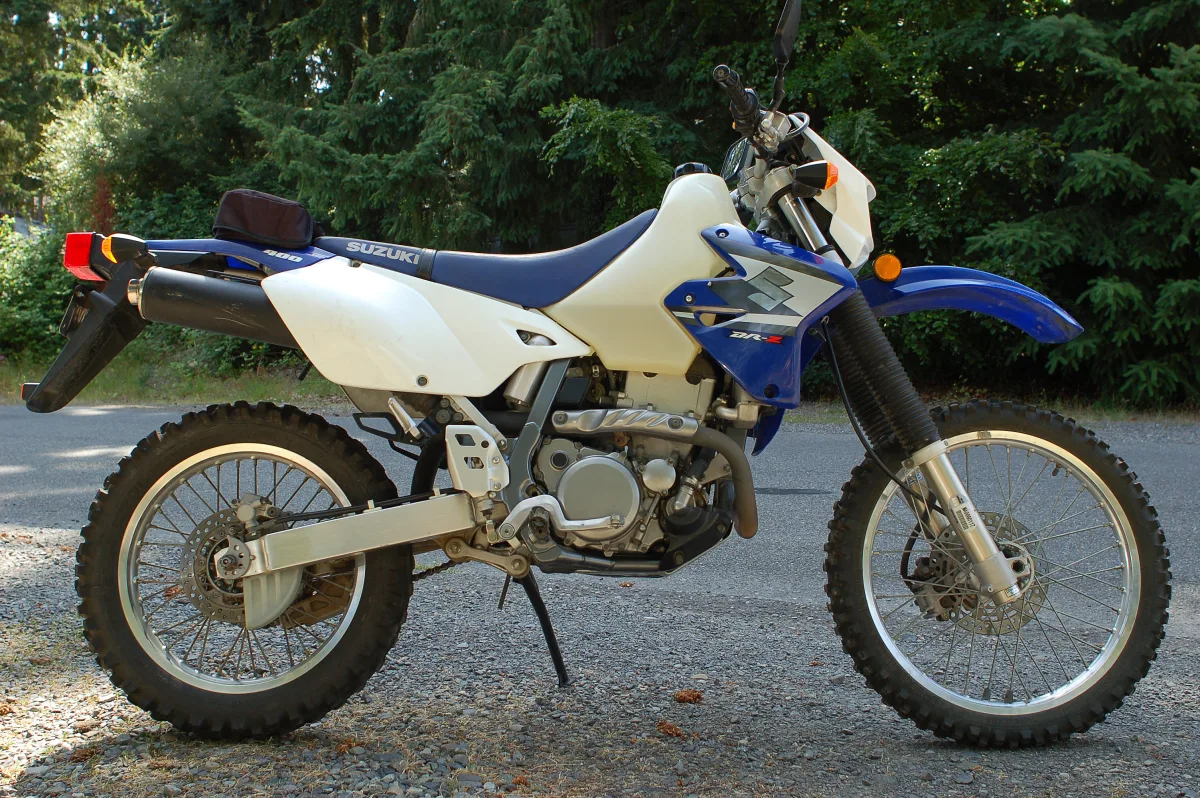
Suzuki DR-Z 400: the ultimate enduro and supermoto motorcycle
Suzuki DR-Z 400 (from 2000) — a lightweight single-cylinder enduro motorcycle, available in both on-road and off-road versions, as well as the supermoto SM variant. We look at the versions, what the engine offers, and what to check when buying used.






DR-Z 400 in brief
The DR-Z 400 is designed as a versatile lightweight motorcycle, suitable for both on-road and off-road use. Its engine is a 398 cm³ liquid-cooled single-cylinder with four valves, known for its smooth and reliable performance.
This is a fairly tall and lightweight motorcycle, popular among both experienced and novice riders looking for a straightforward, reliable machine for the trail and the road.
Versions — what's the difference
The DR-Z 400 is produced in several versions: DR-Z 400 E (more suited to off-road), DR-Z 400 S (with lights and equipment for on-road use) and DR-Z 400 SM (supermoto with smaller diameter wheels and road tyres). Specific market equipment varies.
The newer generation of this model is the DR-Z4S and DR-Z4SM, which feature an updated engine and more modern technology. When buying used, it's important to know which version and which market it is intended for.
Engine, transmission and chassis
The engine is a 398 cm³ liquid-cooled single-cylinder, around 40 hp, with a carburettor. It pulls smoothly from low revs and is lively at high revs.
The gearbox is a five-speed, with chain drive to the rear wheel. The suspension has long travel, making the motorcycle great off-road, but it is quite tall, which can cause discomfort for shorter riders.
What to check when buying a used DR-Z 400
As this is often a trail bike, first look for signs of overly intense use: dents, broken parts, worn-out bearings. Check if the engine starts easily and if the idle is smooth.
Inspect the carburettor, air filter, valve clearance (important for four-valve single-cylinder engines), chain, sprockets, brake discs, wheel bearings, fork seals, and swingarm bushings. Ask about the frequency of oil changes and how the bike has been used.


Trims and versions
Names and equipment vary by market and year; we list the most commonly found versions.
DR-Z 400 E
from 2000Version more suited to trail riding.
- 398 cm³ single-cylinder engine
- Long-travel suspension
- Lightweight construction
DR-Z 400 S
from 2000Version allowed to ride on roads.
- Road lights and equipment
- The same engine base
- Versatile road and trail use
DR-Z 400 SM
from 2005Supermoto version with road tyres.
- Smaller diameter wheels
- Road tyres
- Sporty handling on tarmac
Comparing versions
| DR-Z 400 E | DR-Z 400 S | DR-Z 400 SM | |
|---|---|---|---|
| Who it's for | Off-road riding | On and off-road | Tarmac and city |
| Wheels | Off-road | Mixed | Smaller, road tyres |
| Engine | 398 cm³, around 40 hp | 398 cm³, around 40 hp | 398 cm³, around 40 hp |
| Price in the used market (relatively) | €€ | €€ | €€ |
If you mostly ride off-road, go for the E version. If you want both trail and field, choose the S version. For asphalt and city fun, the SM is a playful choice.
Pros
- Light and versatile
- Reliable, uncomplicated engine
- Choose between trail, enduro, or supermoto version
- Good suspension
Cons
- High seat height
- Not very comfortable for long journeys
- Older models often heavily used
Frequently asked questions
Is the DR-Z 400 suitable for beginners?
Yes, if it's not too tall for you. Power isn't huge, handling is easy, but the seat height might be uncomfortable for shorter riders.
How does the DR-Z 400 SM differ from the S?
The SM is the supermoto version with smaller wheels and road tyres, better suited for asphalt; the S is more versatile for both trails and off-road.
Is the DR-Z 400 suitable for long journeys?
Suitable for short trips and average journeys. Less comfortable for long drives due to limited wind protection and single-cylinder vibrations.
Updated 2026-10-21 · Trim levels and equipment vary by market and model year — check the equipment of the specific car. · Translated automatically


