 English
 Lietuvių
 Latviešu
 Eesti
 Polski
 Русский
 Українська
 Deutsch
 Nederlands
 Čeština
 Slovenčina
 Svenska
 Norsk
 Dansk
 Suomi


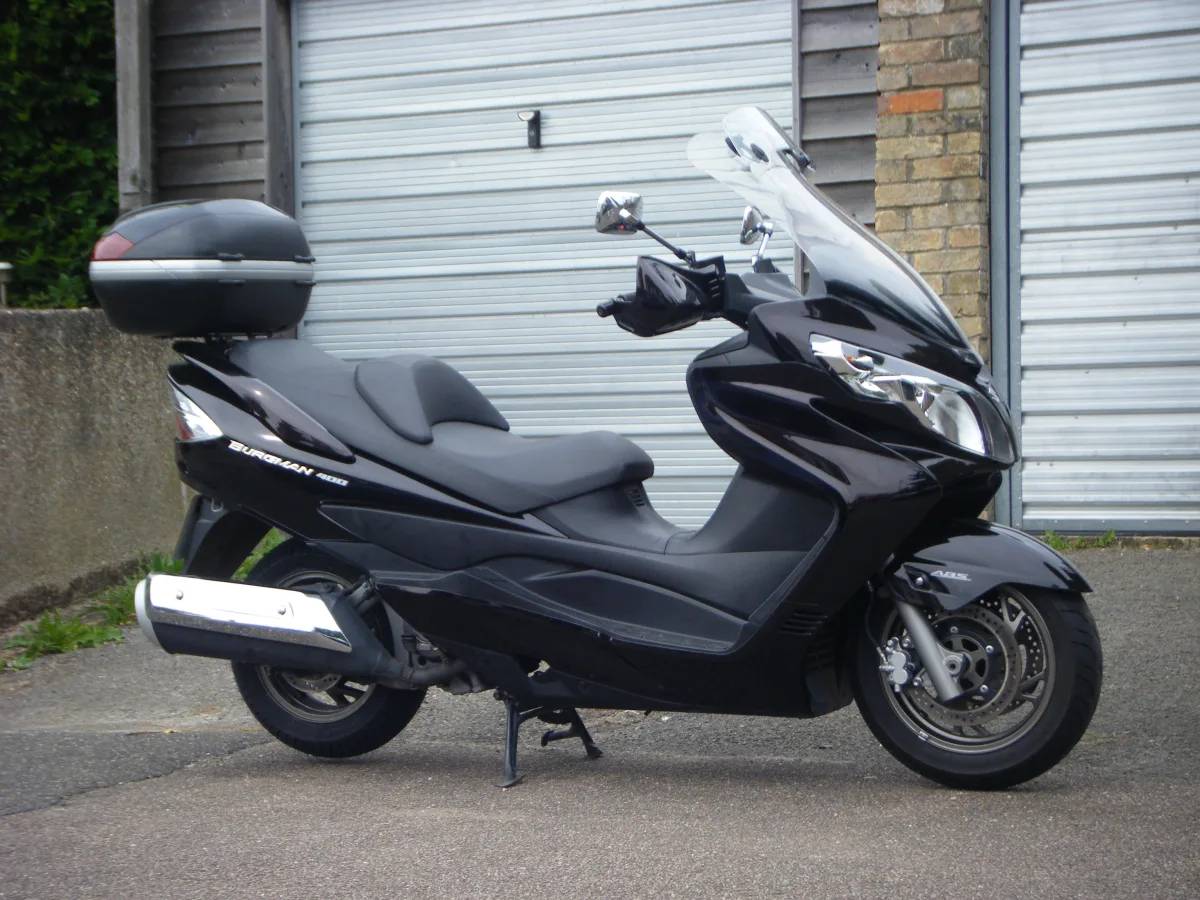
Suzuki Burgman 400: generations, engine and what to check when buying used
The Suzuki Burgman 400 is a large, comfortable scooter with a 400 cm³ engine, designed for city use and longer journeys. We look at the generations, technology, and what's most important to check when buying a used Burgman 400.






The Burgman 400 in brief
The Burgman 400 debuted in 1998 and became one of the most popular large scooters. It offers a comfortable riding position, good wind protection, and plenty of under-seat storage, making it ideal for both daily commuting and touring.
It's a practical choice for those who need a 'larger' scooter with comfort but don't require sporty dynamics. There are plenty of used examples on the market, and prices are usually reasonable.
Generations — what's the difference?
The first generation (1998–2006) features a carburettor and simpler electronics. The second generation (from 2007) introduced fuel injection and a more modern design, with later versions adding ABS and other refinements.
Newer versions (from 2017) meet Euro 4 standards and have an updated look and features. In the used market, it's worth distinguishing between generations, as they differ in price and technology.
Engine and transmission
The engine is a 400 cm³ single-cylinder, four-stroke, liquid-cooled unit. Power output varies depending on the generation and market, but it's sufficient for city and highway riding.
The transmission is an automatic CVT, so there's no need to shift gears. Some versions come with additional features, such as an adjustable windscreen.
What to check when buying a used Burgman 400
Check the engine and CVT: when you rev the engine, the scooter should run smoothly, without hesitation or vibration. Listen for any unusual noises coming from the engine and transmission.
Inspect the plastic body panels, windscreen, and side panels for chips. Check that the under-seat storage, lighting, and screen are all working.
Check the brakes, tyres, and suspension. Ask if regular maintenance has been carried out: oil changes, filters, valve adjustments.


Trim levels and versions
Names and equipment vary by market and year; below are the main generations.
Burgman 400 I karta
1998–2006The older version with a carburettor.
- Approximately 400 cm³ engine
- Simpler technology
- Often – high mileage
Burgman 400 II karta
From 2007 onwardsVersion with fuel injection and a more modern look.
- Fuel injection system
- Often – ABS
- More comfort and equipment
Burgman 400 (nuo 2017 m.)
Nuo 2017 m.Newer version with Euro 4 and refreshed styling.
- Euro 4 engine
- ABS
- Updated interior and lighting
Burgman 400 head-to-head comparison
| I karta | II karta | Nuo 2017 m. | |
|---|---|---|---|
| Who it's for | Budget-conscious driving | City and touring | Those who value newer features |
| Engine | Around 400 cm³, carburettor | Around 400 cm³, fuel injection | Around 400 cm³, Euro 4 |
| Price in the used market (relatively) | € | €€ | €€€ |
Most buyers find the best balance of price and technology in the second generation. Opt for the newer version if you prioritise more modern features.
Pros
- Comfortable seating position and good wind protection
- Spacious under-seat storage
- Adequate power for city and highway driving
- Economical and easy to maintain
Cons
- Heavy weight and large dimensions make it cumbersome in the city
- Less dynamic than sporty scooters
- Older generations have a larger fuel tank
Frequently asked questions
Is the Burgman 400 suitable for an A2 licence?
This depends on the specific version and year. Check the scooter's power and documents, as not all versions fit within A2 limits.
Is the Burgman 400 suitable for long trips?
Yes. It's comfortable, offers wind protection and plenty of space for luggage, making it ideal for medium-length journeys.
What are the differences between Burgman 400 generations?
The first generation features a carburettor, while later models come with fuel injection and more modern equipment. The latest versions comply with Euro 4 standards and include ABS.
Updated 2026-10-21 · Trim levels and equipment vary by market and model year — check the equipment of the specific car. · Translated automatically


