 English
 Lietuvių
 Latviešu
 Eesti
 Polski
 Русский
 Українська
 Deutsch
 Nederlands
 Čeština
 Slovenčina
 Svenska
 Norsk
 Dansk
 Suomi


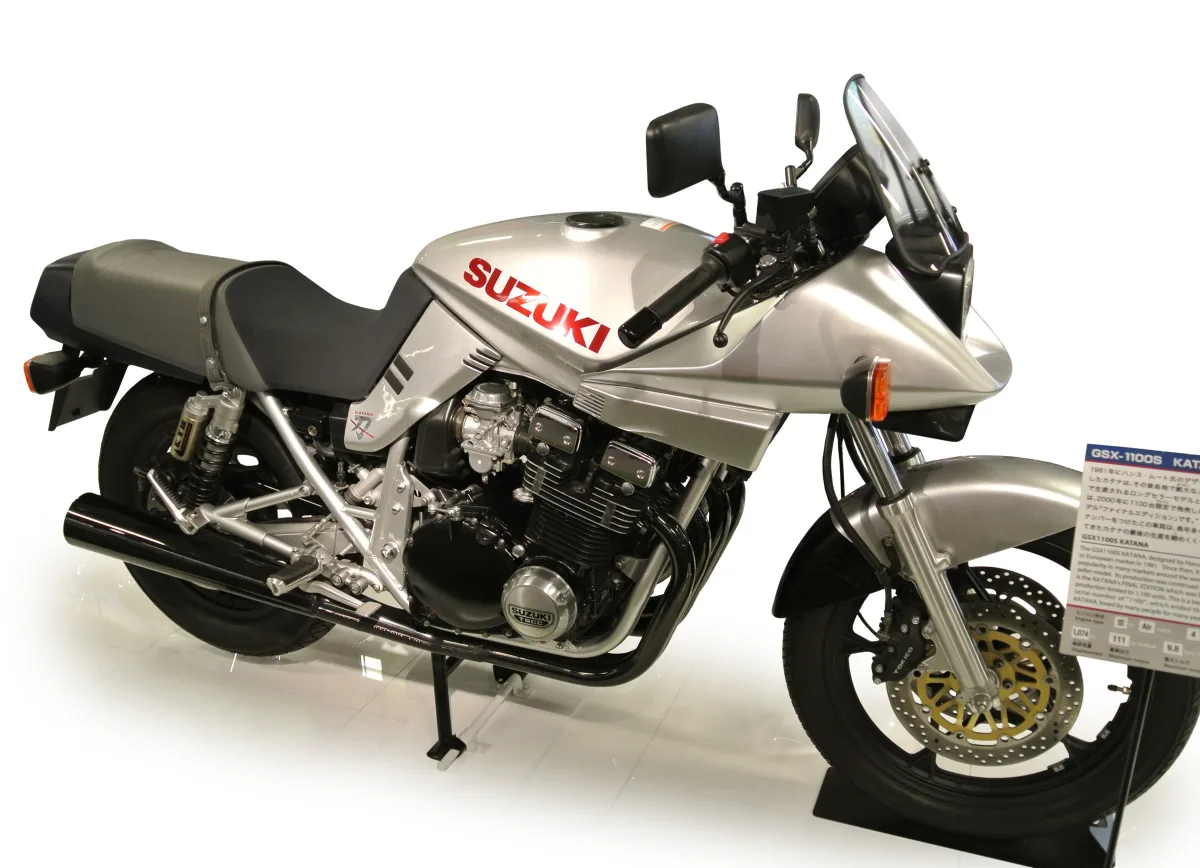
Suzuki Katana: from the 1981 legend to the 2019 revival
Suzuki Katana (from 1981) — one of the most striking examples of motorcycle design: from the classic GSX 1100 S to the 2019 return of the new Katana. We look at how the old and new versions differ and what to check when buying used.






Katana in brief
The Katana is Suzuki's distinctive design sportbike, with the first version debuting in 1981 featuring a sleek tank and a clamshell fairing. The name is derived from the Japanese sword.
Since then, the Katana has become a coveted item among collectors and classic enthusiasts. In 2019, a new Katana was introduced with a modern engine and electronics, retaining the spirit of the original design.
Versions — how they differ
The classic Katana (e.g., GSX 1100 S) features an air-cooled four-cylinder engine, carburetors, and a simple chassis. It's a collector's motorcycle, with value depending on originality and condition.
The new Katana (from 2019) uses a modern 999 cm³ four-cylinder engine, around 150 HP, with ABS, traction control, and other modern systems. It's a completely different motorcycle — much easier to handle and daily-friendly.
Engine, gearbox, and chassis
The new Katana features a 999 cm³ liquid-cooled inline four-cylinder engine, around 150 HP, with strong torque at low and mid-range revs. It includes traction control, ABS, and assist systems that make starting and riding at low revs easier.
Gearbox — six-speed, final drive — chain. Seating position is sporty but more comfortable than pure sports bikes, so the Katana is suitable for daily use.
What to check when buying a used Katana
The classic Katana is a collectible motorcycle, so originality is key: check if the original fairings, tank, seat, and no unapproved modifications or paint jobs remain. Inspect the carburettor, engine oil condition, chain, brakes, and electricals.
The new Katana is a modern motorcycle, so look for signs of drops and check the service history. Ensure ABS and traction control work (no warning lights), inspect the chain, sprockets, brakes, and tyres.


Trims and versions
Names and equipment vary by market and year; we list the main versions.
Katana (klasikinė)
From 1981The first legendary version with an air-cooled engine.
- Four-cylinder engine, carburettors
- Distinctive sloping fairing design
- Collectible value
Katana (nauja)
From 2019The reborn modern version.
- 999 cm³ four-cylinder engine
- ABS and traction control
- Updated electronics and lighting
Version comparison
| Klasikinė Katana | Naujoji Katana | |
|---|---|---|
| Who it's for | For collectors and classic enthusiasts | For daily driving and sporty rides |
| Engine | Four-cylinder, carburetted | 999 cc, around 150 hp |
| Electronics | None | ABS, traction control |
| Price in the used market (relatively) | €€€ | €€€ |
If you're after a collectible motorcycle, go for the classic Katana, but scrutinise the originality. If you want a daily, modern motorcycle with a striking design, opt for the new Katana.
Pros
- Distinctive, recognisable design
- New version with modern electronics
- Classic version — a collector's item
- Powerful four-cylinder engine
Cons
- Classic version requires specialist maintenance
- New version pricier than some rivals
- Limited supply of old parts
Frequently asked questions
Is the Katana suitable for beginners?
The new version is powerful, so it's better suited to experienced drivers. The classic also requires skill and good condition.
Is the classic Katana a collector's item?
Yes, original examples in good condition are valued by collectors, but the value greatly depends on originality and condition.
Does the new Katana have ABS?
Yes, the new Katana has ABS and traction control.
Updated 2026-10-21 · Trim levels and equipment vary by market and model year — check the equipment of the specific car. · Translated automatically


