 English
 Lietuvių
 Latviešu
 Eesti
 Polski
 Русский
 Українська
 Deutsch
 Nederlands
 Čeština
 Slovenčina
 Svenska
 Norsk
 Dansk
 Suomi


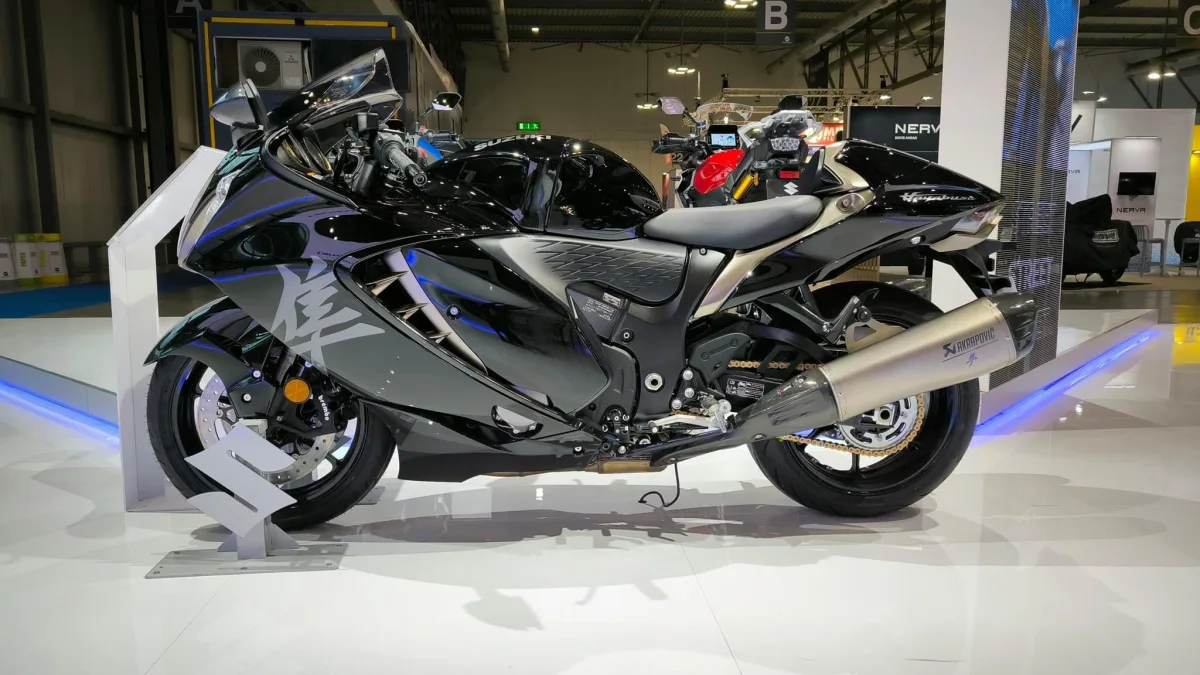
Suzuki Hayabusa: three generations, engines, and what to check when buying used
The Suzuki Hayabusa (GSX1300R) is one of the most famous sportbikes in the world, known for its large engine, stability, and aerodynamics. We look at the three generations, the engine, trims, and what's most important to check when buying a used Hayabusa.






Hayabusa in brief
The Hayabusa debuted in 1999 and quickly became an icon: a large four-cylinder engine, aerodynamic bodywork, and a very stable ride. This isn't a track bike, but a fast sport-tourer that's comfortable to ride every day.
With its power and weight, this bike is for experienced riders. You'll need a category A license, and this model certainly isn't for beginners—the acceleration and speed here are on another level compared to typical sportbikes.
Generations — what's the difference
The first generation (1999–2007) has around a 1300 cm³ engine and a distinctive 'fairing' shape. This is an old bike now: often modified, with an aftermarket exhaust or sporty add-ons, so it's crucial to assess its true condition and how much it's been tampered with.
The second generation (2008–2020) got a 1340 cm³ engine, more advanced electronics (selectable engine modes), and a slightly different design. This is the most popular variant in the used market—there's plenty of supply, and the tech has stood the test of time.
The third generation (from 2021) is compliant with Euro 5 norms, features more modern electronics: an inertial sensor, multiple engine modes, cruise control, and other assist systems. The engine remains 1340 cm³, but the handling has become more modern.
Engine and gearbox
A longitudinally mounted, water-cooled inline four-cylinder engine is used across all generations: around 1300 cm³ in the first generation, and 1340 cm³ in the second and third. Power output is roughly 175–200 hp, depending on the generation and market; in the third generation, it's slightly lower than the second due to Euro 5 regulations.
The gearbox is a six-speed manual, with drive to the rear wheel via a chain. A quickshifter is often found as an option or a retrofit in earlier models.
What to check when buying a used Hayabusa
Since this is a powerful motorcycle, the most important thing is to ensure it hasn't been used on the track or for drag racing. Inspect the frame, footpegs, handlebars, and fairing for signs of crashes, especially in older models.
Check the chain and sprockets, brake discs, tyre wear, and rear suspension. The engine should run smoothly, without vibration or unusual noises, and the cooling fan should engage and disengage as expected.
Many Hayabusas have been modified (exhaust, tuning, longer rear sprocket). Ask for proof of the work done and ensure the changes match the registration documents.


Trims and versions
Names and equipment vary by market and year; below are the main generations.
GSX1300R I karta
1999–2007The first Hayabusa features a distinctive design and older technology.
- Around 1300 cm³ engine
- Simpler electronics
- Often modified and changed
GSX1300R II karta
2008–2020The most popular generation on the used market.
- 1340 cm³ engine
- Selectable engine modes
- Often comes with ABS (depending on year and market)
GSX1300R III karta
From 2021The latest generation with supplementary electronics.
- Euro 5 engine and inertia sensor
- Several engine and traction control modes
- Speed holding and a more modern instrument cluster
Comparing the Hayabusa generations
| I karta | II karta | III karta | |
|---|---|---|---|
| Who it's for | For enthusiasts and collectors | For fast sport touring | For those who value modern electronics |
| Engine | Around 1300 cc | 1340 cc | 1340 cc, Euro 5 |
| Relative price in the used market | Budget-friendly | Mid-range | Premium |
For most buyers, the best choice is a well-maintained second generation. The third generation is worth considering if modern electronics and a newer motorcycle are important.
Pros
- Very stable and smooth ride at high speeds
- A robust and sufficiently reliable engine
- Comfortable seating position, suitable for long journeys
- Plenty of used options in the second generation
Cons
- Large size and dimensions can be cumbersome in urban settings
- High fuel consumption when riding fast
- Many motorcycles are modified or ridden aggressively
Frequently asked questions
Is the Hayabusa suitable for beginners?
No. It's a very powerful motorcycle, and you need a category A license. Beginners are better off choosing a model with less power.
Which Hayabusa generation is the best?
For many buyers, the second generation is the best bet: a wide range of options, sufficiently modern technology, and a lower price than the third generation. If you're after the latest electronics, go for the third generation.
Can the Hayabusa reach 300 km/h?
The manufacturers have limited the speed to around 299 km/h (mostly due to an agreement among manufacturers). The actual possible speed depends on the version, but these speeds are not allowed on public roads.
Updated 2026-10-21 · Trim levels and equipment vary by market and model year — check the equipment of the specific car. · Translated automatically


