 English
 Lietuvių
 Latviešu
 Eesti
 Polski
 Русский
 Українська
 Deutsch
 Nederlands
 Čeština
 Slovenčina
 Svenska
 Norsk
 Dansk
 Suomi


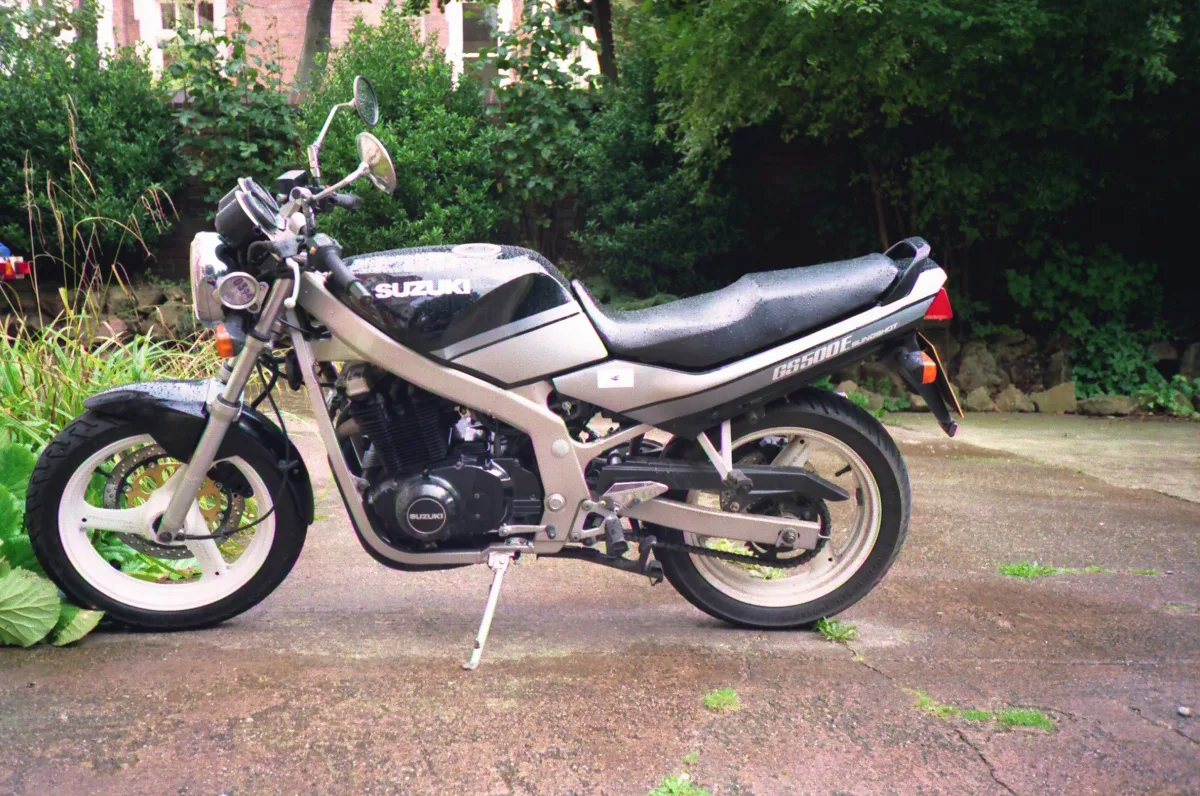
Suzuki GS 500: GS 500 E and GS 500 F, engine and what to check
Suzuki GS 500 — a straightforward, reliable mid-range motorcycle that was popular for years for training and daily commuting. We look at the versions, engine, and what to check when buying used.






GS 500 in brief
GS 500 (1989–2009) — a straightforward twin-cylinder motorcycle that gained popularity for its reliability, low maintenance costs, and ease of handling. The traditional variant is the naked GS 500 E, while later came the fully faired GS 500 F.
Thanks to its simple design, the model is favoured by beginners who want a motorcycle without complex electronics. Most bikes are now quite old, so the key factor is the technical condition, not the spec.
Versions — what's the difference
The GS 500 E is a naked bike with an open rear end and a simple style. It's lighter and more straightforward.
The GS 500 F comes with full fairings, which offer better wind protection, making it suitable for longer journeys. This variant appeared later in Europe and is slightly more comfortable on the motorway, but heavier and more complex to repair.
Engine and gearbox
The engine is an air-cooled twin-cylinder, around 500 cm³ capacity, with about 45 hp (depending on the market and year). It's known for its simplicity and durability.
The gearbox is a manual six-speed, with drive to the rear wheel via chain. The motorcycle is often cited as suitable for the A2 category, but this depends on the specific version and paperwork — check.
What to check when buying a used GS 500
Check the chain and sprockets, brakes, tyres and suspension — older motorcycles often have worn-out running gear. Look for any oil leaks.
Due to age, check the electrical system: battery, charging system, lights. Usually, risks arise from corrosion, especially in the exhaust system, frame, and fuel tank.
Ask if there's a service history, and ensure the mileage and documents match the motorcycle's condition.


Trim levels and versions
Names and equipment vary by market and year; we list the versions most commonly found in Europe.
GS 500 E
1989–2009The naked version — simple and light.
- Open construction, minimalist design
- Basic equipment
- Often the cheapest option
GS 500 F
from around 2004Version with full fairings.
- Better wind protection
- Sportier looks
- More comfortable on the motorway
GS 500 (importas)
various yearsMotorcycles from other countries.
- Often — different trim levels
- Check the paperwork and history
- May be suited to another market
GS 500 (po remonto)
various yearsMotorcycles that have undergone major repairs.
- Repair documentation is crucial
- Often — non-original parts
- Check the condition of the body and frame
Comparing versions
| GS 500 E | GS 500 F | Importinis | |
|---|---|---|---|
| Who it suits | For everyday city driving | For longer journeys | Documents need checking |
| Bodywork | Naked | With fairings | By version |
| Engine | Around 500 cm³ twin-cylinder, around 45 hp | Around 500 cm³ twin-cylinder, around 45 hp | Around 500 cm³ twin-cylinder, around 45 hp |
| Price in the used market (relatively) | € | € | € |
If you're after a simple and affordable motorcycle, go for the GS 500 E. If you often ride longer distances and want better wind protection, opt for the GS 500 F.
Pros
- Simple and reliable construction
- Low maintenance costs
- Lightweight and suitable for beginners
- Affordable used options
Cons
- The model is old — plenty of worn-out parts
- Basic equipment, no modern assistance systems
- Less power on the motorway
Frequently asked questions
Is the GS 500 suitable for beginners?
Yes, it's one of the classic 'first' motorcycles – light, uncomplicated and affordable to run.
Is the GS 500 suitable for an A2 licence?
Some versions are, but it depends on the power-to-weight ratio. Check the specific motorcycle's documents.
What's the difference between the GS 500 E and F?
The E version is a naked bike, while the F comes with full fairings and better wind protection.
Updated 2026-10-21 · Trim levels and equipment vary by market and model year — check the equipment of the specific car. · Translated automatically


