 English
 Lietuvių
 Latviešu
 Eesti
 Polski
 Русский
 Українська
 Deutsch
 Nederlands
 Čeština
 Slovenčina
 Svenska
 Norsk
 Dansk
 Suomi


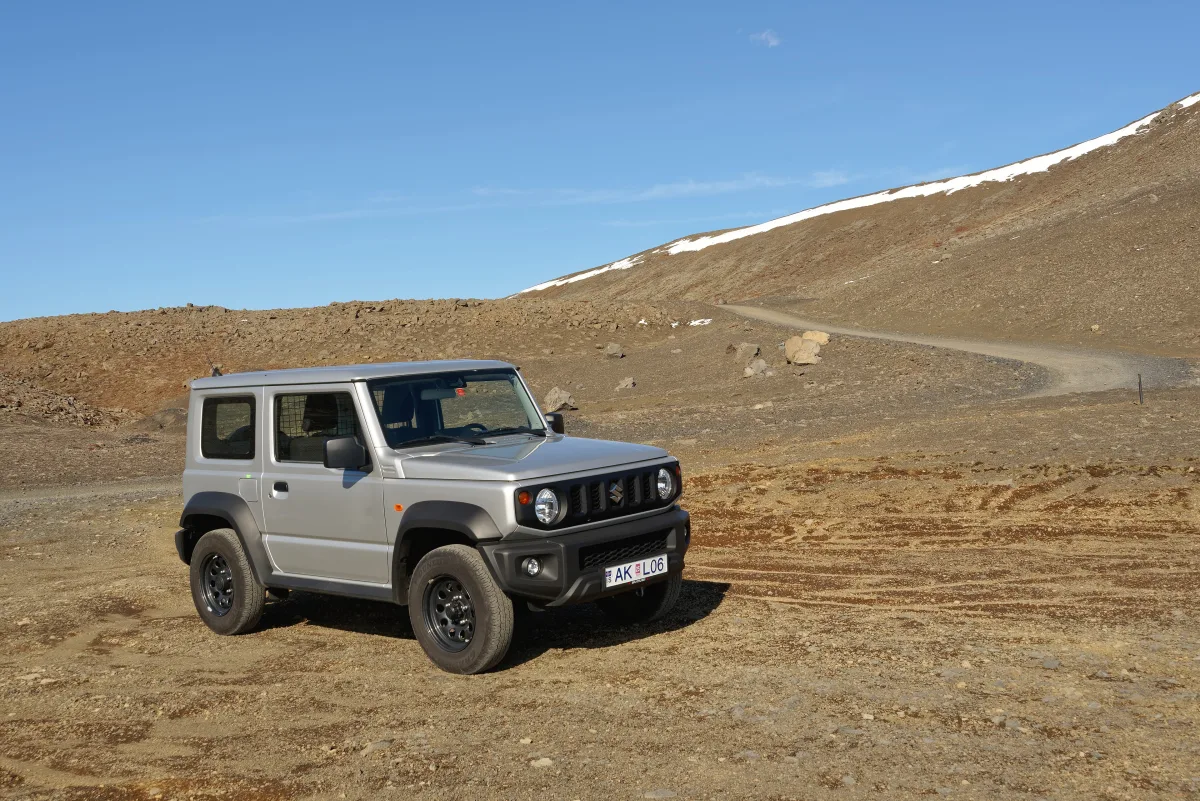
Suzuki Jimny: III and IV generations, engines and trims
Suzuki Jimny — a small but genuine off-roader with a ladder frame, solid axles and a reduction gear, whose history dates back to 1970. We look at what sets apart the most common III (1998–2018) and IV (from 2018) generations on the used market, which engines they come with, what the Jimny Pro is all about, and what to check when buying used.






Jimny in brief
Jimny is one of the few modern cars designed primarily for off-roading. It features a ladder-frame chassis, solid front and rear axles, a selectable four-wheel drive system and a reduction gear. Thanks to its light weight, short overhangs and compact dimensions, it tackles trails where larger off-roaders often struggle.
On the flip side — daily comfort. The Jimny rides firmly, is noisy on the motorway, and the boot is tiny with the rear seats up. Therefore, it's best suited as a second car, for hunters, anglers, estate owners or off-road enthusiasts.
The Jimny holds its value remarkably well: especially for the IV generation, there are usually far fewer used examples available than there are buyers.
III and IV generations — what's the difference
The III generation (1998–2018) was produced for nearly two decades and underwent several updates. Besides the hardtop, a convertible version was also offered. This is the most affordable way to get a Jimny, but most examples are now quite old, so the condition of the frame and body is crucial.
Fourth generation (from 2018) retained the same basic structure – the frame, axles, and transfer case, but gained a boxy design reminiscent of classic off-roaders, a sturdier frame, a larger engine, a more modern interior, and more safety systems.
The tightening of CO2 regulations in Europe means that from around 2021, the new Jimny is mostly sold as a two-seater commercial Jimny Pro with a partition behind the front seats. Therefore, four-seater versions of the fourth generation are mostly from 2018–2020.
Engines and transmissions
The third generation most commonly features a 1.3-litre petrol engine (around 80–85 hp). For a time in Europe, a 1.5 DDiS diesel (around 65–86 hp) was also offered, but there aren't many of these cars.
The fourth generation comes with a single 1.5-litre naturally aspirated petrol engine, around 100 hp. It's simple and reliable, but lacks power on the motorway, and fuel consumption isn't low thanks to the boxy body and all-terrain tyres.
Both generations come with a five-speed manual or four-speed automatic transmission. In the fourth generation, the front-wheel drive and transfer case are engaged with a lever, while in the third generation, it's usually with buttons.
What to check when buying a used Jimny
The most important thing – rust. Thoroughly inspect the frame, especially the rear section, the body mounting points, sills, and floor. In third-generation cars, rust is the most common reason why a car is no longer worth repairing.
Check that the car hasn't been heavily off-roaded: bent protective elements, a dented underbody, or damaged axles indicate a tough life. Test the front-wheel drive and low-range engagement.
While driving, assess whether the steering wheel and front axle start to vibrate excessively at certain speeds, especially after hitting a pothole. This is typical of solid-axle cars and often indicates worn steering or suspension components or improper tyres. Check the service history for any records of technical inspections and servicing.


Trim levels
Trim names vary by country: the fourth-gen Jimny in Germany and many European countries is called Comfort and Comfort+, while in the UK it's SZ4 and SZ5. We list the most commonly encountered versions.
JLX
Third generationThe most common third-gen trim in the UK and some other markets.
- Optional four-wheel drive with low-range gearing
- Often — alloy wheels
- Often — air conditioning
Comfort
Fourth generationBase four-seater trim for the fourth-gen.
- Usually — steel wheels
- Halogen headlights and air conditioning
- Often — anti-lock braking system
Comfort+
Fourth generationBest-equipped four-seater version.
- Lightweight chassis options
- Often — LED headlights and automatic climate control
- Often — touchscreen multimedia display with navigation
Jimny Pro
Fourth generation, from around 2021Two-seater commercial version for the European market
- Only two seats and a partition
- Larger cargo space
- Same underpinnings — chassis, bridges, and reduction gear
Comparison of fourth-gen versions
| Comfort | Comfort+ | Jimny Pro | |
|---|---|---|---|
| Who it's for | For the budget-conscious buyer | For the daily commuter and comfort seeker | For work and cargo |
| Wheels (usually) | 15 in., steel | 15-inch, alloy | 15 in., steel |
| Seats | 4 | 4 | 2 |
| Headlights | Halogen | Often — LED | Mostly halogen |
| Price in the used market (relatively) | €€ | €€€ | €€ |
If the Jimny is to be used daily, the best choice is the four-seater Comfort+. The Jimny Pro is worth considering if you need a workhorse and don't need the rear seats.
Pros
- A true off-roader with a ladder frame, solid axles, and a reduction gear
- Excellent off-road capability thanks to its light weight and compact size
- Simple, robust technology
- Holds its value very well
Cons
- Firm, noisy ride on the motorway
- Very small boot and shallow rear
- Later four-door versions are rare and expensive
Frequently asked questions
Is the Suzuki Jimny suitable for daily driving?
In the city and on short trips — yes, but on long motorway journeys it's noisy, rides firmly, and is sensitive to side winds. For many owners, the Jimny is a second car, used for off-roading and leisure.
What's the difference between the Jimny and Jimny Pro?
The Jimny Pro is a two-seat commercial version of the fourth generation: instead of a rear seat, there's a cargo area with a partition. The mechanics, including the chassis, axles, and transfer case, are the same as the four-door version.
Why is a used Jimny so expensive?
The Jimny has few direct competitors, and the four-door fourth-generation versions weren't sold in Europe for long, but demand is high. Therefore, used cars, especially fourth-generation models, retain their value well.
Is it worth buying an old third-generation Jimny?
Yes, if the chassis and body are free of serious rust, and the car hasn't been heavily used off-road. Before buying, it's worth jacking the car up on a lift and inspecting the underside at a service.
Updated 2026-10-09 · Trim levels and equipment vary by market and model year — check the equipment of the specific car. · Translated automatically


