 English
 Lietuvių
 Latviešu
 Eesti
 Polski
 Русский
 Українська
 Deutsch
 Nederlands
 Čeština
 Slovenčina
 Svenska
 Norsk
 Dansk
 Suomi


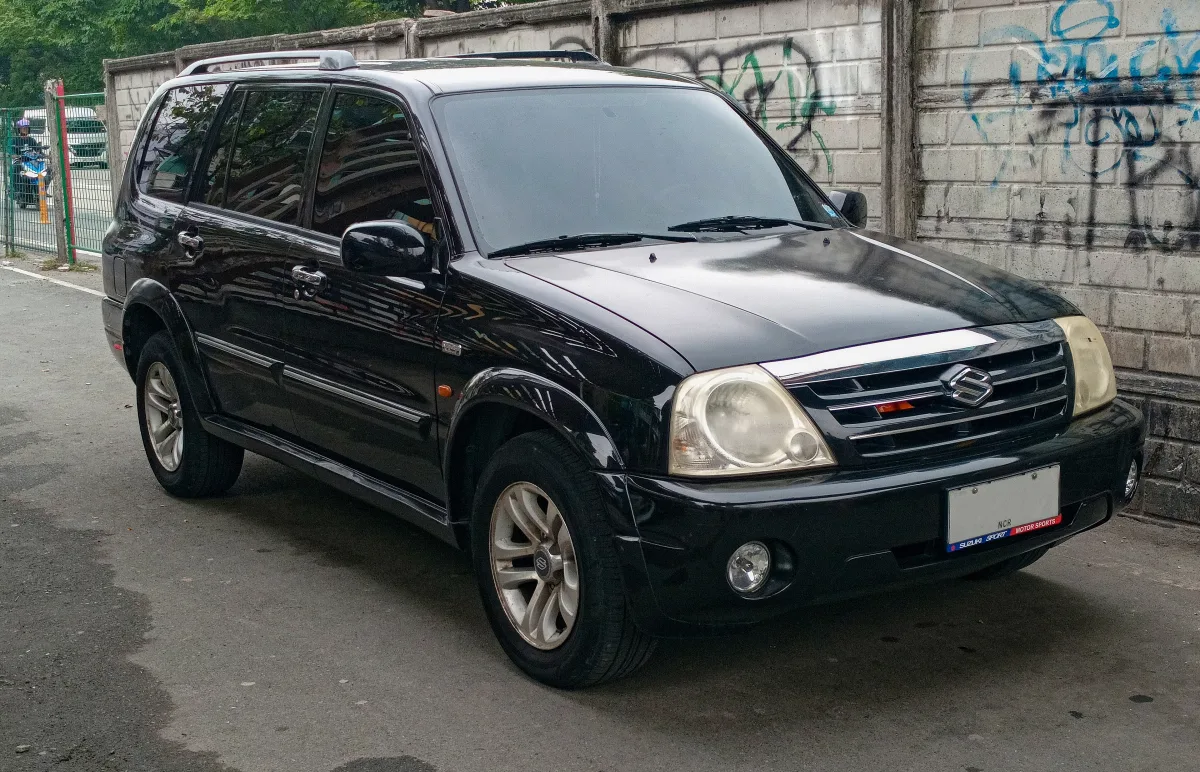
Suzuki XL-7: two generations, engines and what to check when buying
The Suzuki XL-7 is a seven-seater SUV that was sold from 1998 to 2009. It had two distinctly different generations: the first based on the Grand Vitara and the second, developed with GM. We look at how they differ, which engines were offered, and what to check when buying used.






The XL-7 in brief
The first XL-7 was a stretched Grand Vitara with a third row of seats. It's a classic body-on-frame SUV with full-time four-wheel drive and a low-range transfer case, suitable for a few passengers and light off-roading.
The second XL-7 (2007–2009) became a completely different beast—a modern crossover built on a GM platform, with a V6 engine and more comfort. These are two different cars with the same name, so before buying, find out which generation the seller is offering.
Which generation to choose
The first generation is more suitable for those who value the SUV character and mechanical simplicity. Most of these cars are now quite old, so the biggest concerns are corrosion and engine condition, rather than the spec.
The second generation is more comfortable, modern, and safer, but less suited to serious off-roading. It's more like a family crossover and is rarer on the used market.
Engines and transmissions
The first generation most often came with a 2.7-litre V6 petrol engine (around 170hp), paired with a manual or automatic gearbox. Always check the specific car's equipment using the VIN and documents.
Second-hand 3.6-litre V6 (around 250 hp) with a 5-speed automatic gearbox, front-wheel or all-wheel drive. The engine is powerful, but fuel consumption is high.
What to check when buying a used XL-7
Inspect the first-generation XL-7 for rust on the underbody, suspension mounts, and exhaust system. Check the timing belt replacement history on the 2.7 V6 engine, as failure can seriously damage the engine.
Test the all-wheel drive and transmission by driving off-road — unusual noises, grinding, or mechanical binding are bad signs.
In the second-generation model, check the automatic transmission, cooling system, and all electronic functions. Many cars were imported from the USA — check the accident history using the VIN.


Trim levels
Names vary by market and generation: first-generation US versions — LX, EX, Limited; second-generation — Base, Luxury, Limited.
LX
First generationBase trim for the first generation.
- Often comes with basic alloy wheels
- More basic interior
- Often features manual air conditioning
EX
First generationBetter-equipped version with more comfort features.
- Often comes with lightweight alloy wheels
- Often features electric windows and mirrors
- Often — roof-mounted luggage rack
Limited
First generationThe top-of-the-range first-generation trim.
- Often — leather interior
- Often — heated seats
- Better sound system
Base / Luxury
Second generationBase and better second-generation trims.
- More modern safety features
- Often — parking sensors
- More comfort features
Limited
Second generationThe top-of-the-range second-generation version.
- Often — leather interior
- Often — heated seats
- Often — navigation or rear-view camera
Comparison of XL-7 trims
| LX (I karta) | Limited (I karta) | Luxury (II karta) | Limited (II karta) | |
|---|---|---|---|---|
| Who it's for | Budget-friendly SUV | Comfort | Family crossover | Maximum comfort |
| Wheels (most common) | 16-inch | 16-inch | 17-inch | 18-inch |
| Interior | Cloth | Leather | Cloth or leather | Leather |
| Engine | 2.7 V6 | 2.7 V6 | 3.6 V6 | 3.6 V6 |
| Price in the used market (relatively) | € | € | €€ | €€ |
If you're after a straightforward 4x4 with full-time four-wheel drive, go for a first-gen model and thoroughly check for rust. If comfort is key, opt for a second-gen, but expect higher fuel consumption.
Pros
- Seven seats and a spacious interior
- First-gen — a proper 4x4 with a low-range gearbox
- Second-gen — a more powerful V6 and modern comforts
- A rare, standout vehicle
Cons
- High fuel consumption
- Limited parts availability
- First-gen models are getting old and may be affected by rust
Frequently asked questions
What's the difference between the first and second-gen XL-7?
First-gen — a classic 4x4 design based on the Grand Vitara, with a low-range gearbox. Second-gen — a modern crossover with GM tech, a V6 engine, and more comfort, but less suited to rough terrain.
Is the XL-7 suitable for families?
Yes — seven seats and a large boot (with the rear seats folded) make it practical. However, the third row is best for kids, and fuel consumption is high.
How to tell which generation it is?
The first-generation XL-7 looks like a stretched Grand Vitara with a boxy, angular body. The second-generation model features a more rounded design, similar to other GM crossovers, and was produced only between 2007 and 2009.
Updated 2026-10-14 · Trim levels and equipment vary by market and model year — check the equipment of the specific car. · Translated automatically


