 English
 Lietuvių
 Latviešu
 Eesti
 Polski
 Русский
 Українська
 Deutsch
 Nederlands
 Čeština
 Slovenčina
 Svenska
 Norsk
 Dansk
 Suomi


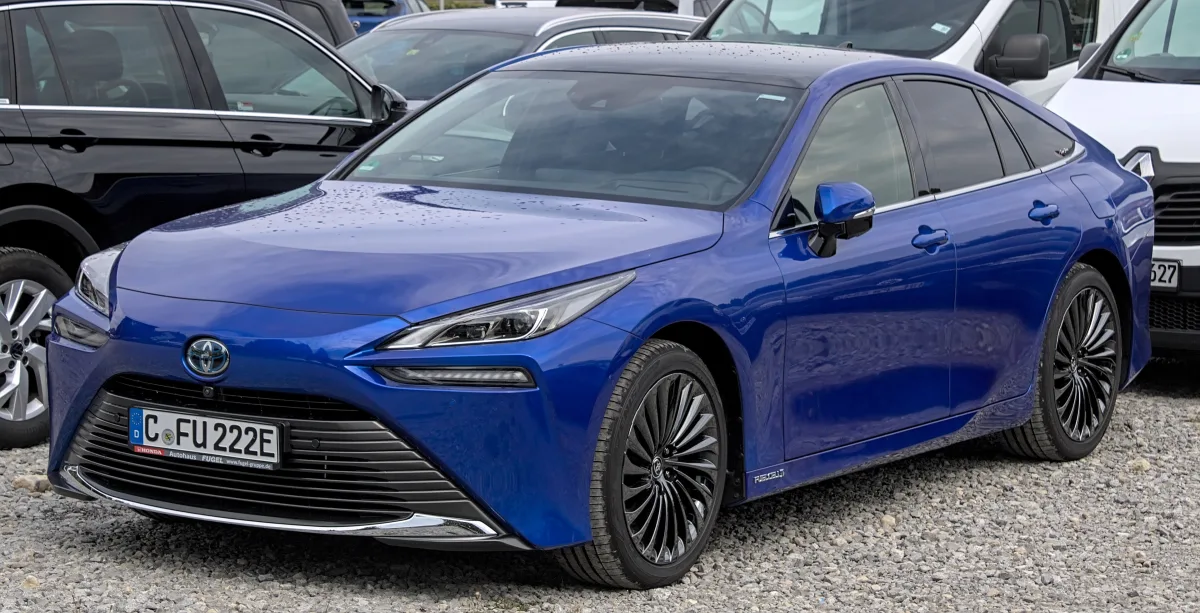
Toyota Mirai: hydrogen car generations and what to know
The Toyota Mirai is one of the first mass-produced hydrogen fuel cell cars in the world. We look at both generations, how this car works, how it differs from an electric vehicle, and what you need to know before buying a used Mirai in Lithuania.






Mirai in brief
The Mirai doesn't run on fuel but on electricity generated by fuel cells using hydrogen and oxygen from the air. The only emission is water vapour. Hydrogen is stored in high-pressure tanks and can be refilled in just a few minutes.
The name “Mirai” is Japanese for “future”. While the technology is intriguing, the key question for buyers is where to refuel. Lithuania has virtually no public hydrogen refuelling network, so before buying, definitely consider how you’ll use the car.
Which generation to choose
The first generation (JPD10, from 2014) is a four-door sedan with front-wheel drive and around 150 hp electric motor. Range on a full tank is up to roughly 500 km. The design is striking and controversial, while the interior feels dated.
The second generation (JPD20, from 2020) is based on a newer Toyota platform, features rear-wheel drive, a lower and sleeker body, three hydrogen tanks, and around 180 hp. Range is greater, up to roughly 650 km, and the interior is more modern.
Engine and drivetrain
Both sets of wheels are driven by an electric motor, so there's no traditional gearbox — you drive silently and smoothly, like an electric car. Fuel cells and a small battery supply power to the motor and store recuperated energy.
The car is easy to operate: sit in, press the start button, and drive off. In cold weather, the system takes a bit longer to warm up.
What to check when buying a used Mirai
The most important thing is the condition of the fuel cells and hydrogen tanks, their warranties, and service history. Only a Toyota dealership or specialists with hydrogen equipment can properly check these components.
Find out where and at what cost you can refill hydrogen, where you can get servicing, and how to handle spare parts. Check for any body damage, especially around the hydrogen tank area, and ensure the system shows no errors.


Trim levels
Names and equipment vary by market and year; we list the trims most commonly found in Europe.
Mirai (I karta)
JPD10The first series Mirai with front-wheel drive.
- Around 150 hp electric motor
- Two hydrogen tanks
- Often comes with a rich standard equipment list
Mirai (II karta)
JPD20The updated model with a longer range and a more modern interior.
- Around 180 hp, rear-wheel drive
- Three hydrogen tanks
- Often — a larger multimedia screen and advanced driver-assistance systems
Trim comparison
| Mirai (I karta) | Mirai (II karta) | |
|---|---|---|
| Who it's for | For enthusiasts and track days | Daily driving where hydrogen refuelling is available |
| Transmission | Front wheels | Rear wheels |
| Approximate range | Up to ~500 km | Up to ~650 km |
| Price in the used market (relatively) | €€ | €€€ |
Buying a Mirai in Lithuania is worth considering only after carefully thinking about hydrogen refuelling. If that's a necessity, the second generation is more practical and modern, but the first one can also be suitable for a more budget-friendly option.
Pros
- Refuelling with hydrogen takes a few minutes
- Only emits water vapour
- Quiet and smooth ride
- Advanced and complex technology
Cons
- Lithuania lacks hydrogen refuelling stations
- Very limited access to servicing and spare parts
- Cost of hydrogen and refuelling accessibility
Frequently asked questions
Can you refuel a Mirai with hydrogen in Lithuania?
There are practically no public hydrogen refuelling stations in Lithuania, so before buying, find out where you can refuel the car and assess whether it suits your needs.
How does the Mirai differ from an electric car?
Both are powered by an electric motor, but the Mirai generates electricity from hydrogen, while an electric car stores it in a battery and is charged from the grid. Refuelling the Mirai takes a few minutes.
Is the Mirai safe?
The hydrogen tanks are designed to withstand impacts and have safety systems, and under normal driving conditions, the car drives like any other. Always require a specialist check after accidents.
Updated 2026-10-17 · Trim levels and equipment vary by market and model year — check the equipment of the specific car. · Translated automatically


