 English
 Lietuvių
 Latviešu
 Eesti
 Polski
 Русский
 Українська
 Deutsch
 Nederlands
 Čeština
 Slovenčina
 Svenska
 Norsk
 Dansk
 Suomi


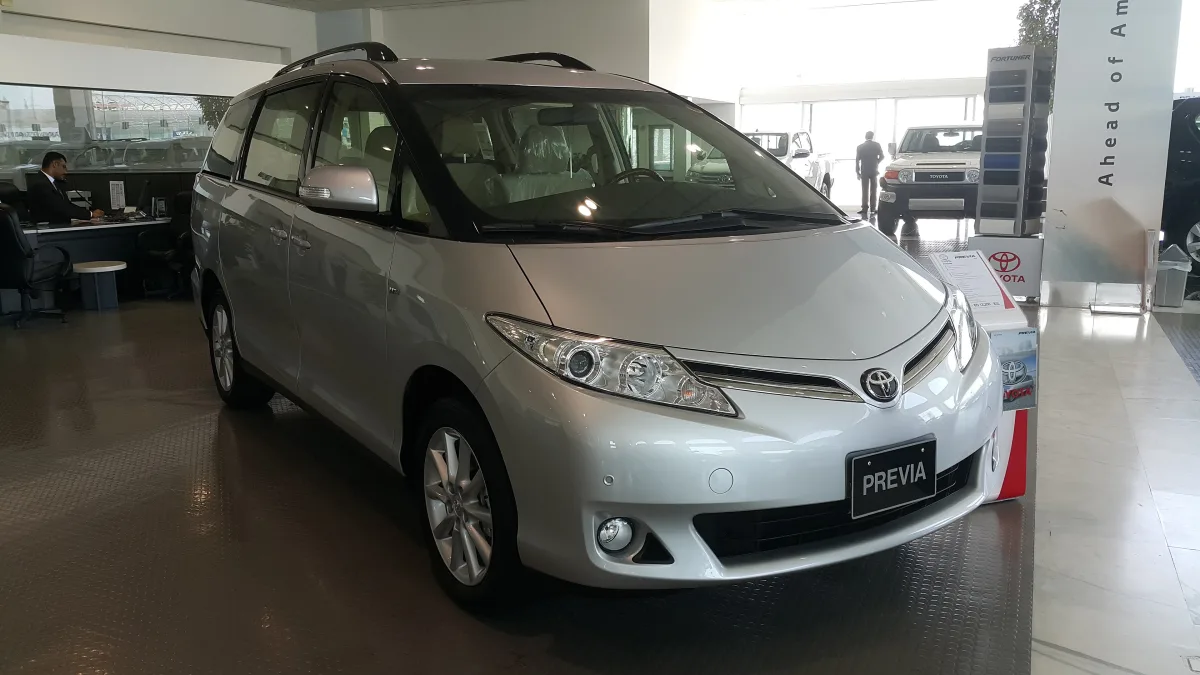
Toyota Previa: generations, engines and trims
The Toyota Previa is a spacious minivan that has been transporting families and business clients around the world since 1990. In this article, we look at the generations, engines, trims, and what to check when buying a used Previa in Lithuania.






Previa in brief
The Previa is a large 7–8 seater minivan with sliding side doors. The first generation stood out with its unconventional egg-shaped body and engine mounted under the front seats; later generations adopted more conventional proportions but retained a spacious, flexible interior.
On the used market, the Previa is valued for its space, reliability, and practicality: it's a great choice for large families, road trips, or transporting passengers. Due to their age, the condition of these cars varies greatly, so a thorough inspection is crucial.
Which generation to choose
The first generation (1990–1999, XR10) is now quite old — its advantages are the price and originality, but the downside is the complex engine maintenance due to its unique layout and age. Many of them now require attention to the body and chassis.
The second generation (XR30, circa 2000–2006) became more conventional, with the engine at the front and sliding doors on both sides. This is the most popular European version on the used market. Additionally, you might find XR50s (Estima) imported from Japan in Lithuania — more modern, but not always suited to European conditions.
Engines and gearboxes
The second generation (XR30) most commonly features the 2.0 D-4D diesel (around 116 hp) and 2.4 VVT-i petrol engines. Gearboxes are either a 5-speed manual or 4-speed automatic; all-wheel-drive versions are also available.
The XR50 (Estima) from Japan usually comes with the 2.4 petrol engine and a continuously variable transmission (CVT), with a 3.5 V6 variant also possible. Due to its size and weight, fuel consumption is higher than that of smaller cars.
What to check when buying a used Previa
In diesel cars, check the turbo, EGR valve, injector condition, and particulate filter (if fitted). In the 2.4 petrol engines, pay attention to oil consumption and leaks — check the oil level, as some engines in this family can use quite a bit.
Test the sliding doors (manual and electric) to see if they move smoothly and are in good condition. Inspect the sills, arches, and underside for rust, and check the air conditioning — it might be dual-zone (front and rear). Test the automatic gearbox with smooth and more demanding driving.


Trim levels
Names and equipment vary by market and year; we list the most common trims found in Europe, and for the XR50 sold in Japan, we use its local names.
Bazinė
First generation (XR10)First-generation Previas with rear-mounted engines.
- Often — air conditioning
- Often — sliding side doors
- 7–8 seats
Linea Terra
Second generation (XR30)The main trim level for the second generation.
- Often — air conditioning
- Often — electric windows
- Sliding rear doors
Linea Sol
Second generation (XR30)Mid-range trim with added comfort.
- Often — climate control
- Often — alloy wheels
- Often — parking sensors
Linea Luna
Second generation (XR30)Top-spec second-generation trim.
- Often — leather interior
- Often — electric seats
- Often — upgraded sound system and trim
Aeras
XR50 (Estima, import)Popular imported version from Japan.
- Often — electric sliding doors
- Often — alloy wheels
- Often — navigation and cameras
Trim comparison
| Linea Terra | Linea Sol | Linea Luna | Aeras (XR50) | |
|---|---|---|---|---|
| Who it's for | For families, everyday use | For comfort on the road | For maximum comfort | For the modern single driver |
| Wheels (most common) | 15-inch | 16-inch | 16-inch | 16–17-inch |
| Doors | Sliding rear doors | Sliding rear doors | Sliding rear doors, sometimes electric | Often electric |
| Engine | 2.0 D-4D, 2.4 | 2.0 D-4D, 2.4 | 2.0 D-4D, 2.4 | 2.4, sometimes 3.5 V6 |
| Price in the used market (relatively) | € | € | €€ | €€ |
If you need a reliable family MPV, opt for a well-maintained second-generation Previa with Sol or Luna trim. The imported XR50 is more modern, but you'll need to check its service history and some parts in advance.
Pros
- Very spacious interior for 7–8 people
- Highly regarded reliability
- Practical sliding side doors
- Wide range of engines and body styles
Cons
- Large dimensions and fuel consumption
- First-generation engine maintenance is complex
- Many of these cars are quite old, so a thorough inspection is necessary
Frequently asked questions
Is the Previa suitable for a large family?
Yes, it's one of the most practical older MPVs: the interior seats 7–8 people, there are sliding side doors, and the seats can be rearranged and removed.
Which Previa engine is better?
The 2.0 D-4D is more economical for long trips, but it requires careful daily maintenance. The 2.4 petrol engine is simpler and quieter, but it drinks more fuel. Choose based on your driving style and the specific car's condition.
Is it worth buying a Previa from Japan (Estima)?
It might be, if the car is in good condition and you have a reliable service centre that knows this model. The parts availability could differ from the European Previa, and some features (e.g., navigation) might only be in Japanese.
Updated 2026-10-17 · Trim levels and equipment vary by market and model year — check the equipment of the specific car. · Translated automatically


