 English
 Lietuvių
 Latviešu
 Eesti
 Polski
 Русский
 Українська
 Deutsch
 Nederlands
 Čeština
 Slovenčina
 Svenska
 Norsk
 Dansk
 Suomi


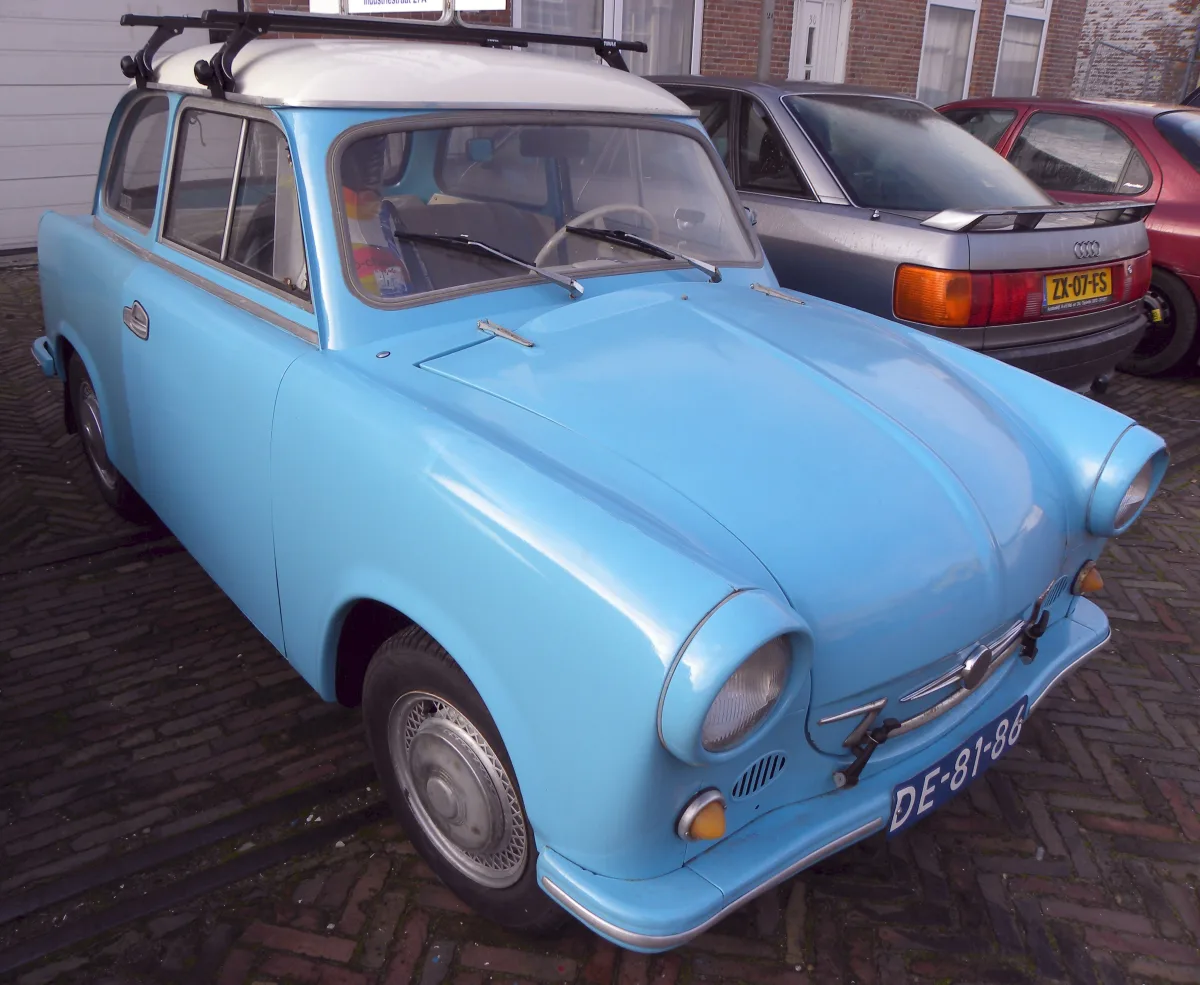
Trabant 600: the early Trabant with a two-stroke engine
The Trabant 600 is an early East German (GDR) Trabant car with a two-stroke engine and plastic body, produced in the early 1960s. Today, it's a collectible and highly recognisable car; we'll look at its technical features and what to check when buying.






Trabant 600 in brief
The Trabant 600 is a small four-seater car with front-wheel drive and a two-cylinder, two-stroke engine. The body is made from duroplast — a material composed of plastic and cotton or other fibres, bonded to a steel frame.
The car was very simple, light, and cheap. It became one of the symbols of Eastern Europe, and today in Lithuania, you'll mostly encounter it in classic car gatherings.
Which version to choose
Two main body styles were produced — the sedan and the estate (Kombi). The estate is more practical, offering more cargo space, while the sedan is generally considered the classic version.
Later, the 600 was replaced by the Trabant 601, which was produced for much longer and is more common. When buying an early 600, check that the car is genuinely from the early series, as it's rarer than the later 601.
Engines and gearboxes
The engine is a roughly 0.6-litre two-stroke, two-cylinder unit with around 23–26 hp. The two-stroke engine requires a mix of petrol and oil, so fuel is prepared separately or special oils are used.
Gearbox — four-speed manual, drive — front-wheel. The car is slow and noisy, but very simple and easy to fix.
What to check when buying a Trabant 600
First off — check the bodywork for rust and the condition of the duroplast panels. Look for any cracks or poorly fitted panels.
Inspect the engine, clutch, and gearbox, electrical system, and fuel system. Due to the two-stroke engine and its age, it's worth hiring a specialist familiar with this model.
Check the documents and VIN. When registering a classic car in Lithuania, familiarise yourself with the rules for historical vehicles.


Trim levels
We list the main body styles; the car is often sold without specific trim names.
Sedanas
Early 1960sThe standard, classic body.
- Duroplast body
- Two-cylinder two-stroke engine
- Front-wheel drive
Universalas (Kombi)
Early 1960sA more practical variant with extra cargo space.
- More cargo space
- Rear boot lid
- The same engine as the sedan
Body comparison
| Sedanas | Universalas | |
|---|---|---|
| Who it's for | For classic design enthusiasts | More practical for everyday use |
| Cargo space | Smaller | Larger |
| Engine | Approximately 0.6-litre two-stroke | Approximately 0.6-litre two-stroke |
| Price in the classic car market (relatively) | €€ | €€ |
The sedan looks more classic, while the estate is more practical. For both, the condition of the body and chassis is crucial.
Pros
- A recognisable symbol of VDR history
- Very simple technology
- Easy and cheap to maintain
- Unique collector's value
Cons
- Very low power and sluggish performance
- Two-stroke engine smoke and noise
- Poor passive safety
Frequently asked questions
Can the Trabant 600 be used daily?
Technically yes, but the car is slow, noisy and has minimal safety features. Mostly used for events and fun.
How does the Trabant 600 differ from the 601?
The 600 is the earlier model, while the 601 is the later and more common. The looks are similar, but the tech and details differ slightly.
Why is the Trabant body made of plastic?
The body is made from duroplast — a composite that was cheap and didn't require much steel, which was scarce at the time.
Updated 2026-10-21 · Trim levels and equipment vary by market and model year — check the equipment of the specific car. · Translated automatically


