 English
 Lietuvių
 Latviešu
 Eesti
 Polski
 Русский
 Українська
 Deutsch
 Nederlands
 Čeština
 Slovenčina
 Svenska
 Norsk
 Dansk
 Suomi


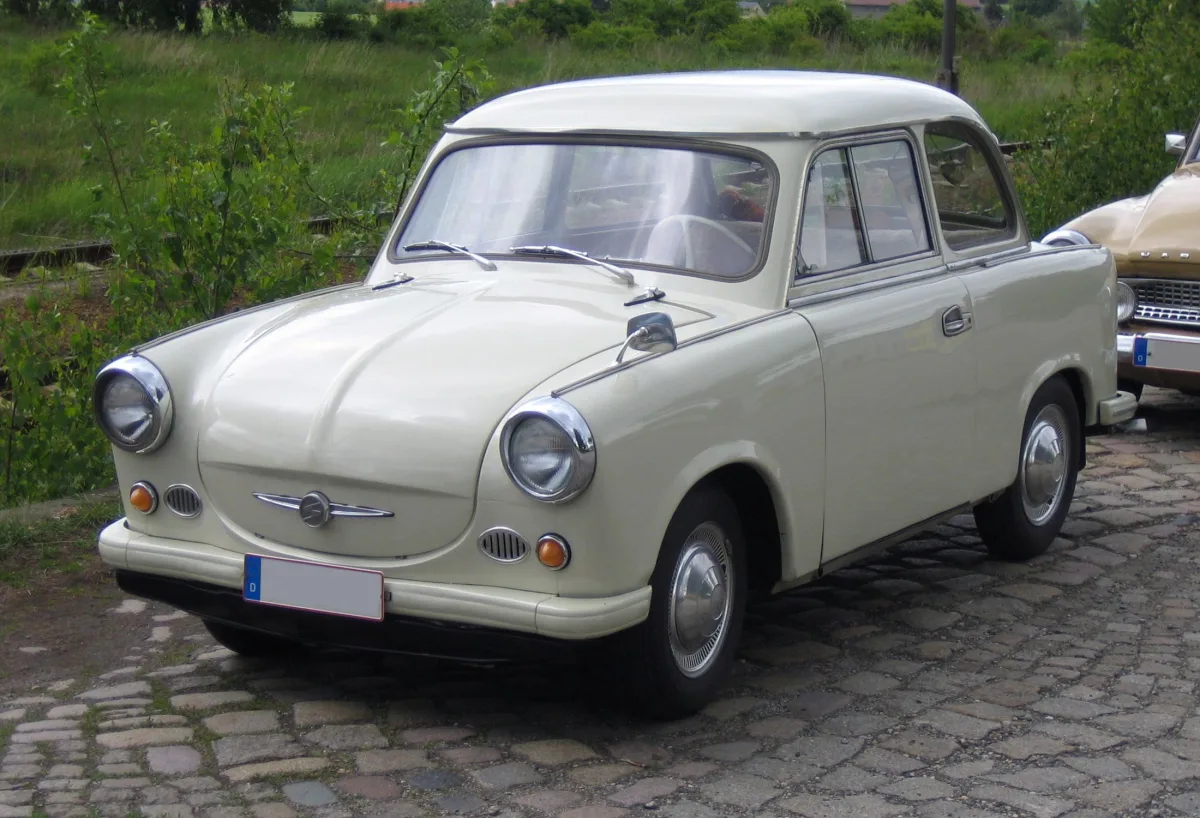
Trabant P50: the first 'Trabant' and what the collector needs to know
The Trabant P50 (also known as the Trabant 500) was the first mass-produced car from East Germany, manufactured from 1957 to 1962. We take a look at what makes it special, its technology, and what collectors need to know.






P50 in brief
The Trabant P50 was produced by VEB Sachsenring Automobilwerke Zwickau from 1957 to 1962. A total of 131,495 units were made, including pre-production cars. In 1962, production switched to the Trabant 600, which combined the P50's looks with next-gen technology.
In 1954, East Germany decided to create a small car for mass motorisation: two proper seats and two smaller ones, a plastic body, and low running costs. The result was a lightweight car with a duroplast body.
What sets it apart
The P50's body is made from duroplast, a composite of cotton and resin, so it doesn't rust like steel. The car is small, light, and simple, and it remains one of the most iconic cars from the socialist era in the minds of German drivers.
In March 1960, an estate version appeared, finished by the Meerane body plant. In 1961, a van (without rear windows) was introduced, and for the domestic market, there was the 'Camping' estate with fold-flat seats and a large opening roof.
Engine and tech
The P50's engine is a two-cylinder, two-stroke unit with around 500cc capacity and approximately 18hp. In October 1958, the improved P50/Z engine arrived, and in August 1959, it was replaced by the P50/1.
In the summer of 1962, the P50 received a fully synchronised gearbox. Like other two-strokes, it needs oil mixed with fuel, which requires extra maintenance today.
What to check when buying such a car
Although the duroplast body doesn't rust, corrosion can affect the steel frame, floor, sills, and door pillars. Check that the body panels aren't dented, deformed, or poorly repaired.
Check the engine's operation: two-stroke engines should run smoothly, without excessive smoking. Parts can be found through clubs and specialist shops, but components for early P50 versions may be rare.


Trim levels
The Trabant P50 came in several body styles, so we'll outline the main ones.
Trabant P50 limuzinas
1957–1962The base two-door saloon.
- A plastic-bodied car
- Two-cylinder two-stroke engine
- A basic interior
Trabant P50 universalas
from March 1960Estate version with a larger boot.
- A practical estate
- The body was finished at a separate factory
- Often — more cargo space
Trabant P50 Camping
Early 1960sA utility vehicle with fold-down seats and a large opening roof.
- Fold-down seats
- Large opening roof
- Intended for the domestic market
Comparing Trabant P50 versions
| Limuzinas | Universalas | Camping | |
|---|---|---|---|
| Who it's for | For collectors | For families and travellers | For camping enthusiasts |
| Engine | Around 500 cm³, two-stroke | Around 500 cm³, two-stroke | Around 500 cm³, two-stroke |
| Body | Two-door | Universalas | Estate with a removable roof |
| Price in the used market (relatively) | €€ | €€ | €€€ |
The Trabant P50 is a collector's car with a striking history. Choose based on condition, and go for the Camping or estate if you're after practicality and a rarer variant.
Pros
- Light plastic body
- Simple technology
- Notable historical significance
- Active Trabant club community
Cons
- Two-stroke engine requires extra maintenance
- Weak power by today's standards
- Parts for early versions can be hard to find
Frequently asked questions
How does the P50 differ from the Trabant 601?
The P50 was an early model with its own engine and tech. The 601 came later, with revised tech and a longer production run.
What is the Trabant body made of?
Made from a composite of plastic, cloth, and wood that doesn't rust like steel.
Is the P50 suitable for daily use?
Due to its outdated technology and poor safety features, it's better suited for events, shows, and weekend drives.
Updated 2026-10-21 · Trim levels and equipment vary by market and model year — check the equipment of the specific car. · Translated automatically


