 English
 Lietuvių
 Latviešu
 Eesti
 Polski
 Русский
 Українська
 Deutsch
 Nederlands
 Čeština
 Slovenčina
 Svenska
 Norsk
 Dansk
 Suomi


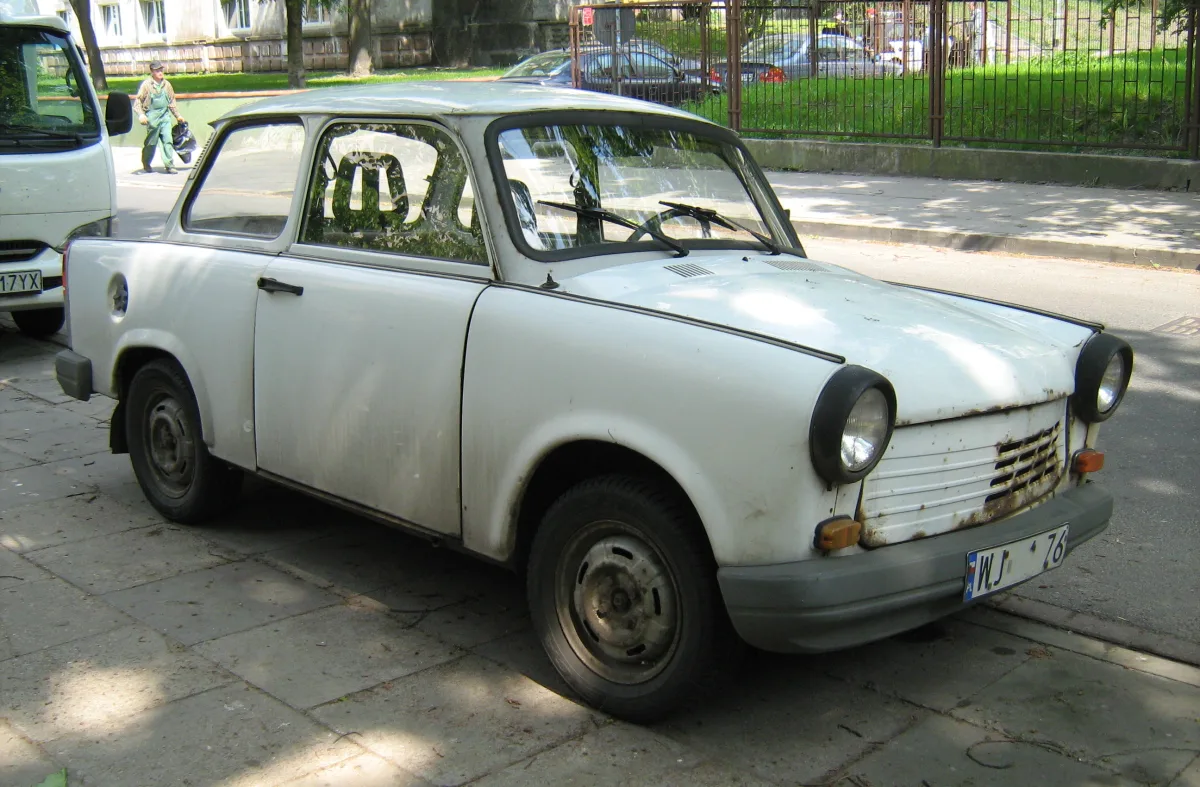
Trabant 1.1: the final Trabant with a VW engine and what to know before buying
Trabant 1.1 — the final and more modern Trabant model, produced 1990–1991 with a Volkswagen four-stroke engine instead of the two-stroke. We look at how it differs from the 601, what body styles are offered, and what to know when buying this collectible car.






Trabant 1.1 in brief
Trabant 1.1 — a small front-wheel-drive car with duroplastic (plastic) body panels over a galvanised steel body shell. It replaced the Trabant 601 and became the last of the four Trabant models (500, 600, 601, 1.1).
Production ran only from 1990–1991, as the era of East Germany came to an end. This car symbolises a transitional period and is now valued by collectors.
How it differs from the 601
The biggest difference is the engine. Earlier Trabants had a two-cylinder two-stroke engine that required oil to be mixed with the fuel, while the 1.1 got a 1,043 cm³ Volkswagen four-stroke engine.
As a result, the 1.1 is cleaner, produces less smoke, and doesn't require fuel mixed with oil. The rest of the construction — the body, suspension — remained largely the same as the 601.
Engine and gearbox
The Trabant 1.1 engine is a 1,043 cm³ four-stroke Volkswagen unit, producing around 40 hp. The gearbox is manual.
For comparison, the 601 engine had 594 cm³ and around 26 hp, with a fuel-to-oil mix ratio of 50:1 or 33:1.
Thanks to its light weight and simple mechanics, the car is still suitable for short distances, although the driving experience and safety levels are in line with 1980s standards.
What to check when buying a Trabant 1.1
The duroplastic panels don't rust, but the steel chassis, floors, and sills can corrode. Inspect the chassis, wheel arches, and underbody, as well as any cracks in the plastic parts.
Check the engine operation, cooling system, gearbox, brakes, and electrical equipment. Many of these cars have been restored, so it's important to find out how well the work was done.
Parts selection is limited, but the Trabant enthusiast community is large. Check the documents and determine if the car can be registered as a historic vehicle.


Trim levels
Classic cars don't have a single trim system, so we describe the versions by production period and body style.
Sedanas (Limousine)
1990–1991 modelsThe most common body style.
- Four-door saloon
- 1.1-litre VW engine
- Simple, easy-to-maintain technology
Universalas (Kombi)
1990–1991 modelsA more practical body with a larger boot.
- Estate body
- The same VW engine
- A larger boot
Pagrindinė įranga
1990–1991 modelsThe base trim.
- Often — basic trim.
- Less additional equipment.
- The more affordable option.
Trabant 601 (palyginimui)
up to 1989.Earlier model with a two-stroke engine.
- 594 cm³ two-stroke engine, around 26 hp.
- Requires an oil and fuel mixture.
- More smoke and noise.
Comparing versions.
| Sedanas | Universalas | 601 (palyginimui) | |
|---|---|---|---|
| Who it's for. | For collectors. | For the practical classic car enthusiast. | For retro fans. |
| Engine | 1043 cc four-stroke | 1043 cc four-stroke | 594 cc two-stroke |
| Body style | Sedanas | Universalas | Saloon or estate |
| Price in the used market (relatively) | Budget | Mid-range | Budget |
Most collectors will appreciate a well-maintained 1.1 saloon. The estate is more practical, but harder to find.
Pros
- Simple, easy-to-maintain technology
- The four-stroke VW engine is cleaner than the two-stroke
- Collectible and historical value
- Large enthusiast community
Cons
- Low safety rating by modern standards
- Limited choice of parts
- Modest power and comfort
Frequently asked questions
How does the Trabant 1.1 differ from the 601?
The 1.1 has a 1,043 cm³ four-stroke Volkswagen engine, while the 601 features a two-stroke engine that requires oil in the fuel.
When was the Trabant 1.1 produced?
The Trabant 1.1 was made between 1990 and 1991. This was the final Trabant model.
Does the Trabant 1.1 rust?
Duroplast panels don't rust, but the steel chassis, floors, and sills can corrode.
Updated 2026-10-21 · Trim levels and equipment vary by market and model year — check the equipment of the specific car. · Translated automatically


