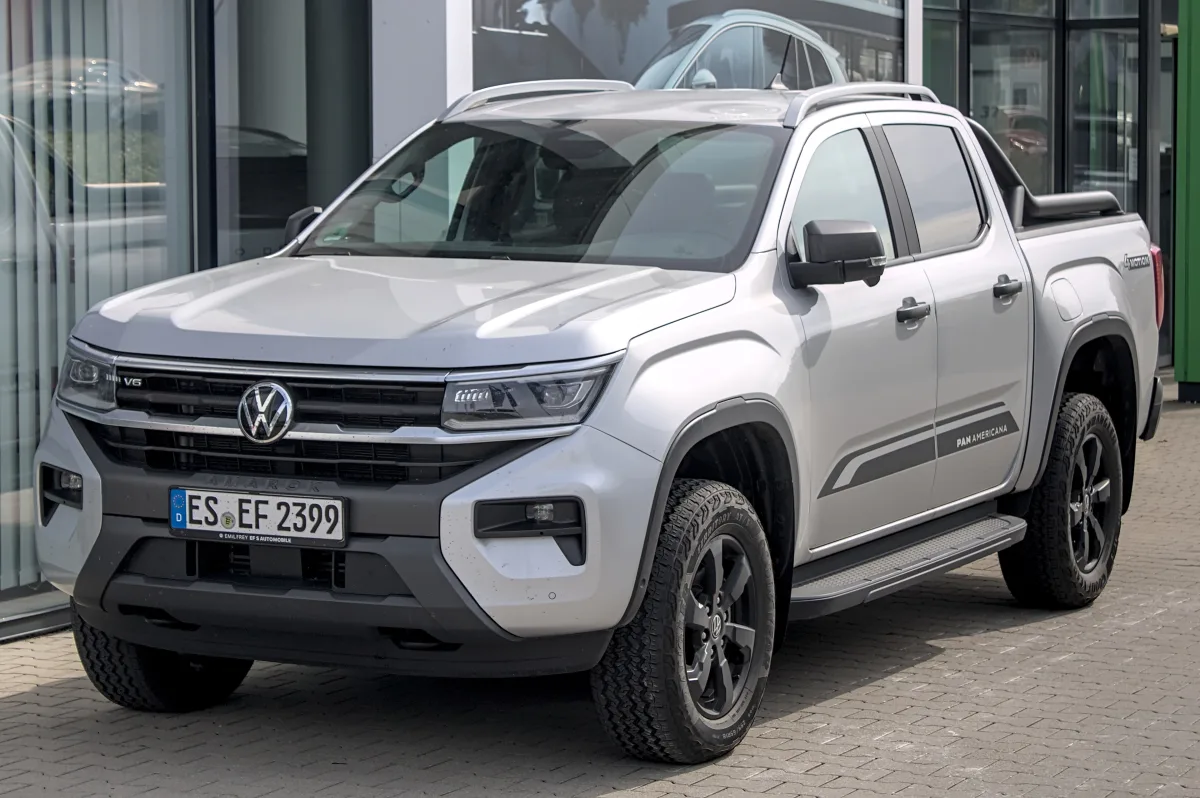
Volkswagen Amarok: I and II generations, engines and trims
Volkswagen Amarok — a mid-size pickup that appeals to farmers, builders, and outdoor enthusiasts. We look at how the I and II generations differ, which engines are most popular, how the trims vary, and what to check when buying a used Amarok.
ADVERTISEMENT
Amarok in brief
The first-generation Amarok was produced from 2010 to 2020 and was Volkswagen's first pickup for the European market. The double-cab (DoubleCab) body style is most common, with the single-cab (SingleCab) version featuring a longer cargo bed being less frequent.
The Amarok is praised for driving more like a regular car than most rivals: the cabin is quieter, the seats are comfortable, and the cargo bed is one of the widest in its class. The second generation (from late 2022) is co-developed with Ford and shares much of its underpinnings with the Ford Ranger.
I and II generation — what's the difference
The first generation (2010–2020) is the most common choice in the used market. Until its 2016 refresh, it came with 2.0 TDI and 2.0 BiTDI diesel engines, and after the refresh, it featured a 3.0 V6 TDI, an updated interior, and a newer infotainment system. Refreshed V6 models are usually pricier but also more refined.
The second generation (from late 2022) is built in South Africa on the Ford Ranger platform but has its own styling and a Volkswagen-style interior. It's more spacious, features a digital instrument cluster, a large vertical screen, and more advanced driver-assistance systems.
If price and simplicity are your top priorities, opt for a well-maintained first-generation model. If you want modern features and lower mileage, go for the second generation, although the used market is still relatively small.
Engines and transmissions
In the first generation, up to 2016, the most common engines were 2.0 TDI (around 122–140 hp) and 2.0 BiTDI (around 163–180 hp) diesels. After the update, the main engine was the 3.0 V6 TDI, offered in several power versions (around 163–258 hp). Transmissions were either a 6-speed manual or an 8-speed automatic.
The first generation offered all-wheel drive in two types: engageable 4MOTION with a manual transmission or permanent 4MOTION with an automatic. You might also find rear-wheel-drive versions, so it's worth checking before buying.
The second generation offers 2.0 TDI four-cylinder diesels (around 150–205 hp) and 3.0 V6 TDI (around 240 hp). More powerful engines are usually paired with a 10-speed automatic transmission, while less powerful ones can come with a manual.
What to check when buying a used Amarok
Pickups are often used for work, so inspect the cargo bed, tow hook, suspension mountings, and underside for signs of damage, rust, and off-road use. Ask what kind of loads or trailers the vehicle has towed.
2.0 TDI and BiTDI engines are prone to EGR valve, diesel particulate filter (DPF), and injector issues, especially if the vehicle has been driven mostly on short trips. Early 2.0 TDI models are also part of the diesel emissions scandal recall campaign — ask if it has been completed.
In V6 models, check that the automatic gearbox shifts smoothly and that its oil is in good condition. For all Amaroks, inspect the ride based on service records and maintenance logs, as workhorses accumulate wear and tear quickly.
ADVERTISEMENT
Trim levels
Names and equipment vary by market and year; we list the most common trims found in Europe.
Trendline
First generation
The base workhorse trim for the first generation.
A more basic infotainment system
Often — steel wheels and plastic bumpers
Durable, easy-to-clean interior trim
Comfortline
First generation
Mid-range trim with more daily comforts.
Light-alloy wheels
Often — automatic climate control
Body-coloured trim details
Highline
First generation
The top standard trim for the first generation.
Larger wheels and chrome details
Often — bi-xenon headlights and parking sensors
Often — a leather interior and heated seats
Aventura
First and second generations
The most luxurious version, often with a V6 engine.
Large alloy wheels and a striking appearance
Leather interior, plenty of comfort features
Often — the most powerful engine version
Style
Second generation
For buyers valuing comfort and style.
Often — matrix LED headlights
A larger multimedia screen and digital instrument cluster
Higher-class interior trim
PanAmericana
Second generation
A styling version tailored for the coupe.
Black exterior details and protective elements
Often — all-season tyres
A spacious interior with everyday comfort
Second-generation trim comparison
Life
Style
PanAmericana
Aventura
Who it's for
For work and daily driving
For comfort and style
For the keen driver and leisure
For ultimate comfort
Wheels (most common)
17 col.
18 col.
18 col., all-season tyres
20–21 col.
Front headlights
LED
Often matrix LED
Often matrix LED
Matrix LED
Engine
2.0 TDI
2.0 TDI, 3.0 V6 TDI
2.0 TDI, 3.0 V6 TDI
Mostly 3.0 V6 TDI
Price in the used market (relatively)
Budget
Mid-range
Mid-range
Premium
For most buyers, the best choice is the Style or PanAmericana: they come well-equipped and you can find both 2.0 TDI and V6 engines. The Life is great for work, while the Aventura is for those who prioritise comfort.
Pros
Drives and feels like a light car
Spacious load platform and high towing capacity
Powerful and smooth 3.0 V6 TDI
Good availability of spare parts
Cons
Large dimensions in the city and when parking
Workhorses are often heavily used
Early 2.0 TDI engine EGR and DPF issues
Frequently asked questions
Which Amarok engine to choose?
If the budget allows, the best choice is the 3.0 V6 TDI: it's powerful, smooth and less strained when towing a trailer. The 2.0 TDI and BiTDI are cheaper, but they require a solid service history and longer journeys to prevent DPF clogging.
Is the Amarok suitable for daily use?
Yes — it's one of the most comfortable pickups: the cabin is spacious and fairly quiet. However, due to its length and large turning circle, it's harder to drive and park in the city than a typical SUV.
How does the second-gen Amarok differ from the Ford Ranger?
Both are built in the same factory and share common technology, but the Amarok has its own styling, different interior trim and equipment levels. Driving dynamics and technical characteristics are essentially similar.
Updated 2026-10-09 · Trim levels and equipment vary by market and model year — check the equipment of the specific car. · Translated automatically
Comments
No comments about the Volkswagen Amarok yet. Share your experience.
We use necessary cookies to run the website. With your consent, we will also use analytics and advertising measurement cookies — to understand how the website is used and to measure our advertising results. Learn more
 English
 Lietuvių
 Latviešu
 Eesti
 Polski
 Русский
 Українська
 Deutsch
 Nederlands
 Čeština
 Slovenčina
 Svenska
 Norsk
 Dansk
 Suomi


 4