 English
 Lietuvių
 Latviešu
 Eesti
 Polski
 Русский
 Українська
 Deutsch
 Nederlands
 Čeština
 Slovenčina
 Svenska
 Norsk
 Dansk
 Suomi


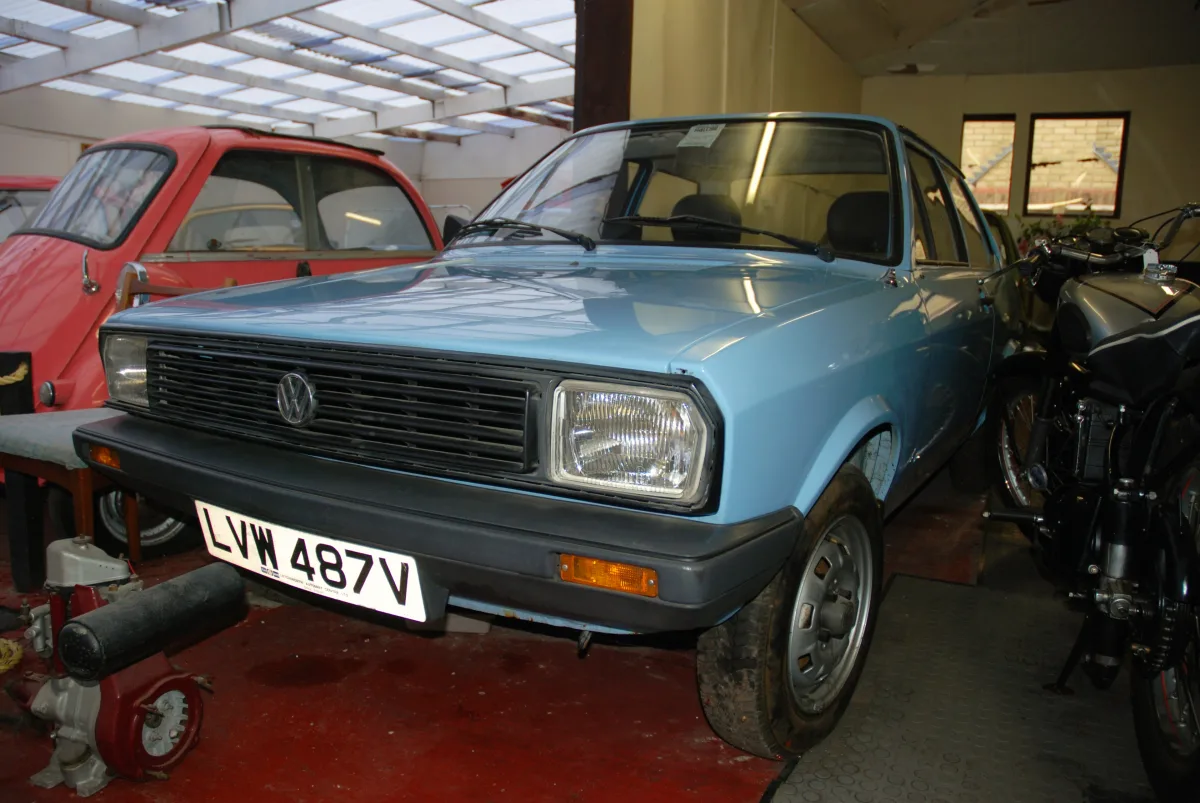
Volkswagen Derby: 1977–1981 sedans, engines and trims
Volkswagen Derby — the 1977–1981 compact sedan built on the first-generation Polo platform. We delve into its history, engines, trims, and what you need to know to buy a classic Derby in Lithuania.






Derby in brief
Derby — the sedan version of the first-generation Polo, offered to those who preferred a classic 'three-box' body with a separate boot. The tech is straightforward: front-wheel drive with a modest four-cylinder petrol engine, and a compact, lightweight body.
The Derby is quite rare in Lithuania these days and is often a classic car enthusiast's vehicle. Due to its limited production run and age, it's valued more as a historic machine than a daily driver.
One generation and its successor
The Derby was produced for one generation — 1977–1981. Later, it was replaced by the Polo Classic, which was based on the second-generation Polo.
So, if you're hunting for a Derby, focus on condition, originality, and whether the car has been modified. There aren't many trims to choose from, so you should be able to find what you're after fairly easily.
Engines and gearboxes
The Derby came with small petrol engines — around 0.9–1.3 litres in capacity, with power ranging from roughly 40 to 60 hp. They're simple but lacklustre in terms of performance.
The most common gearbox is a 4-speed manual. Check the car's documents and markings for precise details.
What to check when buying a used Derby
Cars of this age often rust heavily — check the arches, sills, door bottoms, front end, and boot floor. Also, inspect the steering and suspension condition.
Test the engine and gearbox — they should operate without vibrations and strange noises. Older car electrical systems often fail, so test the lights, wipers, and signals.
Many parts are shared with the Polo and Audi 50, but body parts might be scarce. Before buying, check where parts can be sourced and if there are clubs or specialist suppliers.


Trim levels
Names vary by market and year; we list the most commonly encountered versions.
Derby
1977–1981 modelsBase model.
- Often — 0.9 l engine
- Often — basic interior trim
- Often — steel wheels
Derby LS
1977–1981 modelsMore equipment than the base model.
- Often — more comfortable interior trim
- Often — additional exterior elements
- Often — 1.1 l engine
Derby GLS
1977–1981 modelsBetter-equipped version.
- Often — 1.3 l engine
- Often — better trim
- Often — extra equipment
Derby versions comparison
| Derby | LS | GLS | |
|---|---|---|---|
| Who it's for | Ideal for budget-conscious classic use | For comfort | For the best-equipped variant |
| Alloy wheels (most often) | Alloy | Alloy or light alloy | Light alloy |
| Engine | Around 0.9 l (around 40 hp) | Around 1.1 l | About 1.3 l (around 60 hp) |
| Interior | Basic | A bit better equipped | Better equipped |
| Price in the used market (relatively) | Budget-friendly | Budget-friendly | Mid-range |
The Derby is perfect for classic car enthusiasts looking for a simple and affordable car. The most important thing is the condition and originality of the body, as rust is the main issue here.
Pros
- Simple and easy-to-maintain technology
- Classic sedan body style
- Some parts are interchangeable with the Polo
- Low purchase price
Cons
- Very rare in Lithuania
- Rust is the main problem
- Plush comfort and dynamics
Frequently asked questions
How does the Derby differ from the Polo?
The Derby is the first-generation Polo sedan with a separate boot. Technically, they're very close, but the body is different.
Is the Derby suitable for daily use?
Rarely — this is an old car with lacklustre dynamics and a risk of corrosion. It's more suited to classic car enthusiasts.
Is it easy to find parts for the Derby?
Mechanical parts often match those of the Polo and other models from that era, but body parts might be scarce. Before buying, check the availability of parts.
Updated 2026-10-21 · Trim levels and equipment vary by market and model year — check the equipment of the specific car. · Translated automatically


