 English
 Lietuvių
 Latviešu
 Eesti
 Polski
 Русский
 Українська
 Deutsch
 Nederlands
 Čeština
 Slovenčina
 Svenska
 Norsk
 Dansk
 Suomi


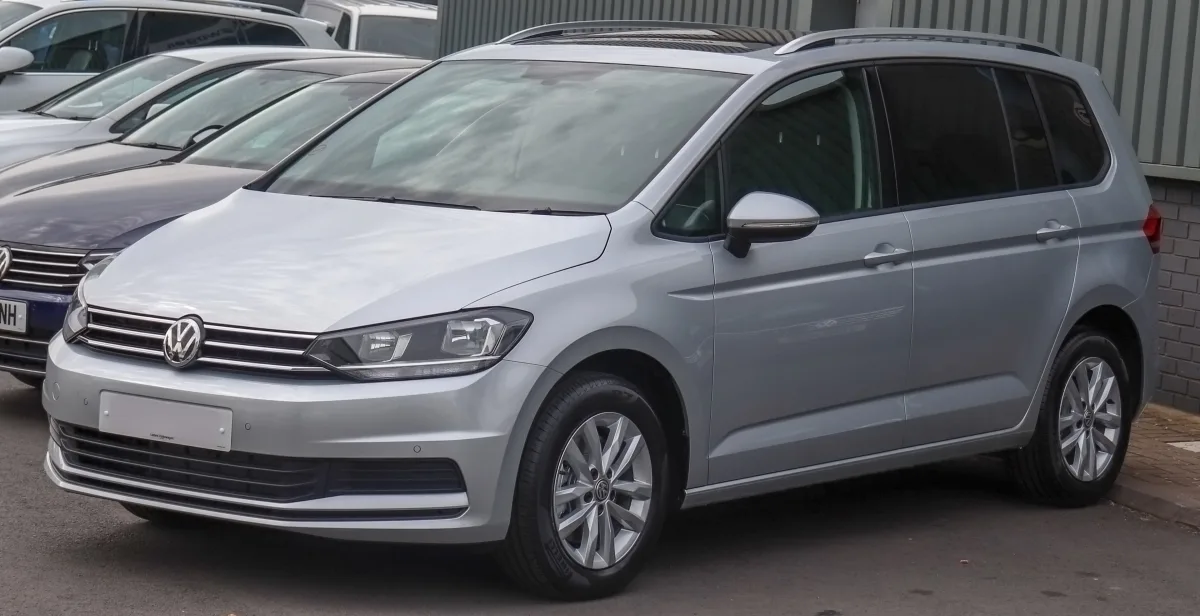
Volkswagen Touran: Generations I and II, engines and trims
The Volkswagen Touran is a compact MPV designed for families who need plenty of space and the ability to carry up to seven people. We look at the differences between the two generations, the most common engines, how the trim levels differ, and what to watch out for when buying a used one.






Touran at a glance
The Touran has been in production since 2003. It is based on Golf underpinnings but features a taller body, three individual second-row seats, and an optional third row of seats, making it suitable for both five- and seven-passenger configurations.
The Touran is prized for its practical cabin, numerous storage compartments, and easy ingress and egress. On the used market, it is popular among families, usually comes with a diesel engine, and frequently has high mileage.
Generations I and II — what are the differences?
Generation I (2003–2015) had a long market run and received two facelifts — in 2006 and 2010. The newest models from 2010–2015 feature more modern common-rail diesels and TSI petrol engines, making them the ones to aim for when shopping for a first-gen car. A rugged Cross Touran version was also offered.
Generation II (from 2015 onwards) is built on the MQB platform: it is larger, roomier, has a more capacious boot, a more modern interior, and more driver assistance systems. It is the best choice if your budget allows — the car is quieter, more fuel-efficient, and safer.
Engines and gearboxes
In Generation I, the most common powerplants are the 1.9 TDI and 2.0 TDI diesels, while post-2010 models feature the 1.6 TDI and 2.0 TDI common-rail engines. Petrol 1.4 TSI and 1.2 TSI units are less common; a compressed natural gas (CNG) 1.4 TSI EcoFuel version was also available.
In Generation II, the lineup is anchored by the 1.6 TDI (around 110–115 hp) and 2.0 TDI (mostly 150 hp, with a more powerful version also offered) diesels, alongside the 1.2, 1.4, and later 1.5 TSI petrol engines.
Gearboxes are either manual or DSG. Lower-output engines are often paired with the 7-speed dry-clutch DSG (DQ200), while more powerful diesels get the wet-clutch DSG. The Touran is front-wheel drive only.
What to check when buying a used Touran
The DSG transmission must shift smoothly: juddering when pulling away, thumps during gear changes, or vibrations often indicate expensive clutch or mechatronic unit repairs. Ask whether the oil has been changed regularly (on wet-clutch DSG boxes).
The timing chain on early 1.4 TSI and 1.2 TSI engines is prone to stretching — a cold engine must not rattle upon startup. On diesel models, check the diesel particulate filter (DPF), EGR valve, and make sure the engine is not consuming coolant.
Family cars usually lead a hard life, so inspect the cabin and test the folding and removal mechanisms of all seats, especially the third row. Verify the mileage against MOT and service records.


Trim levels
Names and equipment vary depending on the market and model year; the trims listed below are the most common in Europe.
Trendline
Generations I and IIBasic trim — straightforward and the most affordable.
- Usually steel wheels
- Air conditioning
- Basic multimedia system
Comfortline
Generations I and IIThe most popular choice for families.
- Alloy wheels
- Frequently features automatic climate control and parking sensors
- Often includes second-row folding trays and extra storage compartments
Highline
Generations I and IIThe top standard trim offering greater comfort.
- Larger wheels and chrome accents
- Frequently equipped with xenon or LED headlights
- Often features partial leather upholstery and sportier seats
Cross Touran
Generation IA rugged-styled version without all-wheel drive.
- Raised ride height
- Protective plastic body cladding
- More vibrant interior trim
R-Line
Generation IIA sporty-looking styling package.
- Sporty bumpers and larger wheels
- R-Line interior trim
- Frequently includes sports seats
Comparison of Generation II trim levels
| Trendline | Comfortline | Highline | |
|---|---|---|---|
| Who they are for | For the rational buyer | For most families | For comfort seekers |
| Wheels (typically) | 15–16 in. | 16 in. | 17 in. |
| Climate control | Air conditioning | Often — automatic | Automatic |
| Interior | Basic | More storage compartments, more comfortable seats | More upscale trim |
| Used market price (relative) | € | €€ | €€€ |
For most families, the best choice is the Comfortline with the 1.6 TDI or 2.0 TDI engine. Highline is worth choosing if you want more comfort, and if you need seven seats, make sure the car actually has the third row of seats.
Pros
- Highly practical cabin with three separate second-row seats
- Up to seven seats
- Fuel-efficient diesel engines
- Abundant supply and wide choice of spare parts
Cons
- Many cars with high mileage
- Third row of seats is mostly suitable for children
- No all-wheel drive version available
Frequently asked questions
Is the Touran suitable for a family of seven?
Yes, provided the car has the third row of seats. However, it is cramped and better suited for children or short trips, and with all seats up, the boot space shrinks significantly.
Which Touran engine should I choose?
For high-mileage drivers, the 2.0 TDI or 1.6 TDI is usually the best fit — they are economical and suited for long journeys. If you mostly drive in the city, choosing a petrol TSI is more rational, as the diesel particulate filter requires longer trips.
Which Touran generation is better?
The second generation (from 2015) is more spacious, modern, and safer, making it the best choice if your budget allows. The first generation is cheaper, but usually has high mileage — look for a 2010–2015 car with a clear service history.
Updated 2026-10-09 · Trim levels and equipment vary by market and model year — check the equipment of the specific car. · Translated automatically


