 English
 Lietuvių
 Latviešu
 Eesti
 Polski
 Русский
 Українська
 Deutsch
 Nederlands
 Čeština
 Slovenčina
 Svenska
 Norsk
 Dansk
 Suomi


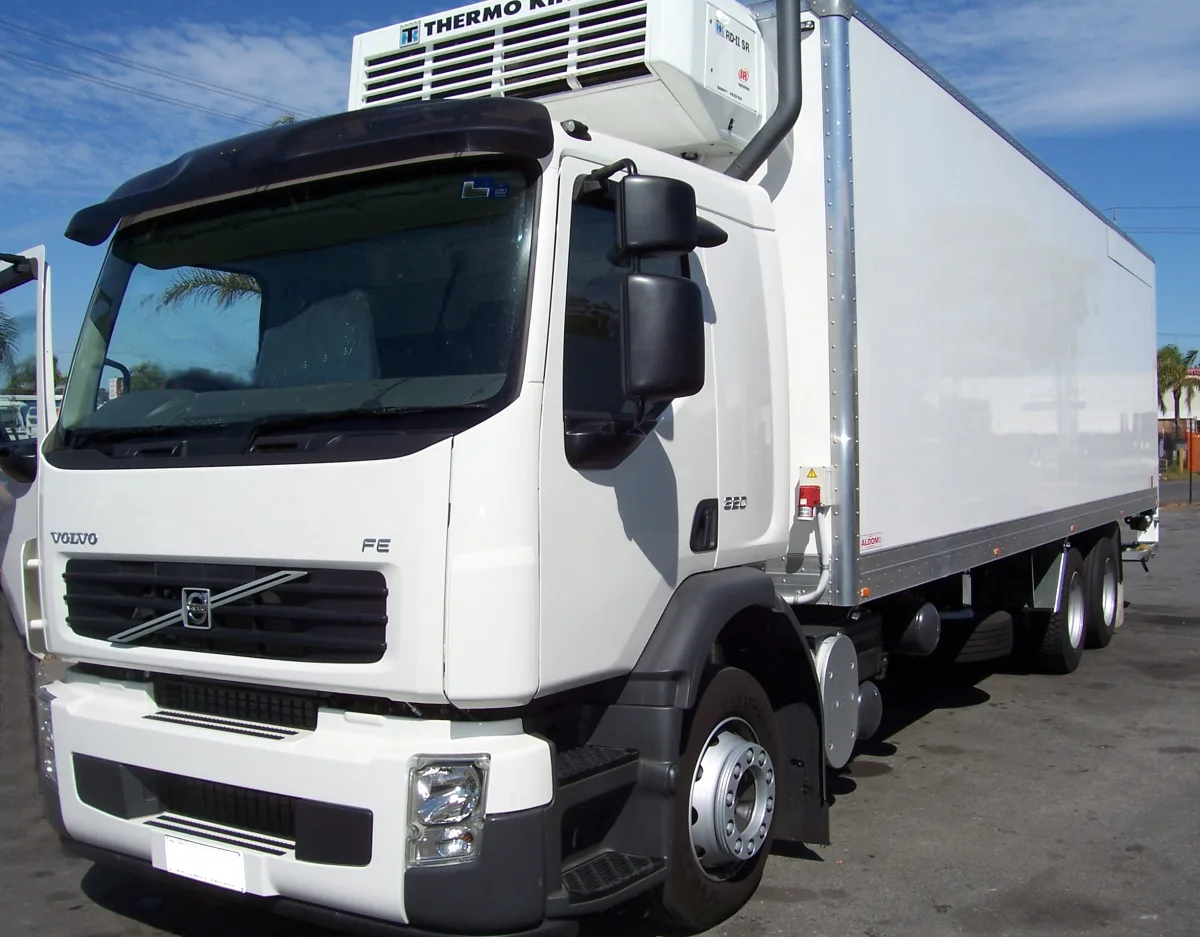
Volvo FE: medium-duty truck, engines and trims
Volvo FE — the medium-duty truck widely used for distribution, municipal and construction tasks. We look at the engines, cab and body trims, and what to check when buying a used FE.






FE in brief
The Volvo FE has been in production since 2006 and is designed for urban and regional transport: food and goods distribution, refrigerated units, municipal and construction tasks. It's one of Volvo's most popular medium-duty platforms, so there's a wide range of used options available.
You'll commonly find refrigerated units, vans, flatbed trucks, box trucks and waste collection trucks. Since the FE is adaptable to various body types, its condition greatly depends on the work it was used for.
Generations and trims — what's the difference
Early FE models (from 2006) come with Euro 4 and Euro 5 engines, some using AdBlue (SCR) for emissions control. They're often cheaper, but you're more likely to encounter worn-out chassis and cabs.
Later FE models meet Euro 6 standards, feature a more modern cab and advanced driver-assistance systems. These versions are pricier, but offer lower running costs and better job prospects in city zones with emissions restrictions.
Aside from the usual diesel variants, there's also an electric FE — designed for urban deliveries, but still rare in the used market.
Engines and transmissions
FE engines — Volvo diesels, around 7 and 8 litres in capacity, with varying power outputs (roughly from 250 to 350 hp, depending on the version). The name, for example, FE 280 or FE 320, indicates the approximate engine power.
Transmissions come in manual, automated Volvo I-Shift, or automatic Allison, depending on the version and purpose. For municipal tasks, an automatic transmission is often chosen, while for long-haul transport, the I-Shift is preferred.
What to check when buying a used FE
First, assess the condition of the cab and chassis: check for corrosion on the flatbed, van, or refrigerated body, frame deformations, and axle mounts. Inspect the suspension (leaf springs or air bags) and brakes.
For waste collection, tipper, or refrigerated versions, check the hydraulics, cooling unit operation, and working hours. Verify the mileage using tachograph data and service records.
In Euro 5 and Euro 6 vehicles, check the AdBlue system, particulate filter, and error memory. Request the service history and confirm the permitted weight and driver category.


Trims and versions
Trims and versions vary by market and year; below are the most commonly encountered versions.
Šaldytuvas
All generationsA refrigerated van for food delivery.
- Often equipped with a Thermo King or another manufacturer's cooling unit
- Insulated body
- It's crucial to check the cooling unit hours
Furgonas
All generationsEnclosed body for goods distribution.
- Often features a rear lift gate
- Enclosed cargo area
- Ideal for city deliveries
Borto platforma
All generationsVersatile choice for cargo
- Removable sides
- Often — canopy
- Often — hydraulic lift platform
Savivartis
All generationsFor construction and municipal services
- Hydraulic tail lift
- Sturdier chassis
- Check the hydraulics and frame
Komunalinis (atliekų)
All generationsRefuse collection truck with compactor
- Often — automatic transmission
- Special body
- High mileage
Comparing versions
| Furgonas | Šaldytuvas | Savivartis | Atliekų surinkimo | |
|---|---|---|---|---|
| Who it suits | For goods distribution | For food and product delivery | For construction | For municipal services |
| Gearbox (usually) | Manual or I-Shift | Manual or I-Shift | Manual | Automatic |
| What to check in particular | The body condition and platform | The air conditioning unit | The hydraulics and suspension | The power steering mechanism |
| Usage intensity | Average | High | High | Very high |
| Price in the used market (relatively) | €€ | €€ | €€ | € |
For most buyers, the best bet is a well-maintained FE van or flatbed with a Euro 5 or Euro 6 engine. Skip the refuse collection and refrigerated versions unless you know their working hours and service history.
Pros
- Wide range of body styles and versions
- Comfortable and quiet cabin
- Parts and service widely available
- Generally reliable construction
Cons
- Specialist bodies can be heavily worn
- Euro 5/6 versions require AdBlue and DPF systems to be monitored
- Variety of sellers and body styles makes comparison difficult
Frequently asked questions
What does FE 280 or FE 320 mean?
The number indicates the approximate engine power in horsepower, so the FE 320 is more powerful than the FE 280. Always check the exact power in the registration documents.
Is the FE suitable for intercity routes?
Yes, the FE is often used for regional hauls. For longer routes, it's important that the cab is comfortable and the engine and gearbox are suitable for continuous driving.
How does the FE differ from the FL?
The FL is a lighter model, while the FE is heavier and designed for larger loads. The specific maximum permitted weight is determined by the particular version, so check the documents.
Updated 2026-10-21 · Trim levels and equipment vary by market and model year — check the equipment of the specific car. · Translated automatically


