 English
 Lietuvių
 Latviešu
 Eesti
 Polski
 Русский
 Українська
 Deutsch
 Nederlands
 Čeština
 Slovenčina
 Svenska
 Norsk
 Dansk
 Suomi


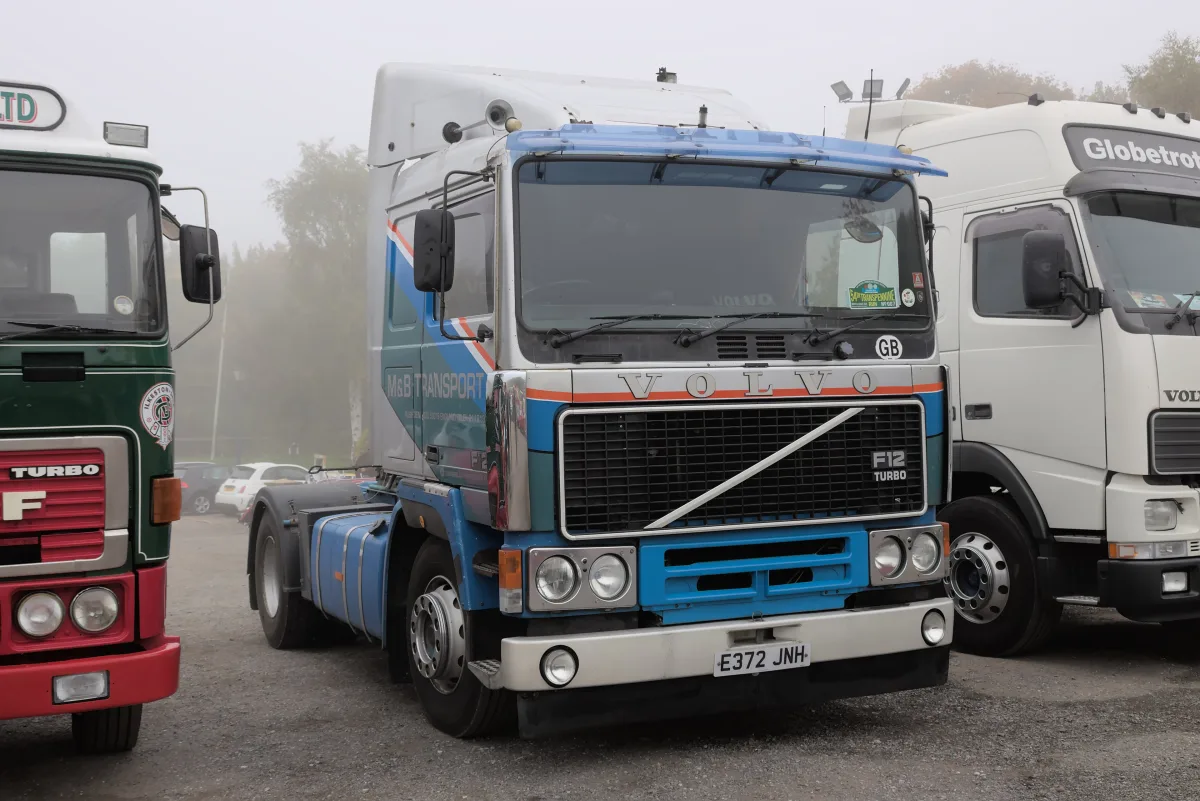
Volvo F12: generations, engines and what to check
The Volvo F12 is a heavy-duty truck produced from 1977 to 1994 that became one of Volvo's most famous long-haul trucks. We look at how its versions differ, which engines you'll find, and what to check when buying a used F12.






The F12 in brief
The F12 was a mid- to high-range Volvo truck with a six-cylinder turbodiesel. It worked on long-haul routes, hauled tankers, flatbed loads, and containers, and was very popular due to its robustness and versatility.
Today, the F12 is valued as a reliable, well-known old truck that's chosen for both work and collections. When buying, the specific condition of the vehicle is crucial, as one example can differ greatly from another.
Generations — how they differ
Over nearly two decades, the F12 was updated several times: it received more powerful engines, an intercooler, and an improved cab and equipment. As a result, early and late F12s differ significantly.
Early trucks are simpler but less powerful and more prone to corrosion. Later models, with the intercooler, are more powerful and economical, making them more sought after for work.
In 1993, the FH series began to replace the F12, and production of the F12 ended in 1994. As a result, all F12s are now old, so their Euro class often doesn't comply with modern emission zones.
Engines and transmissions
F12 engines are around 12-litre six-cylinder turbodiesels. Depending on the version, power ranges from roughly 300 to over 400 HP; 'Turbo' and 'Intercooler' versions are marked on the cab.
Gearboxes are usually manual, often with a splitter. It's worth test-driving them: the condition of the synchros and dog clutches is particularly important due to the high loads.
The engine is considered robust if it has been properly maintained. Before buying, ask about the oil change history, the condition of the cooling system, and whether the engine has been overheated.
What to check when buying a used F12
First and foremost — the chassis and cab. Older trucks often suffer from corrosion at the cab corners, seams, wings, and crossmembers, and the cab lift system should operate smoothly.
Start the engine cold and assess the smoke, oil pressure, and turbocharger noise. Check the pneumatic system, brakes, and engine brake, as repairs can be expensive.
Check the odometer against the records, and ensure the vehicle meets the technical inspection requirements in the documents. If you're buying it for a collection, originality is key.


Versions
The F12 was produced in several versions; we list the most commonly encountered.
F12 Turbo
Early productionThe initial turbocharged version.
- Simpler equipment
- Often — a mechanical cab suspension
- A more budget-friendly choice
F12 Intercooler
Later productionWith an intercooler — the more powerful and economical version.
- More power
- Often — a spacious sleeper cab
- Popular among used cars
Tolimųjų reisų vilkikas
Entire productionMostly used as a sleeper cab truck.
- Bunk behind the seats
- Ideal for long journeys
- Often — an autonomous heater
Krovininė važiuoklė
All versionsWith a flatbed, van, or tank body.
- Simple body construction
- Body condition determines value
- Often — a drop-side body
Originali klasikinė būklė
Any versionCars that have retained their factory appearance.
- Original parts
- Often — collector's value
- More expensive than modified
Comparison of F12 versions
| Turbo | Intercooler | Krovininė važiuoklė | Originalus klasikinis | |
|---|---|---|---|---|
| Who it's for | For less frequent drives | For long-distance drives | For distribution | For collectors |
| Approximate power | More refined | More powerful | Depends on the version | Depends on the version |
| Engine | Around 12 litres | Around 12 litres | Around 12 litres | Around 12 litres |
| Price in the used market (relatively) | € | €€ | €€ | €€€ |
For work, it's usually best to opt for the 'Intercooler' version with a tidy chassis and checked engine. For collectors, originality and condition are key, not power.
Pros
- A robust, well-known engine
- Spacious, comfortable sleeper cab
- Many versions and applications
- Parts and used assemblies availability is better than for rarer models
Cons
- An old car means corrosion and wear are common
- High fuel consumption
- Euro class restricts operation in low-emission zones
Frequently asked questions
What's the difference between the F12 Turbo and Intercooler?
The 'Intercooler' version has an additional air cooler, making it more powerful and economical than the standard 'Turbo'. You'll find the difference on the cab badge and engine specs.
Is the F12 still usable?
Yes, but due to its age, it doesn't meet the Euro standards for modern emissions zones. Check where you can operate it and whether it meets the technical inspection requirements.
How does the F12 differ from the F10?
The F12 has a larger, approximately 12-litre engine and more power, while the F10 has a smaller, approximately 9.6-litre one. Externally, they look similar, so the difference is shown by the cabin badge and engine specs.
Updated 2026-10-21 · Trim levels and equipment vary by market and model year — check the equipment of the specific car. · Translated automatically


