 English
 Lietuvių
 Latviešu
 Eesti
 Polski
 Русский
 Українська
 Deutsch
 Nederlands
 Čeština
 Slovenčina
 Svenska
 Norsk
 Dansk
 Suomi


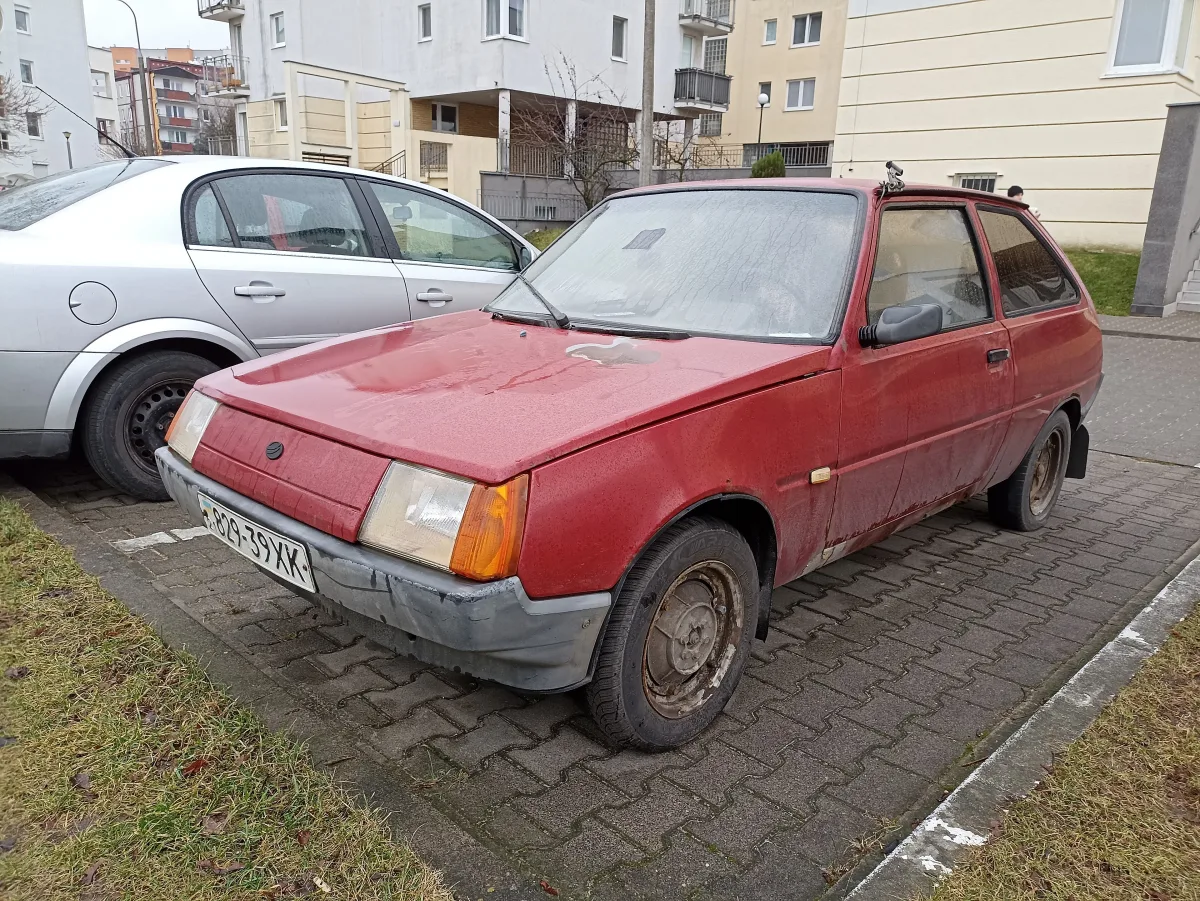
ZAZ-1102 Tavria Nova: The Ukrainian hatchback, engines, and what to know when buying
The ZAZ-1102 Tavria Nova is a three-door front-wheel-drive hatchback produced in Zaporizhzhia since 1999 as a modernised version of the Tavria. We explain how it differs from the original Tavria, which engines are available, and what to check if you come across one in the used market.






The Tavria Nova in brief
The first ZAZ-1102 Tavria debuted in 1987 and received its name (Tavria is an old form of the name Crimea) in 1989. It was the first ZAZ car with front-wheel drive and a water-cooled engine, replacing the rear-engine Zaporozhets.
Production of the Tavria Nova began in 1999 as a modernisation effort, developed in collaboration with Daewoo: the radiator grille, headlights, taillights, body structure, and interior noise were all improved. Mass production of the hatchback ended in 2007.
What changed in the Nova version
The goal of the Nova version was to eliminate noticeable flaws and improve reliability and passive safety. Reinforced body support elements and an additional third brake light on the rear doors were added.
The body remained a three-door hatchback, and the core technology—a front MacPherson strut suspension and rear beam axle—essentially stayed the same. Based on this foundation, the entire family was created: the ZAZ-1103 Slavuta, ZAZ-1105 Dana, and the pickup ZAZ-11055.
Engines and gearboxes
The Tavria family of cars uses a small-displacement, four-cylinder petrol MeMZ engine. The exact power output and displacement should be verified according to the specific car's documents.
The gearbox is usually manual. With modest power, this car is best suited to city driving and short journeys.
What to check when buying a Tavria Nova
There aren't many of these cars in Lithuania, and some are old imports. First, inspect the body for rust in the sills, arches, and underside, and check that the paperwork is in order.
Check the engine's operation when cold and hot, the cooling system, suspension, and brakes. Consider parts availability in advance — some may need to be ordered from abroad.


Trim levels
Trim names and equipment varied depending on the market and year of production; here we describe only the general level of equipment.
Standartinė versija
1999–2007 model yearsA basic city hatchback with minimal equipment.
- Often fitted with steel wheels and decorative hubcaps
- Simple interior trim
- Equipment varies by market and year
Comparison of Tavria family models
| Tavria Nova | Slavuta | Dana | |
|---|---|---|---|
| Body | 3-door hatchback | 5-door liftback | 5-door estate |
| Who it's for | City driving and short trips | Who needs more boot space | Who needs an estate |
| The basics | Tavria platform | Tavria platform | Tavria platform |
| Price in the used market (relatively) | € | € | € |
All family cars are technically similar, so the choice mainly comes down to body style and the condition of the specific car.
Pros
- Simple and unpretentious construction
- Compact dimensions, easy to park
- The Nova version has a reinforced body and better noise levels
- Very low price in the used market
Cons
- Low power and sparse comfort
- Parts supply in Lithuania is limited
- Many cars' age and rust
Frequently asked questions
What sets the Tavria Nova apart from the original Tavria?
The Nova version, produced from 1999 onwards, features revised headlights and taillights, a reinforced body, reduced cabin noise, and a third brake light. The core technology remains unchanged.
When was the Tavria Nova discontinued?
Mass production of the ZAZ-1102 hatchback ended in 2007, although a few batches were assembled later.
Is the Tavria Nova suitable for daily use?
It's fine for short urban trips, but low power and sparse comfort limit its use on long journeys. Before buying, thoroughly check the body for rust.
Updated 2026-10-21 · Trim levels and equipment vary by market and model year — check the equipment of the specific car. · Translated automatically


