 English
 Lietuvių
 Latviešu
 Eesti
 Polski
 Русский
 Українська
 Deutsch
 Nederlands
 Čeština
 Slovenčina
 Svenska
 Norsk
 Dansk
 Suomi


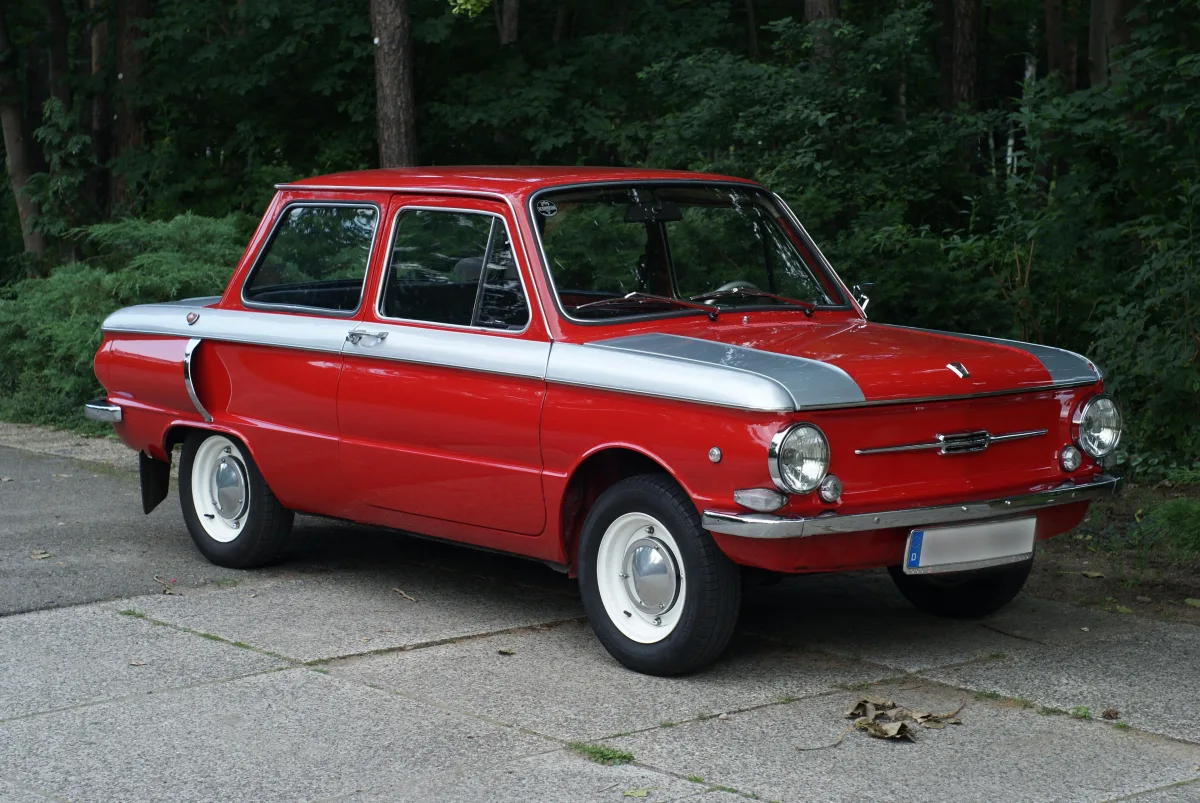
ZAZ-968 Zaporožec: generations, V4 engine and what to know before buying
The ZAZ-968 is a Ukrainian rear-engine compact car produced since 1971, known as the 'Zaporožec'. We look at what sets the 968, 968A, and 968M apart, which engines were used, and what to check if you're considering this classic car.






ZAZ-968 in brief
The Zaporožec was the Soviet Union's 'people's car': cheap, sturdy, and easy to fix. The ZAZ-968 features an air-cooled rear engine, and its design with round air intake 'ears' on the sides became highly recognizable.
The ZAZ-968 series was produced from spring 1971 to December 1979, while the later 968M continued until 1994. This car is well-known in many former Soviet countries, including Lithuania.
Versions — what's the difference
The original ZAZ-968 was a slightly modernized ZAZ-966: reverse lights were added, the dashboard was simplified, and the brakes were updated. In 1973, a refresh was carried out, and in 1974, the improved ZAZ-968A was introduced.
The 968A featured dual-circuit brakes, a softer dashboard, a collapsible steering column, and seats from the VAZ-2101. The 968M, produced from 1979, had a different, more rectangular body without the 'ears'. This variant was later replaced with the Tavria's front wheels.
Engine and gearbox
The ZAZ-968 engine is an air-cooled 1,197 cm³ V4 MeMZ-968, producing around 40 HP. Some export versions had an engine producing around 45 HP.
Top speed was roughly 120 km/h. The gearbox is manual, the engine is rear-mounted, and the drive is to the rear wheels.
Thanks to its simple design, the car is easy to maintain, but the air-cooled V4 engine requires attention to oil levels and cooling.
What to check when buying a ZAZ-968
Inspect the body for rust: look at the sills, wheel arches, floor, and rear section joints. Due to the quality of the Soviet era, many cars have already been repaired.
Check the engine: pressure, oil leaks, noise, and the operation of the cooling fan. Test the clutch, gear shifting, and brakes.
Before buying, check the documents and whether the car is registered. The choice of parts is limited, but enthusiast clubs and shops can help.


Trim levels
Classic cars don't have a single trim system, so we describe the versions by production period and body style.
ZAZ-968
1971–1978The first series, based on the ZAZ-966.
- 1.2 l V4, around 40 hp
- Round air intake 'ears'
- Basic, budget interior
ZAZ-968A
From 1974Better-equipped version.
- Dual-circuit brakes
- Soft dashboard
- Collapsible steering column
ZAZ-968M
from 1979Later version with revised bodywork.
- Body without 'ears'
- The same 1.2-litre V4 engine type
- Produced until 1994
Eksportinės versijos
market-specificAdapted for other markets.
- Headlights to international standards
- Safety glass and steering lock
- Often — a more powerful engine
Comparing versions
| 968 | 968A | 968M | |
|---|---|---|---|
| Who it's for | For collectors | A more user-friendly classic | For the later version |
| Engine | 1.2-litre V4, ~40 hp | 1.2-litre V4, ~40 hp | 1.2-litre V4 |
| Body | With 'ears' | With 'ears' | Without 'ears' |
| Price in the used market (relatively) | Budget | Mid-range | Budget |
For most collectors, the best choice is a well-maintained 968A or 968M. The key is the body condition and paperwork.
Pros
- Simple, easy-to-fix technology
- Recognisable classic looks
- Low purchase and maintenance costs
- An active community of enthusiasts
Cons
- Modest power and comfort
- The rear air-cooled engine requires maintenance
- Limited choice of parts
Frequently asked questions
How does the ZAZ-968 differ from the 968M?
The 968M has been produced since 1979 and features a boxy body without air intakes on the 'ears'.
What engine does the ZAZ-968 have?
A 1,197 cm³ air-cooled V4 with around 40 HP.
Why is it called the Zaporožec?
The name comes from the city of Zaporizhzhia, where the car is manufactured.
Updated 2026-10-21 · Trim levels and equipment vary by market and model year — check the equipment of the specific car. · Translated automatically


