 English
 Lietuvių
 Latviešu
 Eesti
 Polski
 Русский
 Українська
 Deutsch
 Nederlands
 Čeština
 Slovenčina
 Svenska
 Norsk
 Dansk
 Suomi


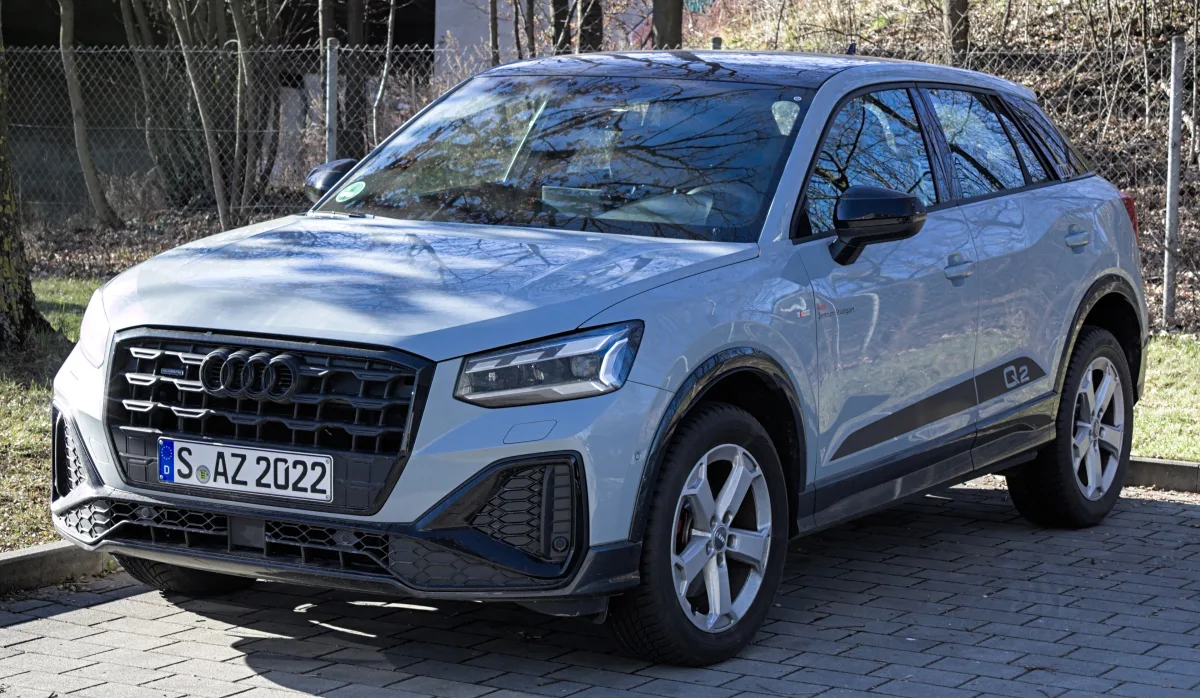
Audi Q2: GA generation, facelift, engines and trims
The Audi Q2 is Audi’s smallest SUV, offered since 2016 for those who want a premium-class car in city-friendly dimensions. We look at how the cars differ before and after the 2020 facelift, which engines are the most popular, how the trims vary, and what to check when buying used.






Q2 at a glance
The Q2 has been in production since 2016 and to date has had one generation (production code GA). It’s built on the MQB platform, like the Audi A3 or Volkswagen T-Roc, is around 4.2 metres long, and has a boot capacity of around 400 litres. Most cars have front-wheel drive, while the more powerful versions have quattro four-wheel drive.
The Q2 is praised for its high-quality interior, solid handling, and ease of parking in the city. However, it’s not a family SUV: there’s roughly as much space in the rear seats and boot as in a compact hatchback. Most used Q2s in the Lithuanian market are imported from Western Europe, often from Germany.
Before and after the facelift — what’s changed
The 2016–2020 cars are the cheapest way to get a Q2. Even then, you could choose a digital instrument cluster (Audi virtual cockpit), LED headlights, and adaptive cruise control, but the equipment very much depends on the packages ordered, so two cars of the same age can differ significantly.
Towards the end of 2020, the Q2 received new bumpers and headlights, revised trims, and a wider selection of driver assistance systems; matrix LED headlights are becoming more common. Essentially, the technology remains the same, so it's worth choosing based on condition, mileage, and features, not just the year.
The sportiest version is the SQ2 (from 2018) with a 2.0 TFSI engine, around 300 hp, and quattro all-wheel drive. There aren't many of these cars on the market; they're pricier and often more intensely used.
Engines and transmissions
Petrol: 1.0 TFSI (30 TFSI, around 110–116 hp), initially the 1.4 TFSI with cylinder deactivation, and from 2018 the 1.5 TFSI (35 TFSI, 150 hp), plus the 2.0 TFSI (40 TFSI, around 190 hp) with quattro. Diesel: 1.6 TDI (around 116 hp) and 2.0 TDI (around 150 hp, some with quattro and more power).
Transmissions come as a 6-speed manual or S tronic (dual-clutch) automatic. Smaller engines are usually paired with a 7-speed dry-clutch S tronic, while more powerful quattro versions get a wet-clutch S tronic.
For most buyers, the 1.5 TFSI is the sweet spot: it's powerful enough, relatively economical, and doesn't mind short city trips. The 1.0 TFSI is fine for city driving, but diesel is worth considering only if you do a lot of out-of-town driving.
What to check when buying a used Q2
The S tronic gearbox should operate smoothly: juddering when pulling away, clunks when shifting, or vibration in the steering wheel often indicate a need for clutch or mechatronics repair. Early 1.5 TFSI models may suffer from uneven running at low speeds — ask if the software has been updated.
For diesel cars that have done a lot of city driving, check the diesel particulate filter (DPF) and EGR system, and for newer models, the AdBlue system. The mileage should match the service history records.
Since the equipment heavily depends on the packages, check the VIN code to see what was actually fitted at the factory. Inspect the alloy wheels and tyres — large alloy wheels with low-profile tyres are easily damaged, and check the body for painted-over parts and uneven gaps.


Trim levels
Names and equipment vary by market and year; we list the most common trims found in Europe.
Q2 (bazinė)
2016–2020 and post-faceliftThe base version, whose equipment heavily depends on the packages ordered.
- Often 16-inch alloy wheels
- A more basic multimedia system
- Often — parking sensors and air conditioning
Design
2016–2020A more elegant version with a more distinctive exterior design.
- Light-alloy wheels
- Contrasting side details
- Often — automatic climate control
Sport
2016–2020A popular choice with sportier seats.
- Sporty front seats
- Larger alloy wheels
- Often — LED headlights and a digital instrument cluster
Advanced
post-2020 faceliftMid-range facelifted Q2 with more kit.
- LED headlights
- Light-alloy wheels, sharper exterior styling
- Often — automatic climate control and a rear-view camera
S line
all year roundSporty-looking version without a sporty engine.
- S line bumpers and larger alloy wheels
- Sport seats and steering wheel
- Often — sport suspension and matrix LED headlights
SQ2
from 2018The sportiest Q2 with a powerful engine and quattro transmission.
- 2.0 TFSI engine, around 300 hp
- Quattro all-wheel drive and S tronic gearbox
- Sporty handling, larger brakes
Comparing the updated Q2 trims
| Q2 (bazinė) | Advanced | S line | SQ2 | |
|---|---|---|---|---|
| Who it's for | For city driving and a smaller budget | For everyday comfort | For a sporty look | For driving pleasure |
| Wheels (most common) | 16-inch | 17-inch | 18-inch | 18–19-inch |
| Front headlights | LED | LED | LED, often matrix | LED, often matrix |
| Engine | 1.0–1.5 TFSI, TDI | 1.0–1.5 TFSI, 2.0 TDI | 1.5–2.0 TFSI, 2.0 TDI | 2.0 TFSI, around 300hp |
| Price in the used market (relatively) | € | €€ | €€ | €€€ |
For most buyers, the best choice is the Advanced or S line with a 1.5 TFSI engine. The SQ2 is worth considering only if you're after a genuinely fast car, while the base model is ideal if price is the top priority.
Pros
- A quality, well-built interior
- Compact — perfect for city driving and parking
- A wide choice of engines, with quattro versions available
- Holds its value well
Cons
- Cramped rear seats and a small boot
- Equipment varies greatly depending on the package
- Repairs to the S tronic dry clutch can be expensive
Frequently asked questions
How does the Audi Q2 differ from the Q3?
The Q2 is smaller and more suited to the city: a shorter body, less space at the back, and a smaller boot. The Q3 is more spacious and better for families, but usually more expensive in the used market.
Which Q2 engine should you choose?
For most buyers, the best choice is the 1.5 TFSI: it's powerful enough and suits short city trips. The 1.0 TFSI is fine for relaxed driving, while the diesel is worth considering only if you do a lot of out-of-town driving.
Does the Audi Q2 have four-wheel drive?
Only some models – quattro drive was usually paired with the more powerful 2.0 TFSI and 2.0 TDI engines, as well as the SQ2. Most Q2s on the market have front-wheel drive, so check this via the VIN or documents.
Is it worth buying a Q2 before the facelift?
Yes, if the car has a clear history and the right equipment. The technology before and after the 2020 facelift is essentially the same, so a well-maintained earlier Q2 can be a sensible buy.
Updated 2026-10-09 · Trim levels and equipment vary by market and model year — check the equipment of the specific car. · Translated automatically


